10 Multi‑Purpose Furniture Hacks to Turn Any Room into a Mini Gym
You want a mini gym at home, but you don’t want your living room to look like a sporting goods store exploded. I get it. I once tried to “just keep a few dumbbells out” and somehow my space started giving “garage floor” vibes. So I started turning everyday furniture into workout gear—and honestly, it works way better than it has any right to.
Ever looked around your room and thought, “Where would I even put a treadmill?” Cool, same. Let’s turn what you already own into a space-saving home gym setup that actually feels livable.
1) Turn Your Couch Into a Strength Station
Your couch already supports your bad posture during Netflix. Why not make it support your workouts too?
Use the couch for dips, incline push-ups, and step-ups
You can use a sturdy couch for:
- Triceps dips (hands on the edge, feet on the floor)
- Incline push-ups (hands on the seat cushion edge)
- Step-ups (one foot on the couch base if it feels stable)
I like couch dips because they fry my triceps fast, and I don’t need a fancy dip station. Who knew your “comfort furniture” had such a mean side?
Quick safety check (because ER visits ruin gains)
Before you start:
- Pick a couch with a solid frame
- Avoid super-squishy edges that collapse under pressure
- Keep the couch against a wall so it doesn’t slide
Ever tried a dip and felt the couch scoot backward like it wanted no part of your fitness journey? Yeah… don’t.
2) Make a Dining Chair Your Balance + Legs Tool
A dining chair might look innocent, but it can train your legs and balance like a champ.
Use chair-supported squats and split squats
Try:
- Box squats (tap the chair seat, stand back up)
- Bulgarian split squats (back foot on the chair, front foot working)
- Single-leg sit-to-stands (humbling, in the best way)
IMO, the chair makes leg day less scary because you control depth and form. And if you wobble, you grab the backrest like a responsible adult.
Chair workout tip
Choose a chair that:
- Feels heavy and stable
- Doesn’t roll (no wheels unless you want chaos)
- Sits on a non-slip surface
3) Use Your Coffee Table for Rows and Core Work
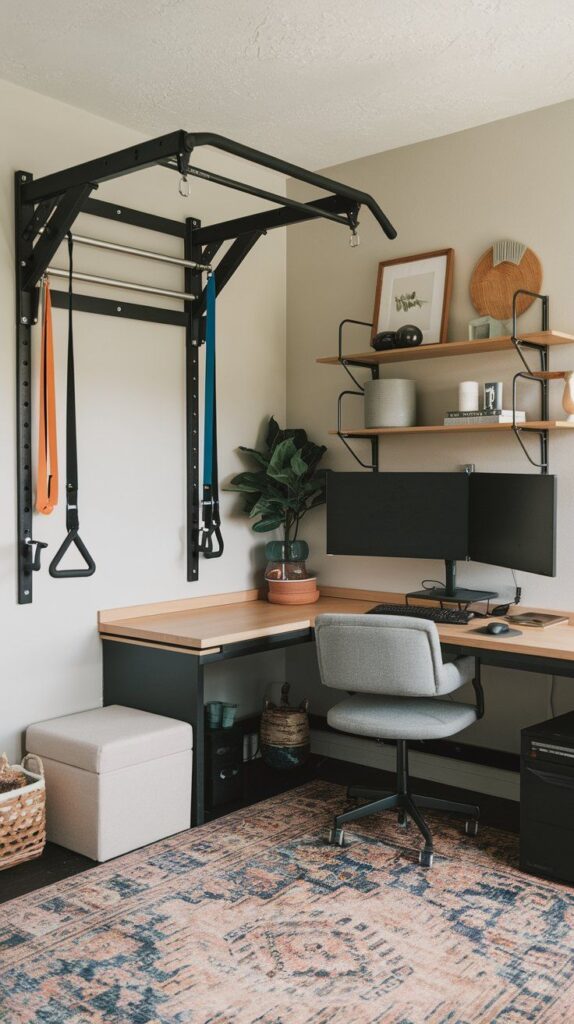
A coffee table can pull double duty as a home gym bench alternative—if it stays put.
Do incline planks, shoulder taps, and elevated mountain climbers
You can level up core training with:
- Incline plank holds
- Shoulder taps (fight rotation)
- Elevated mountain climbers (hello, cardio)
Want a quick burn without rearranging your life? This one hits fast.
Add a towel for “slider” moves
Put your hands or feet on a towel on smooth flooring and do:
- Hamstring curls
- Body saws
- Plank slides
FYI, these towel sliders look easy until your abs start negotiating for peace.
4) Convert a Bed Frame Into a Pull + Push Playground
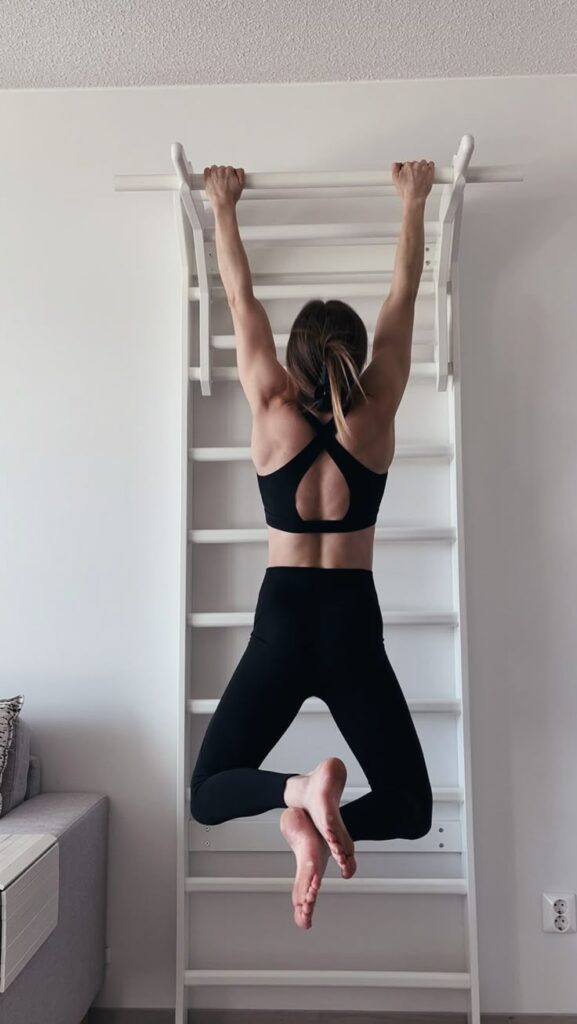
Beds take up space anyway, so you might as well get some reps out of them.
Do under-bed rows (yes, really)
If your bed frame sits high and feels sturdy, you can do inverted rows by grabbing the frame and pulling your chest upward. You can bend your knees to make it easier or straighten your legs to make it harder.
Ever tried rows without a pull-up bar? This feels like a cheat code.
Use the bed for incline/decline push-ups
You can hit different angles fast:
- Hands on bed = incline push-ups (easier)
- Feet on bed = decline push-ups (harder)
I love decline push-ups because they light up shoulders and upper chest without extra equipment. Your bed won’t judge you for sweating on the floor… probably.
5) Turn a Sturdy Bookshelf Into a Mobility + Anchor Station
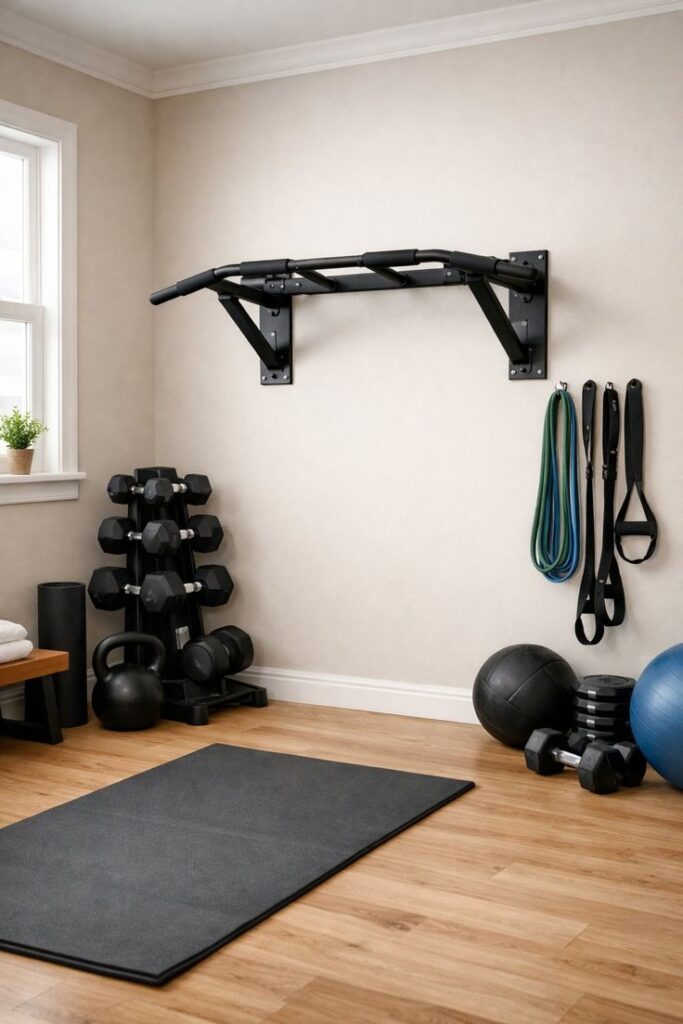
A bookshelf can do more than hold novels you swear you’ll read.
Use it as a stretching and mobility support
Try:
- Calf stretches (heel drops on a lower ledge if safe)
- Hip flexor stretches (hand support for balance)
- Thoracic openers (gentle rotations while holding the shelf edge)
You improve consistency when stretching feels easy to start. And nothing screams “I have my life together” like doing mobility work next to a bookshelf.
Use it to anchor bands (carefully)
If you use resistance bands, you can loop them around a sturdy vertical support. You must check stability first.
Look for:
- Solid wood, not flimsy particleboard
- A shelf that doesn’t wobble when you pull
- A low anchor point that won’t tip the unit
6) Use a Wall and Doorway Like Built-In Equipment
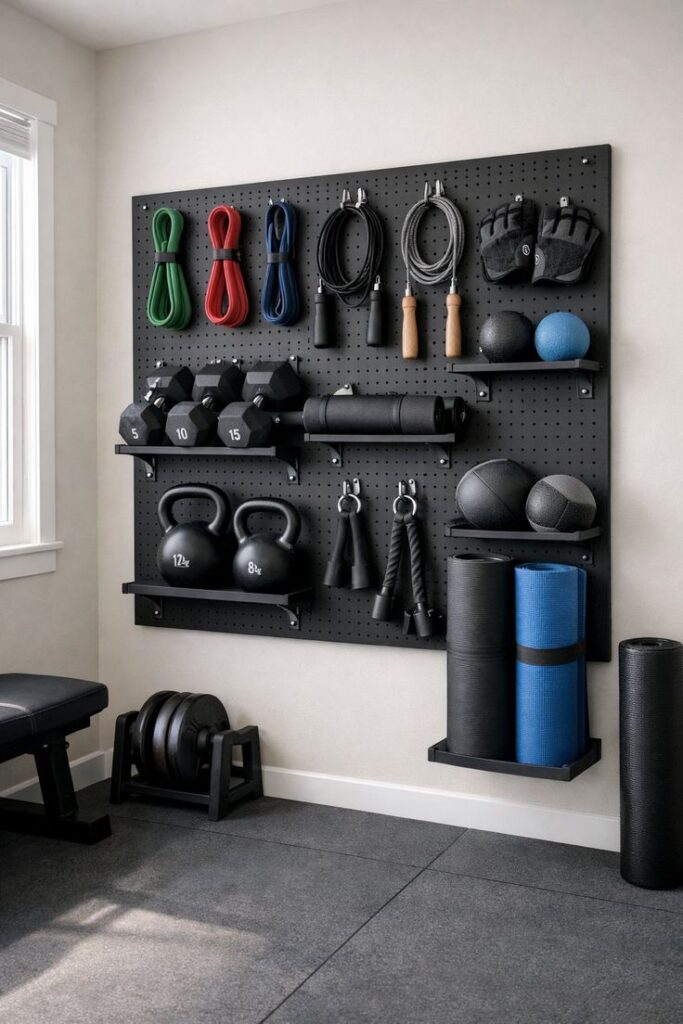
You don’t need a full power rack when you have… architecture.
Wall sits and wall angels for strength + posture
Do:
- Wall sits for quad endurance
- Wall angels for shoulder mobility
- Scapular slides for upper-back control
Wall sits humble everyone equally. Your legs will start screaming and your face will pretend everything feels fine.
Doorway “isometrics” and stretches
You can use a doorway for:
- Chest stretches
- Isometric presses (push into the frame for 10–20 seconds)
- Hip mobility holds with hand support
Ever wondered why isometrics feel weirdly intense? You create maximum tension without moving, and your muscles take it personally.
7) Turn an Ottoman Into a Plyo and Glute Tool
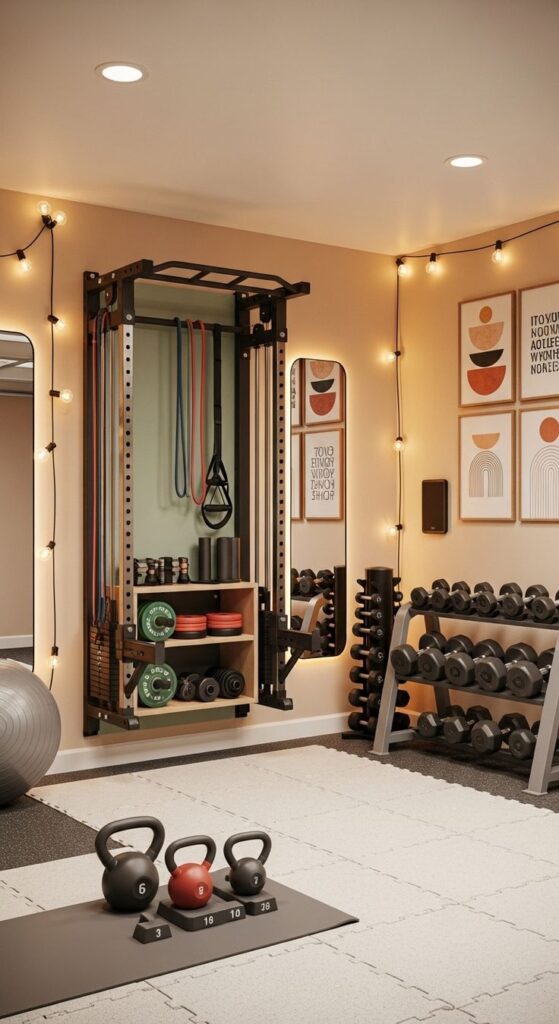
Ottomans don’t just hold snacks and tired feet. They also build legs.
Do step-ups, glute bridges, and hip thrusts
You can do:
- Step-ups (drive through the heel)
- Glute bridges (feet on ottoman for more range)
- Hip thrusts (upper back on the ottoman)
I like feet-elevated glute bridges because they hit hamstrings and glutes without loading your spine. Your lower back will thank you.
Ottoman rules
Pick one that:
- Doesn’t slide
- Has a firm top (no sinking)
- Holds your weight without wobbling
8) Make a Desk Setup Work for Micro-Workouts
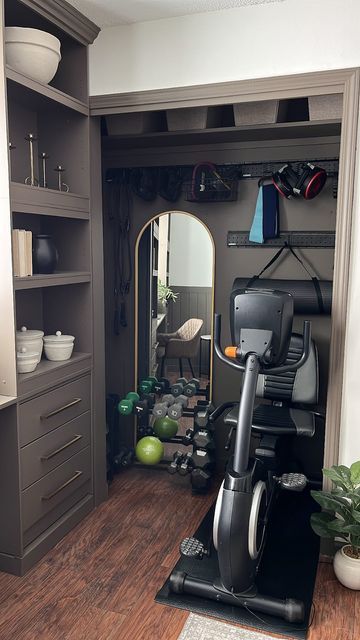
You sit at a desk anyway, so you might as well steal some reps between tasks.
Sneaky strength you can do in 3 minutes
Try:
- Chair squats (5–15 reps)
- Desk incline push-ups (8–20 reps)
- Calf raises while you wait for something to load
Do you really need another scroll break, or do you want stronger legs? :/
Desk posture bonus
A desk also helps you practice:
- Standing hip hinges (hands on desk, push hips back)
- Neck retractions (chin tucks, not “text neck”)
These tiny habits stack up fast, especially if you work from home.
9) Use a Backpack + Furniture to Create “Adjustable Weights”
Dumbbells cost money. A backpack costs… whatever you already paid for it.
Load a backpack and use it for squats, rows, and carries
Fill it with books, water bottles, or pantry items and do:
- Goblet-style squats (hug the pack)
- Backpack rows (hinge and pull)
- Farmer carries (hold the straps and walk)
I started doing loaded carries in my hallway, and I felt ridiculous for about eight seconds. Then my core kicked in and I stopped caring.
Pair it with furniture for more options
You can combine the backpack with:
- A chair for split squats
- A couch for weighted step-ups
- A coffee table for renegade-row positions (only if stable)
This hack gives you a budget home gym vibe without buying a full set of weights.
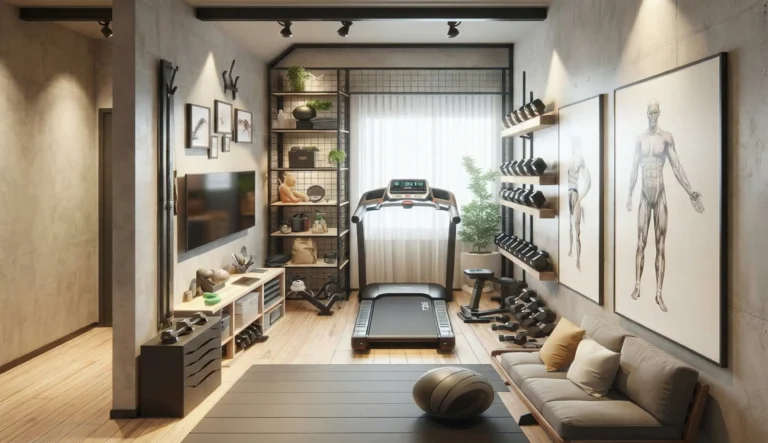
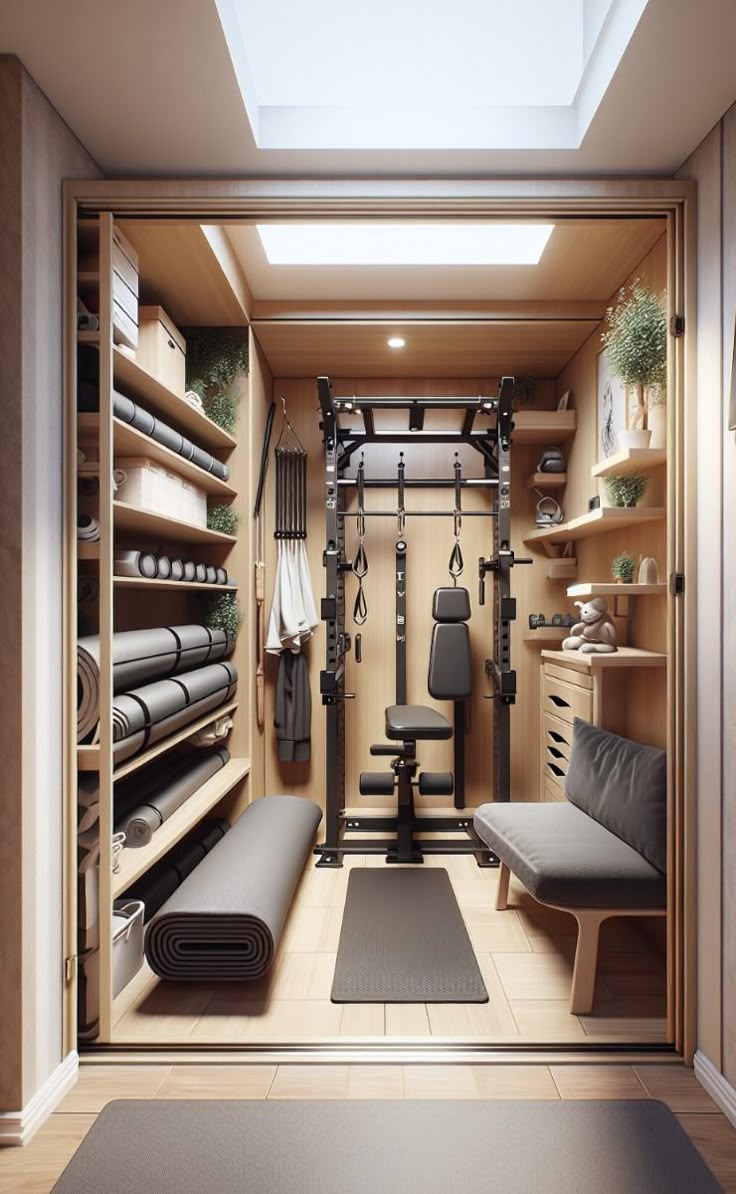
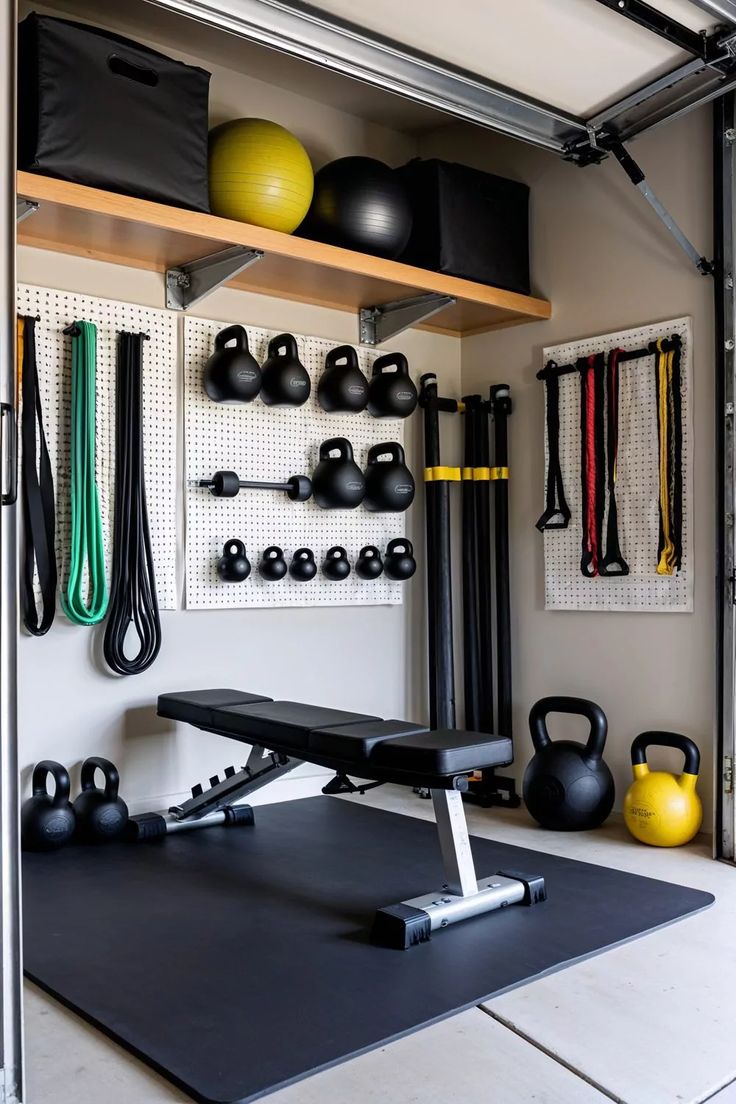
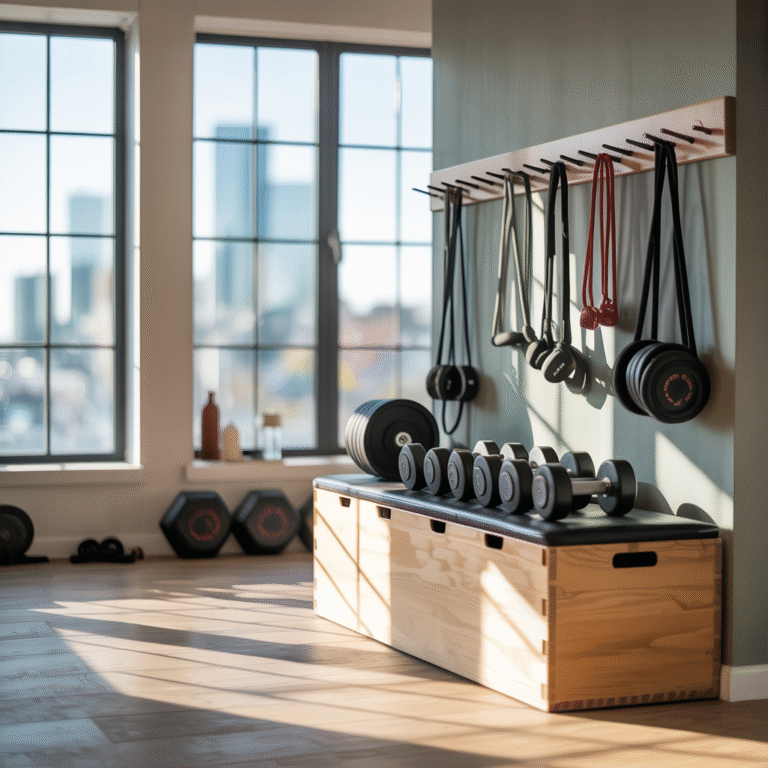
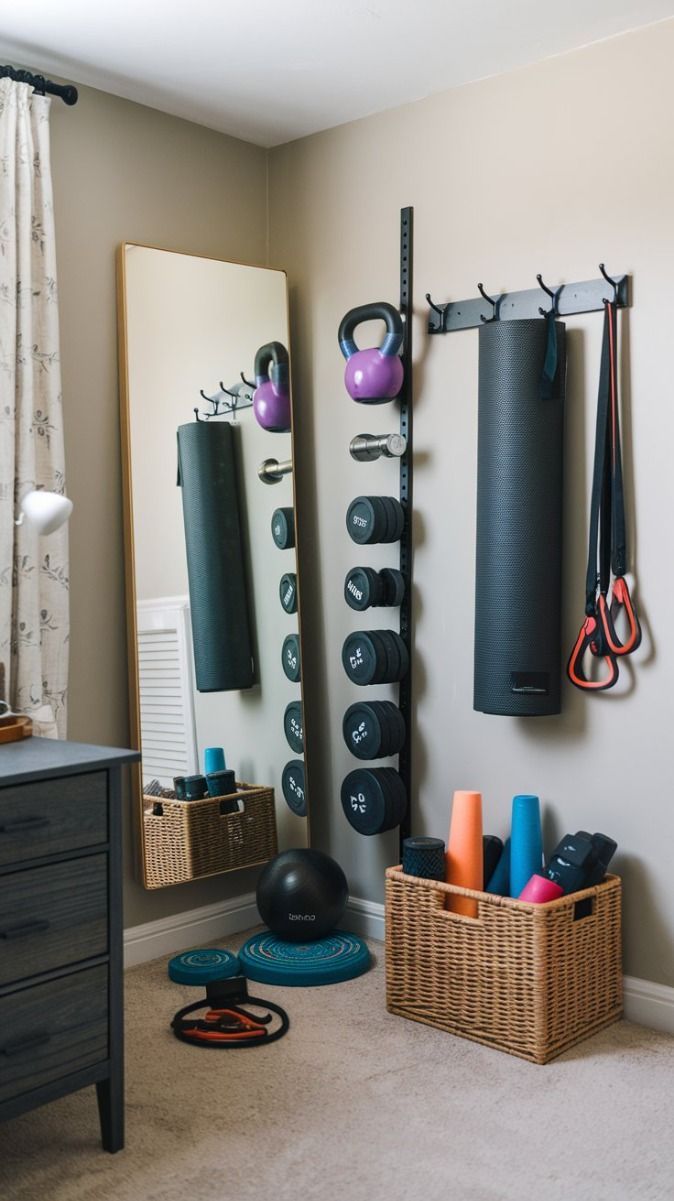
10) Build a “Fold-and-Store” Mini Gym Corner With Storage Furniture
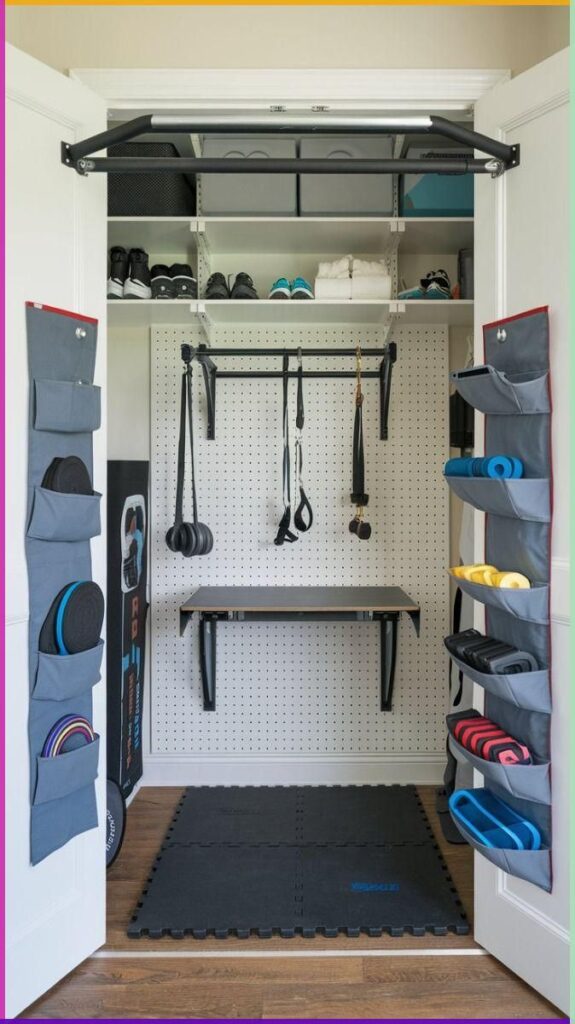
You win the home gym game when you keep it easy to start and easy to hide.
Use storage benches, baskets, and cabinets like a pro
You can stash gear inside:
- Storage ottomans (bands, jump rope, sliders)
- TV consoles (yoga blocks, small weights)
- Under-bed bins (mats, towels, mini bands)
I keep a resistance band set in a basket near the couch. I grab it during TV time, and I magically do more workouts. Funny how convenience works, right? 🙂
What you actually need in that corner
Keep it simple with:
- One resistance band set
- One yoga mat
- One “weight” option (backpack, adjustable dumbbells, or a kettlebell)
- One timer app on your phone
You create consistency when you reduce friction. You don’t need a shrine to fitness—you need a setup that takes 20 seconds to start.
Conclusion: Your Furniture Already Wants to Join Your Fitness Era
You don’t need a massive home gym to get strong. You just need a few smart multi-purpose furniture hacks and a little creativity. You can turn your couch into a dip station, your chair into a leg-day assistant, your coffee table into a core trainer, and your backpack into adjustable weight.