10 Smart Mini Home Gym Ideas for Small Apartments
You want a home gym, but your apartment barely fits your couch, your coffee table, and your emotional baggage? Same.
I spent years working out in living rooms, bedrooms, and one very tragic studio with a squeaky floor, so I know the “I-have-no-space-but-I-refuse-to-skip-training” struggle. The good news? You can build a seriously effective mini home gym in a small apartment without turning your place into a storage unit for dumbbells.
Let’s walk through 10 smart mini home gym ideas for small apartments that actually work in real life (not just in Pinterest fantasies).
1. Start With a Foldable Exercise Mat (Your Workout HQ)
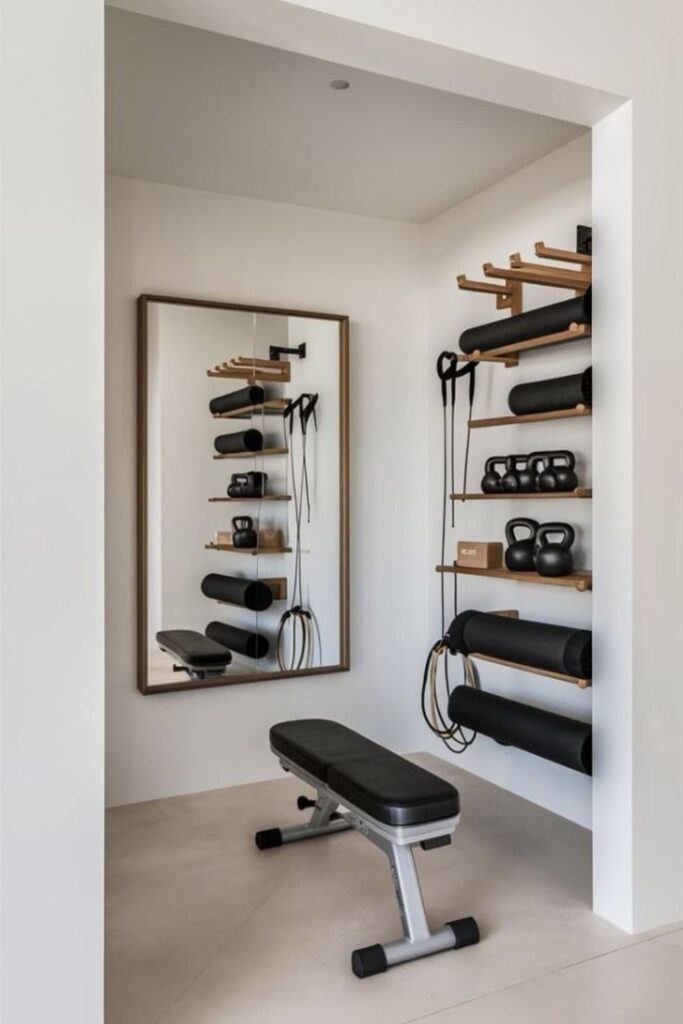
You don’t need a full room for a gym. You need one defined workout zone.
For small apartments, a foldable or roll-up exercise mat turns any corner into your training space in 5 seconds.
Why this works so well:
- You protect your joints, floors, and maybe your downstairs neighbors’ sanity.
- You create a mental cue: mat on the floor = workout mode.
- You fold or roll it away and store it under your bed, couch, or in a closet.
Look for:
- Thicker mats (10–15 mm) for knees and wrists.
- A non-slip bottom if you train on hardwood or tiles.
- A size that fits your body but still rolls small.
My rule: if I can’t easily put my mat away, I stop using it. So I always pick a mat that I can fold fast and hide quickly when guests show up and I want them to think I’m normal.
2. Go All-In on Adjustable Dumbbells
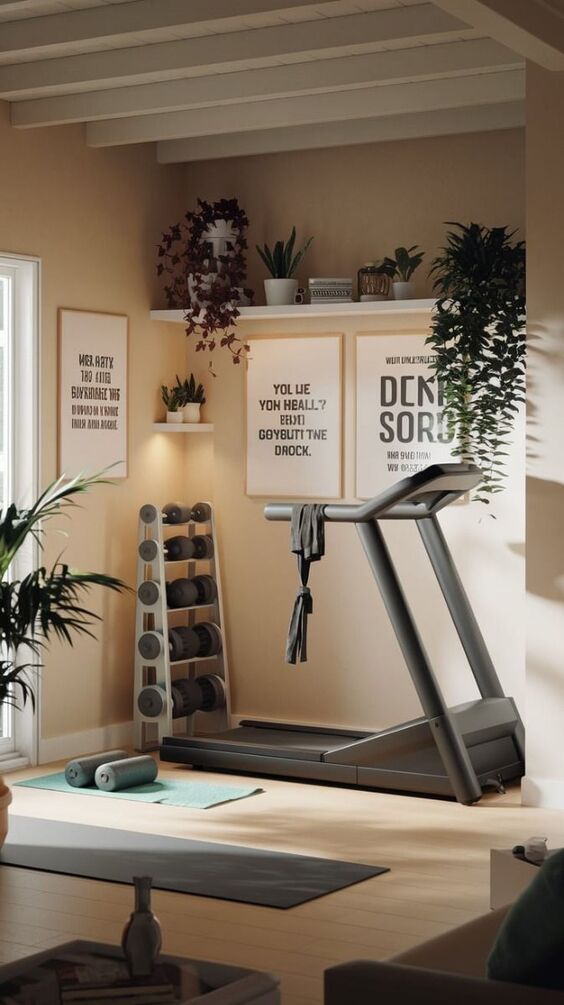
You know those racks with 20 different pairs of dumbbells in a gym? Great there. Horrible in a studio apartment.
Adjustable dumbbells basically save your space and your wallet.
Why adjustable dumbbells win in small apartments:
- One pair replaces 10+ sets of fixed dumbbells.
- You adjust load in seconds: light for shoulders, heavy for legs.
- You store them in a corner, under a table, or inside a cabinet.
Key things to consider:
- Weight range: Aim for something like 5–50 lbs (or higher if you lift heavy).
- Adjustment mechanism: Dials and pins feel faster than spin-lock collars.
- Shape: Some are bulky and clunky; others feel closer to real dumbbells.
IMO, if you can only buy one major piece of strength equipment, go with adjustable dumbbells. You can hit full-body strength training with just those and your body weight: squats, lunges, presses, rows, RDLs, curls, you name it.
3. Use Resistance Bands for a Full Gym in a Shoebox
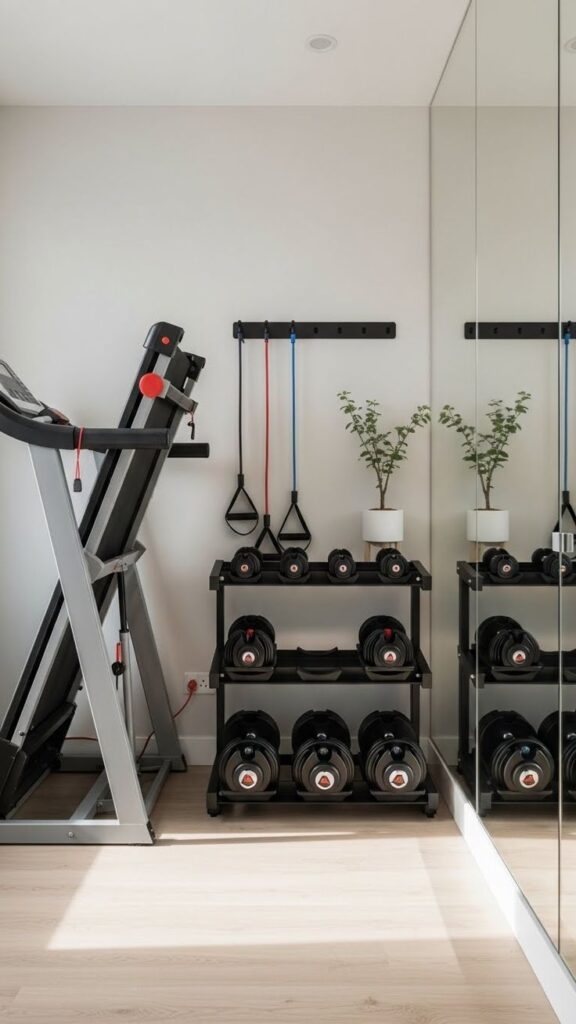
If dumbbells feel too pricey or heavy to store, resistance bands come in clutch.
They weigh nothing, take zero space, and still fry your muscles if you use them right. Ever thought elastic rubber could humble your ego that fast?
Types worth having:
- Loop bands (mini bands): Great for glute work, lateral walks, hip activation.
- Long loop bands: Use them for pull-up assistance, rows, presses, and stretching.
- Tube bands with handles: Closer to cable machine exercises.
Benefits for small apartments:
- You store them in a drawer, backpack, or a small box.
- You attach them to doors, table legs, or heavy furniture.
- You travel with them and keep your routine consistent.
If your goal is a compact mini home gym for small apartments, a solid set of bands can handle:
- Upper body pulls and presses
- Lower body glute and leg work
- Mobility and warm-ups
FYI, bands also feel way less scary to drop on your toes than metal weights. 🙂
4. Install a Doorway Pull-Up Bar (No Drilling, No Drama)
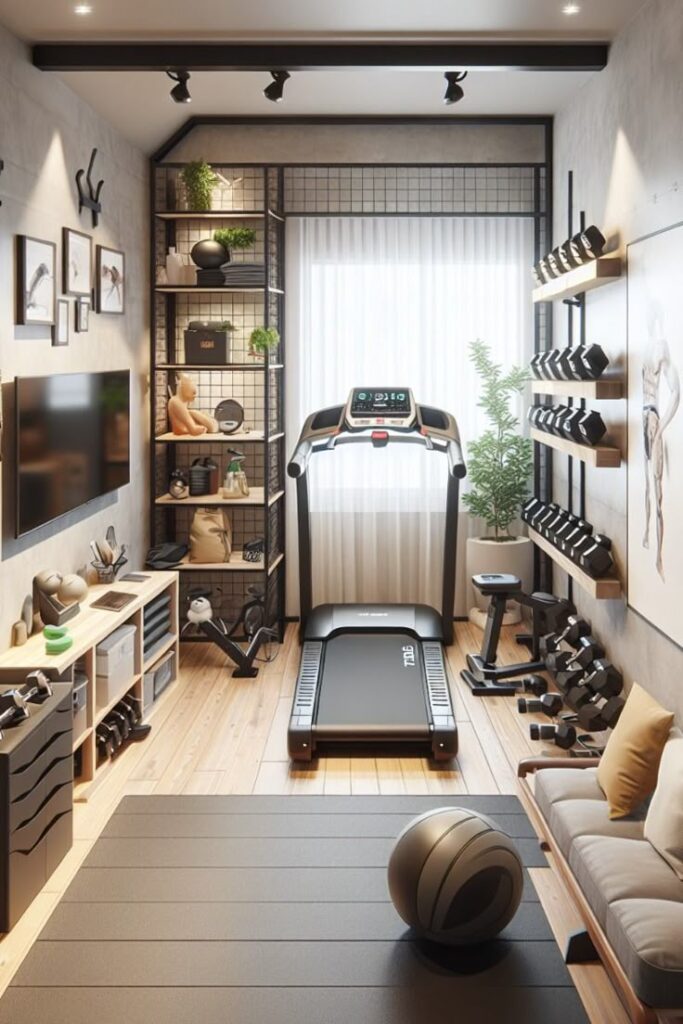
If you can do pull-ups, or you want to learn, a doorway pull-up bar upgrades your tiny apartment gym instantly.
You don’t need to drill into walls (your landlord probably sighed in relief just now). Many models hook onto the frame and come off in seconds.
Why a pull-up bar belongs in a mini home gym:
- You train back, biceps, core, and grip in very little space.
- You combine it with bands for assisted pull-ups.
- You can do hanging leg raises, knee raises, and dead hangs.
Look for:
- A bar that fits your doorway width.
- Protective pads that won’t wreck your doorframe.
- A sturdy design with a decent weight limit.
I used a doorway bar in a tiny place where my “gym” was literally the 3 feet between my bed and my door. Still made progress. No excuses, only slightly awkward setups.
5. Get an Adjustable Bench (Or a Smart Bench Alternative)
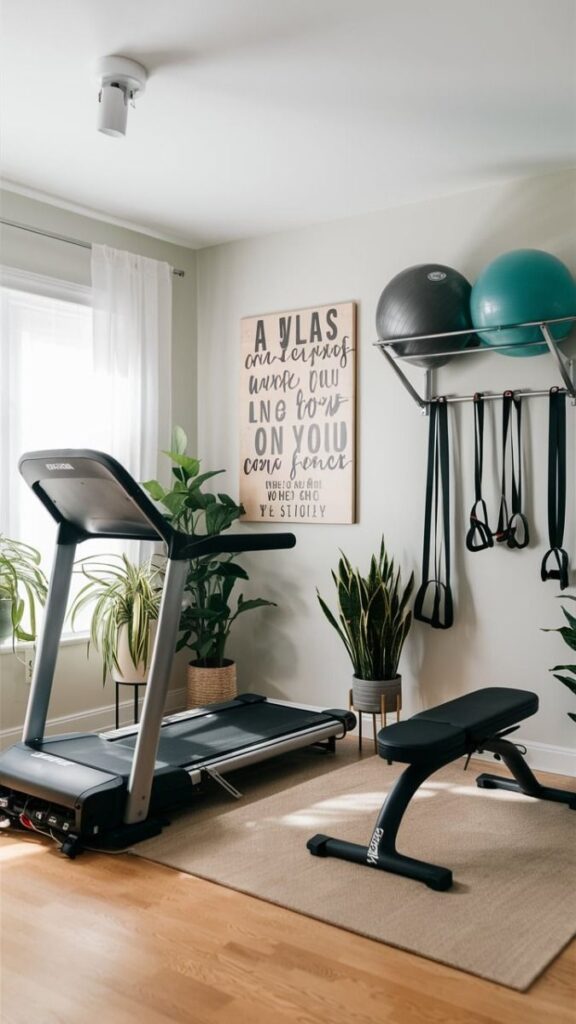
A flat or adjustable bench makes dumbbell workouts so much better.
You can do presses, rows, step-ups, split squats, and core work comfortably. But does a bench fit in a small apartment? Yes—if you pick the right one.
Space-smart options:
- Foldable benches you slide under a bed or stand against a wall.
- Compact flat benches that double as a small table or seat.
- Sturdy ottomans or low benches that you already own (just make sure they don’t wobble).
When you choose a bench:
- Check the footprint and folded height.
- Ensure it holds your bodyweight + dumbbells.
- Look for wheels if you want to move it easily.
If you truly have zero bench space, you still win with the floor: floor presses, hip thrusts off the couch, Bulgarian split squats using your bed. Tiny homes just force you to get a bit creative.
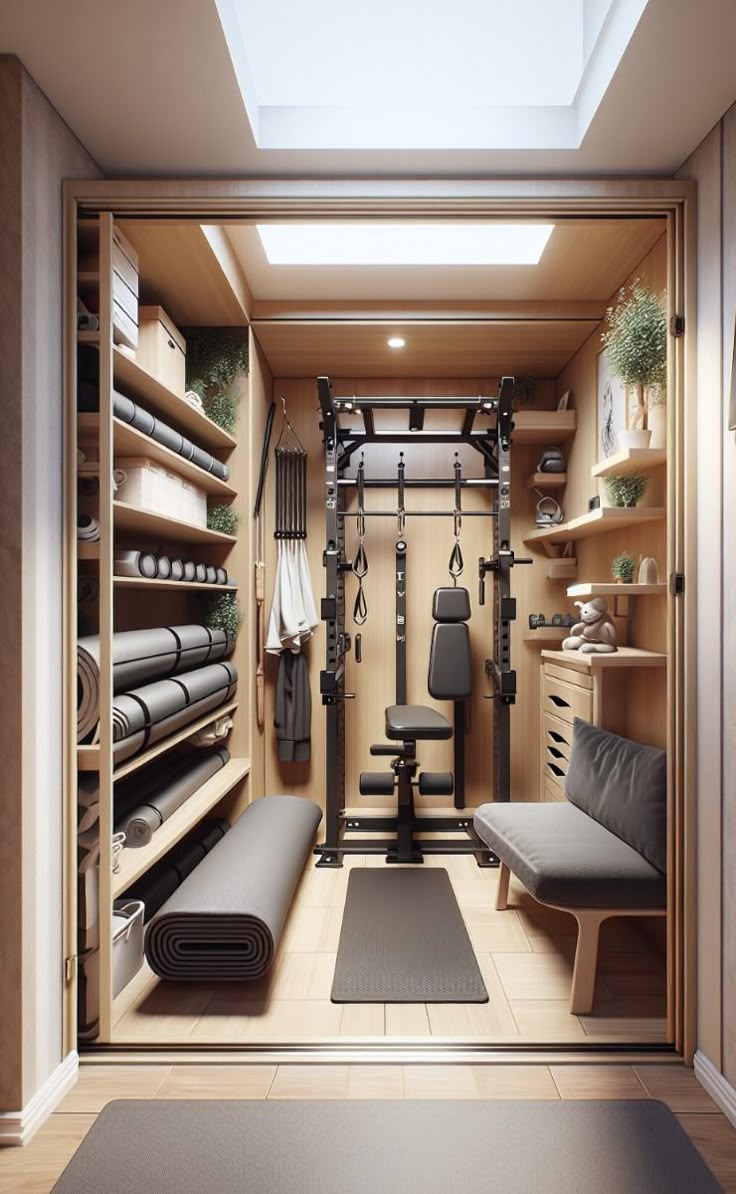
6. Use Under-Bed Storage for Your Mini Home Gym
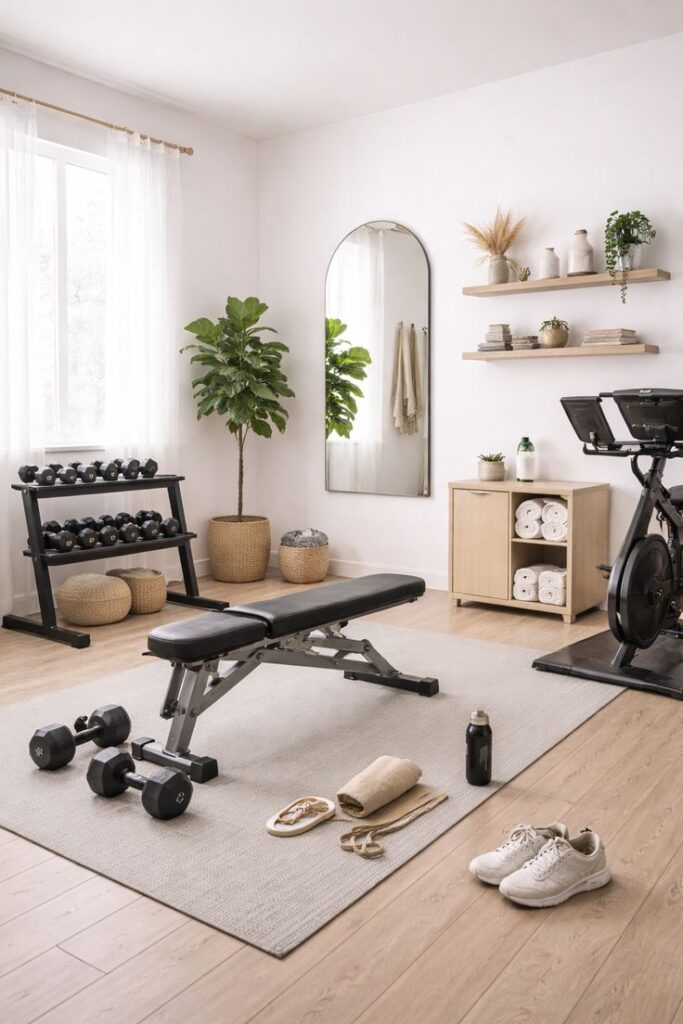
If your gear sits out in the open, it turns your apartment into a cluttered equipment graveyard. That kills motivation fast.
Solution: treat under-bed space like a secret gym locker.
You can store:
- Foldable mat
- Resistance bands
- Adjustable dumbbells
- Sliders or gliding discs
- Jump rope
- Yoga blocks or a foam roller
Use under-bed bins or low rolling boxes to keep things neat and easy to access. When everything has a home, you set up and pack up your mini gym in under 2 minutes.
You know that feeling when you want to work out but don’t want to dig through chaos? This fix kills that excuse.
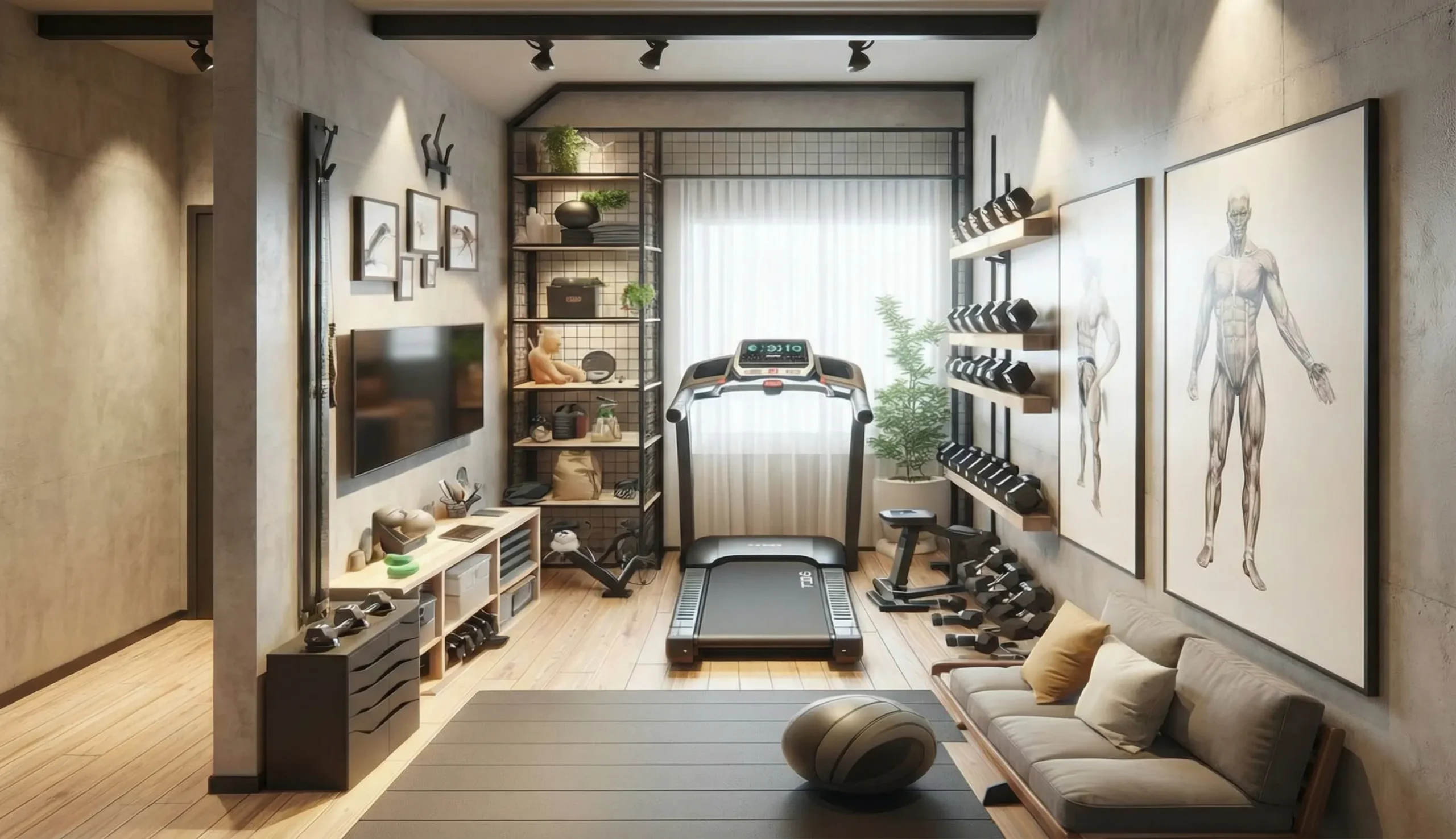
7. Try a Compact Cardio Option (Without a Giant Treadmill)
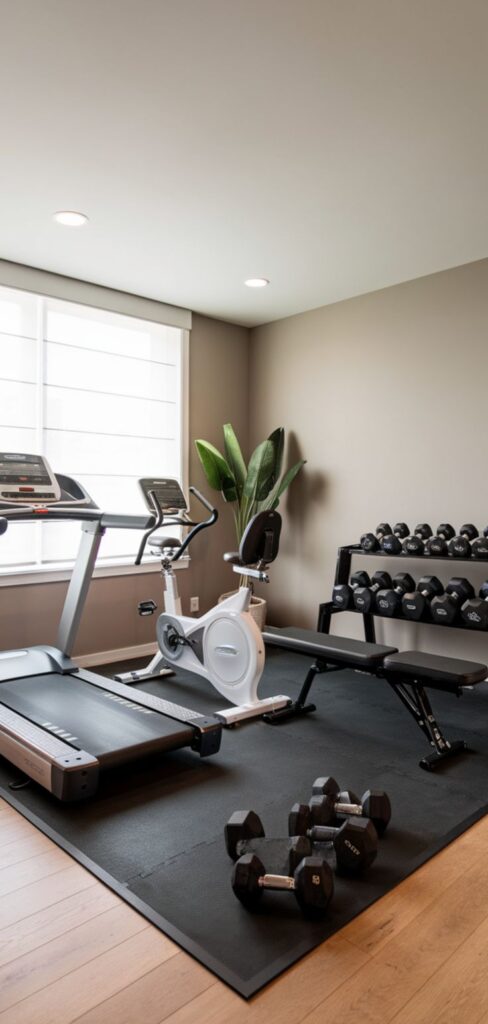
You probably don’t want a massive treadmill in your living room, unless you also use it as a clothing rack (which, let’s be honest, many people do).
Instead, go for compact cardio equipment that fits small apartments.
Great small-space cardio ideas:
- Foldable walking pad or under-desk treadmill
- Slim, low profile, and fits under a bed or couch.
- Perfect if you work from home and want steady steps.
- Mini stepper
- Small footprint and solid for low-impact cardio.
- You tuck it in a corner or closet easily.
- Jump rope
- Cheap, brutal, and fits in your pocket.
- Just make sure your ceiling and neighbors don’t hate you.
Ask yourself: Do I actually enjoy this cardio option? If you don’t, you’ll never roll it out. Pick something that you realistically use 3–4 times a week, not just once during your “new me” phase in January.
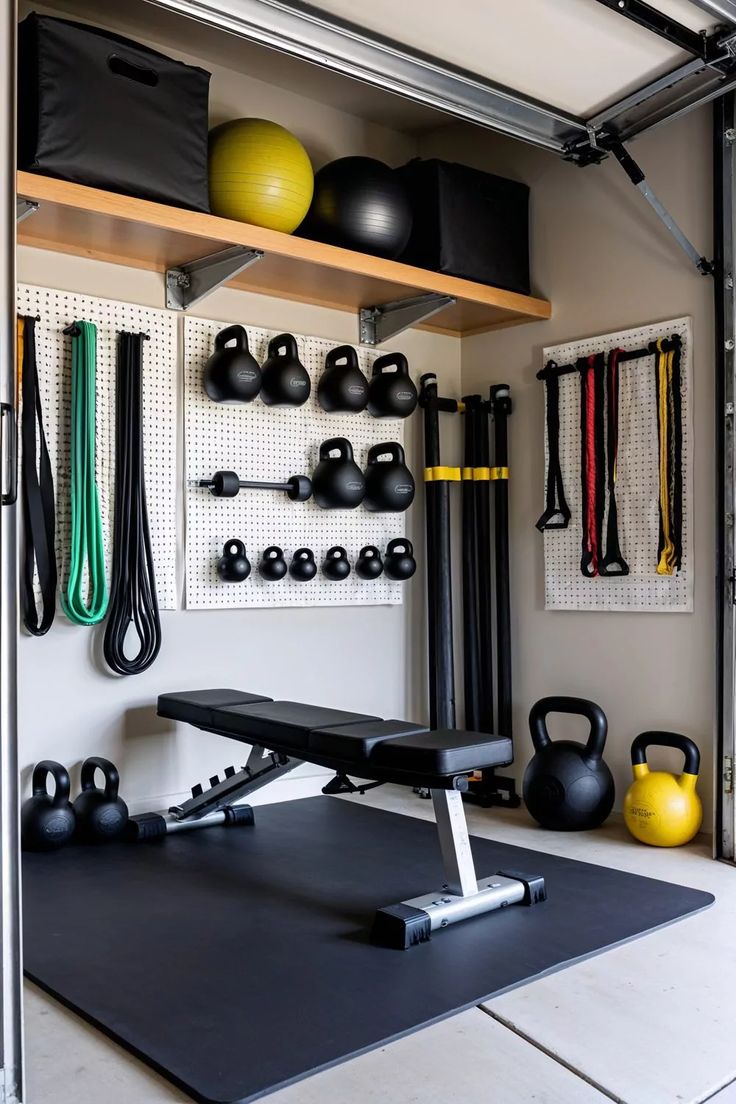
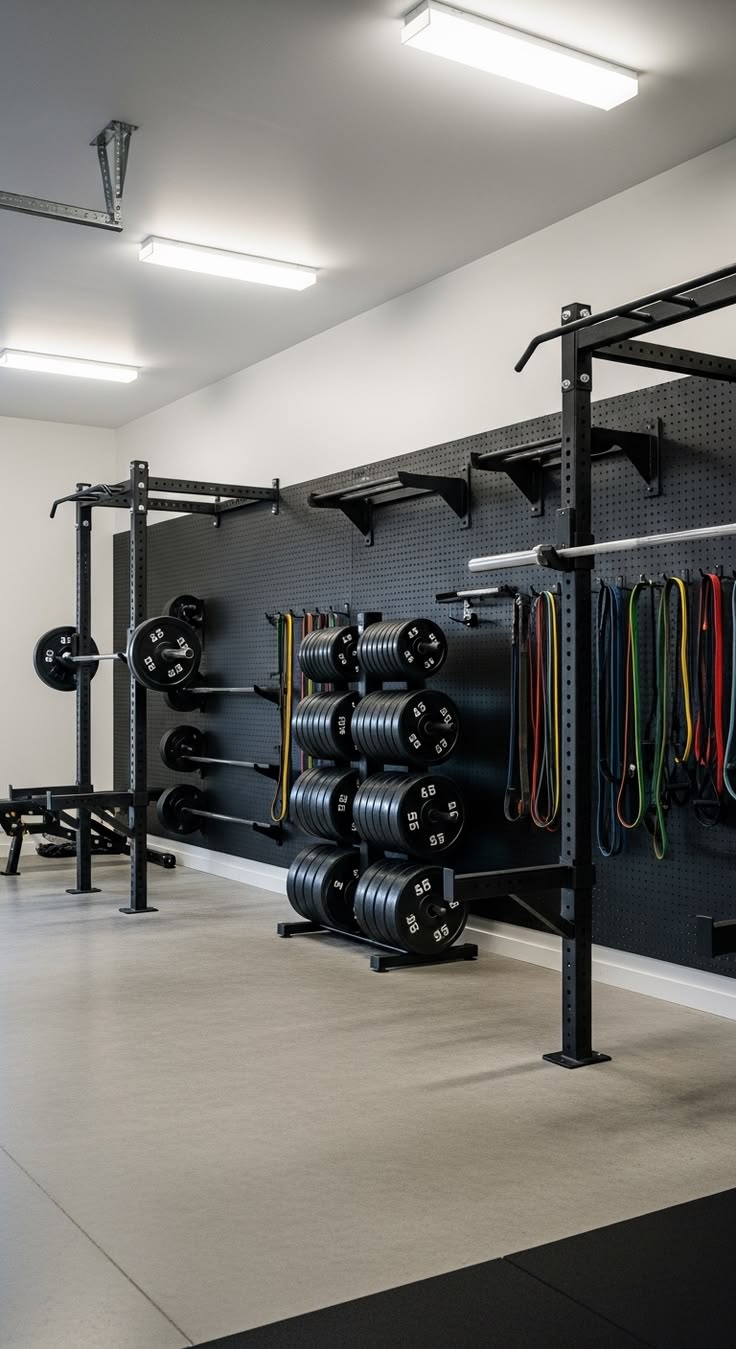
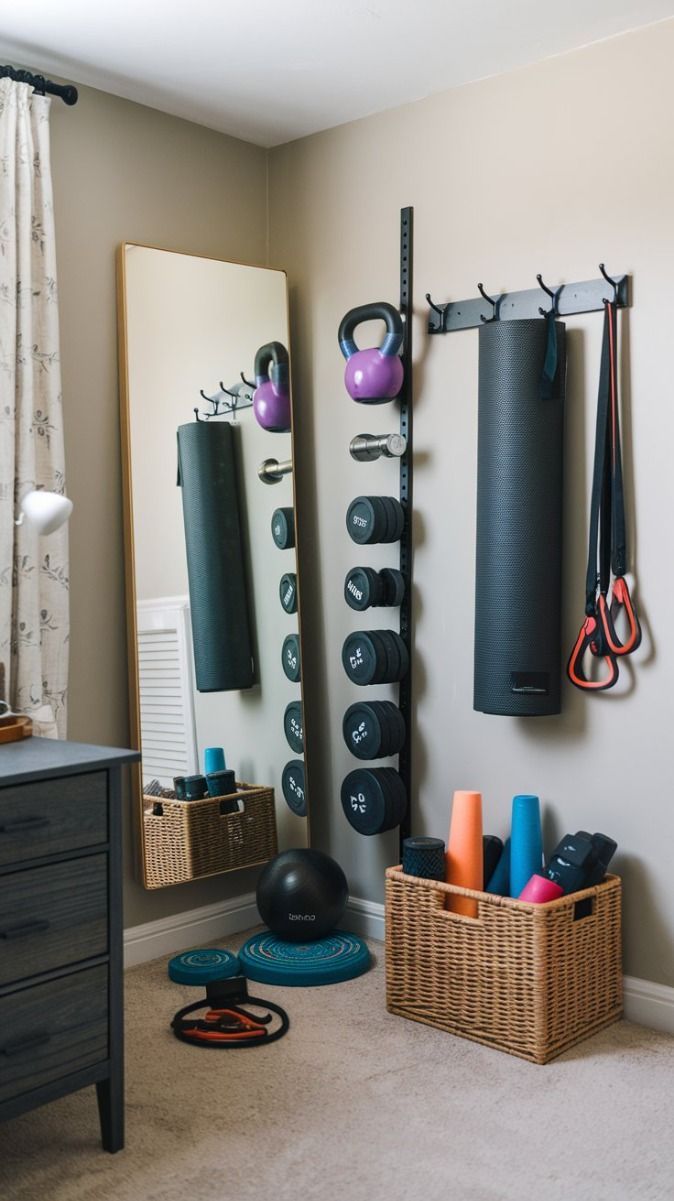
8. Use Your Walls for Storage (Vertical > Horizontal)
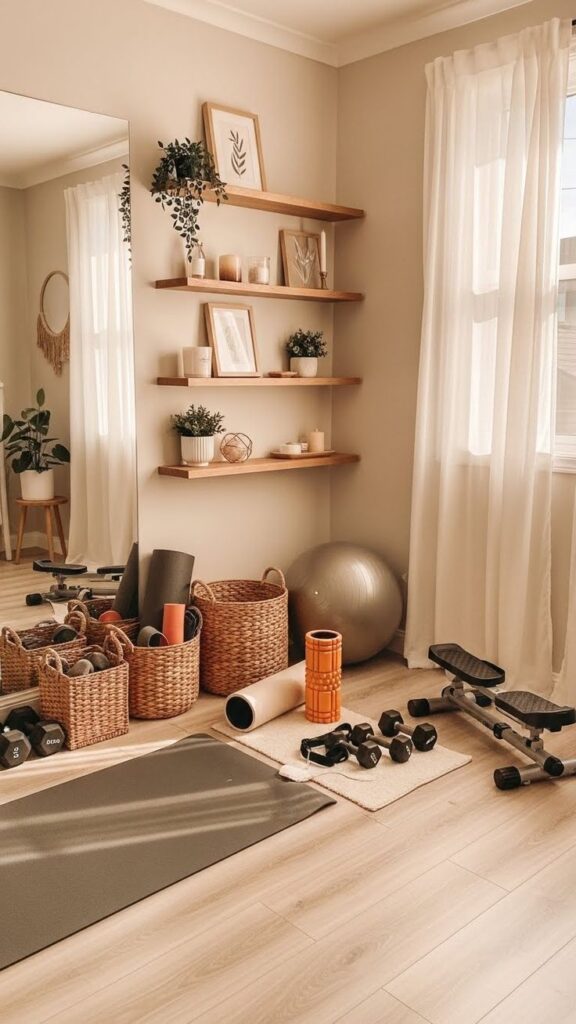
In a small apartment, floor space feels sacred, so you have to think vertically.
Your walls can hold:
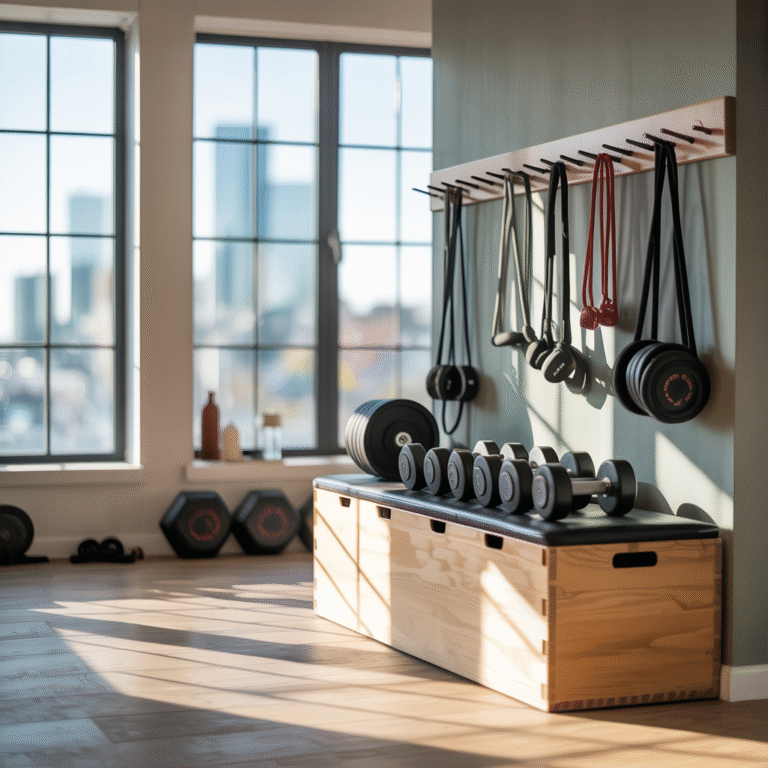
- Hooks for resistance bands and jump rope
- Wall-mounted racks for yoga mats or foam rollers
- Pegboards for light gear like sliders, towels, bands
This setup keeps gear:
- Off the floor
- Visible, so you remember to use it
- Easy to grab mid-workout
I like a simple hook-and-rack combo near my workout area. It turns your mini home gym into something that actually feels intentional, not like random equipment exploded across the room.
9. Turn Your Living Room Into a “Pop-Up” Gym
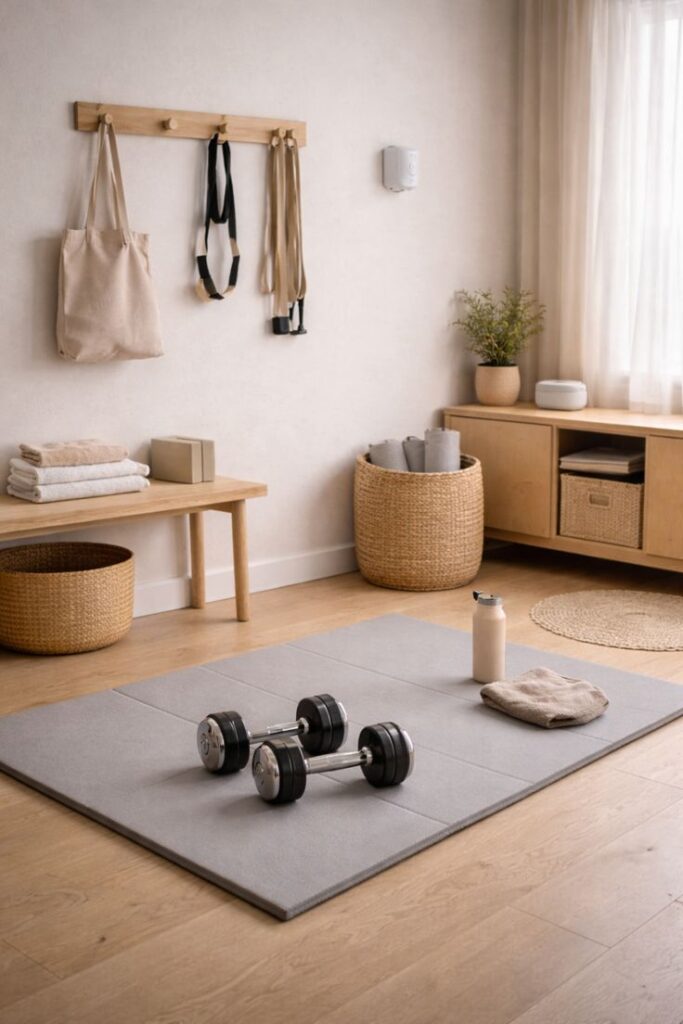
Your small apartment probably has one main area that does everything: you eat there, work there, watch Netflix there, and now…you train there.
Instead of fighting that, just accept it and design a pop-up home gym concept.
How a pop-up gym works:
- Store gear compactly nearby (under sofa, in baskets, in a TV stand).
- When it’s workout time, pull out only what you need: mat, weights, bands.
- Train in the same 4–6 feet of open floor space every time.
- When you finish, slide everything back into its hiding spot.
You don’t dedicate a whole room; you dedicate a time + small section of floor.
This shift in mindset helps a lot. You don’t see your tiny space as a limitation; you treat it like a transformer room that changes function when you want it to.
10. Build a Simple, Effective Routine Around Your Setup
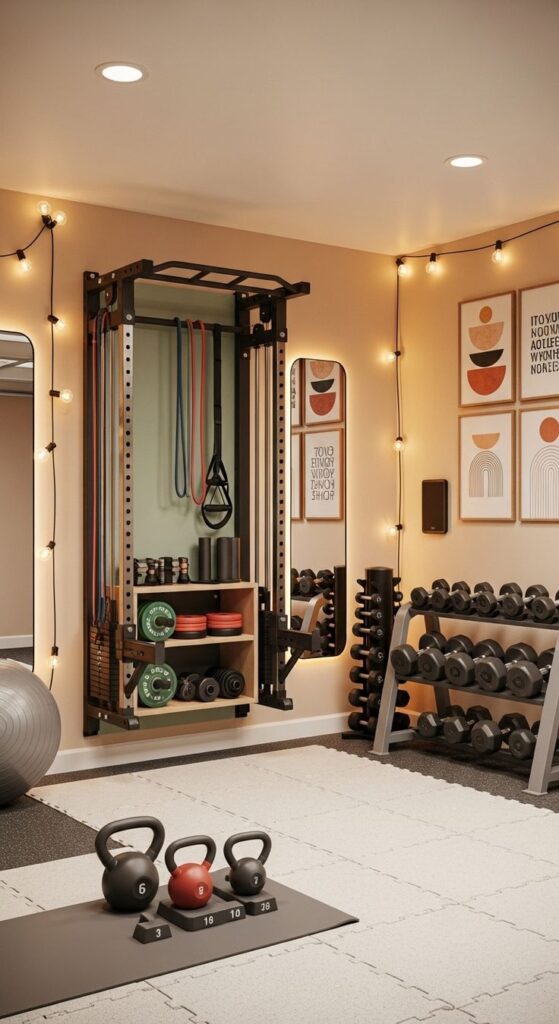
You can buy clever compact gear all day, but your routine turns your mini home gym from “cute idea” into real results.
Ever wonder why some people get fit in tiny studios while others waste full basements? They use what they have consistently.
Here’s a simple way to structure workouts with minimal equipment:
Example 3-Day Full-Body Split
Day 1 – Push + Legs
- Goblet squats (dumbbells or bands)
- Dumbbell or band chest press (on bench or floor)
- Shoulder presses
- Glute bridges or hip thrusts (use couch/bed)
Day 2 – Pull + Core
- Bent-over rows (dumbbells or bands)
- Pull-ups or assisted pull-ups (doorway bar + band)
- Banded face pulls
- Planks, dead bugs, or leg raises
Day 3 – Mixed Strength + Conditioning
- Split squats or lunges
- Push-ups (floor or incline on couch)
- Band or dumbbell RDLs
- Short cardio finisher:
- Jump rope, stepper, or fast-paced bodyweight circuits
You don’t need fancy. You need repeatable. Pick 8–10 core exercises you can do with your compact setup and rotate them weekly.
Mini Home Gym Shopping Checklist for Small Apartments
To keep things simple, here’s a compact home gym bundle that works well for most small spaces:
- Foldable exercise mat
- Adjustable dumbbells or a versatile band set
- Resistance bands (mini + long loops)
- Doorway pull-up bar
- Compact bench or sturdy ottoman
- Jump rope or mini stepper for cardio
- Under-bed storage bin for everything
You can add goodies later (foam roller, sliders, yoga blocks), but this core list creates a legit mini home gym that fits almost any apartment.
Final Thoughts: Your Square Footage Doesn’t Decide Your Fitness
Your small apartment doesn’t block your fitness goals; your strategy does.
When you use foldable gear, vertical storage, adjustable equipment, and pop-up workout zones, you turn even a tiny place into a smart mini home gym that actually works for your life.
You don’t need a garage, a spare room, or some giant influencer-style setup. You need:
- A few smart, compact pieces
- A tiny corner of space
- A routine you stick with
So what’s your next move? Pick one idea from this list—maybe adjustable dumbbells, resistance bands, or a foldable mat—and set up your own mini workout zone this week.