12 Attic Bedroom Ideas to Turn Sloped Ceilings into Charm
Let’s be real for a second. Most of us look at an attic and see a dark, dusty storage locker for holiday decorations and spiders. Maybe you see a concussion waiting to happen every time you stand up too fast. But I see something else. I see the coziest, most character-filled room in the entire house just begging for a makeover.
Attics offer a unique architectural vibe that standard boxy bedrooms just can’t match. Those sloped ceilings create natural nooks, crannies, and intimate spaces. Sure, the angles present a geometry puzzle that would make a math teacher sweat, but that’s part of the fun. With the right approach, you turn those awkward inclinations into a design feature rather than a bug.
So, are you ready to stop wasting that square footage? I’ve pulled together 12 killer ideas to transform that attic from “creepy vibe” to “charming sanctuary.” Let’s get to work.
1. Embrace the Skylight Sanctuary
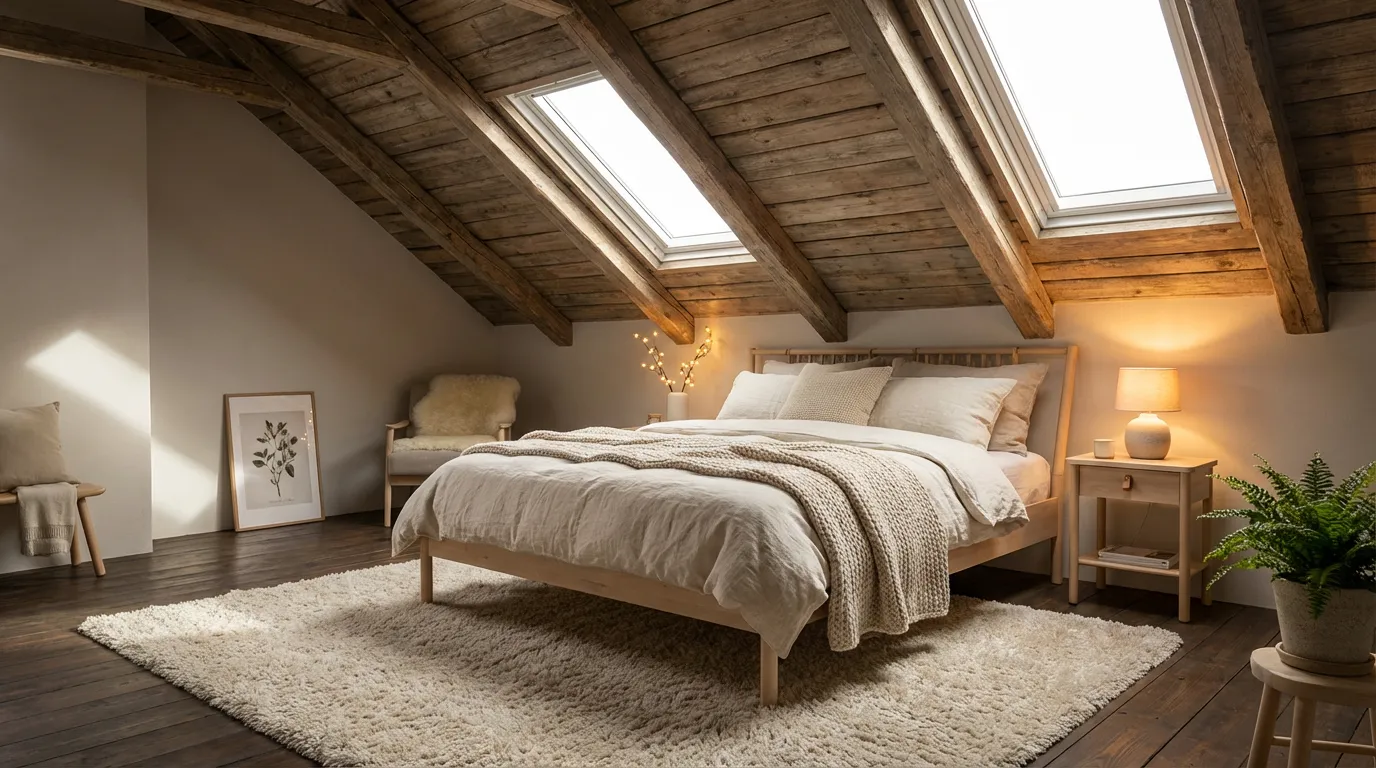
You simply cannot talk about attic conversions without addressing the light situation. Attics usually suffer from a serious lack of windows. Without proper light, you don’t have a bedroom; you have a cave. Installing skylights changes everything.
I remember the first time I slept in an attic room with a skylight directly over the bed. Waking up to natural sunlight streaming down (instead of a blaring alarm) felt magical. Plus, staring at the stars while tucked under the duvet? Unbeatable.
Skylights open up the ceiling visually, making the roof feel higher than it actually is. They break up the oppressive expanse of drywall.
Why this works:
- Maximizes Daylight: Vertical windows might be impossible, but the roof is fair game.
- Ventilation: Operable skylights let out the hot air that naturally rises to the top of the house.
- Visual Height: It draws the eye upward and out, battling claustrophobia.
2. Master the Knee Wall Storage
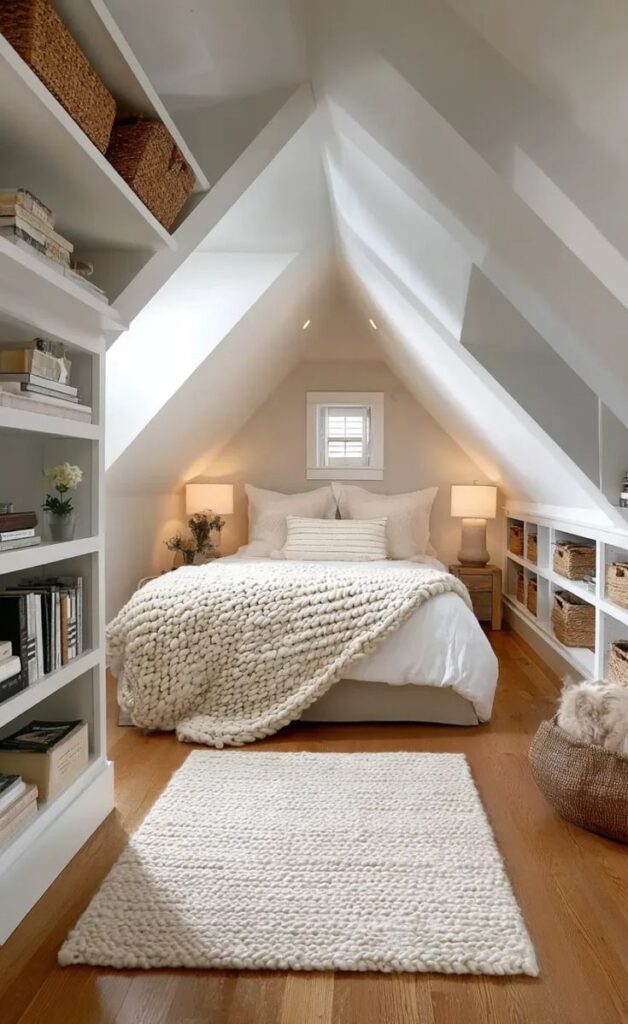
Let’s talk about that weird, short wall where the roof slope meets the floor. Builders call this the “knee wall.” Most people look at this 3-foot-high space and think it’s useless dead zones. Do not ignore this space.
If you shove a standard dresser against a knee wall, it looks awkward and leaves a gap behind it. instead, build custom storage right into the wall. Recessing drawers or cabinets into the eaves utilizes space you wouldn’t walk in anyway.
I once saw a renovation where the owner installed a long, low bookshelf running the entire length of the room under the eaves. It looked incredible and held hundreds of books without taking up a single inch of floor space.
Smart storage options for knee walls:
- Recessed Dressers: Push the drawers into the wall cavity.
- Open Shelving: Perfect for books, shoes, or display items.
- Rolling Bins: Hide ugly plastic bins behind cute custom doors.
3. The Low-Profile Bed Setup
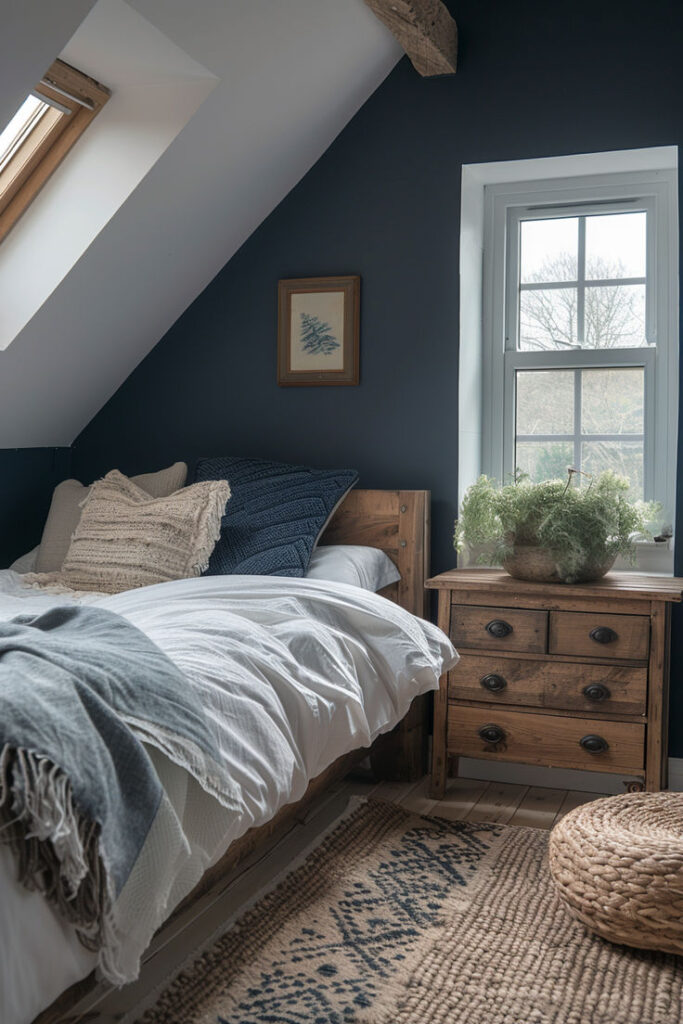
Gravity is the law here. The ceiling gets lower near the walls, so your furniture should too. Trying to force a massive four-poster bed into an attic is a recipe for disaster (and a broken bed frame). Go low.
Platform beds work wonders in spaces with sloped ceilings. By keeping the bed closer to the floor, you maximize the vertical space above you. This makes the room feel airier and prevents that cramping feeling when you sit up in bed.
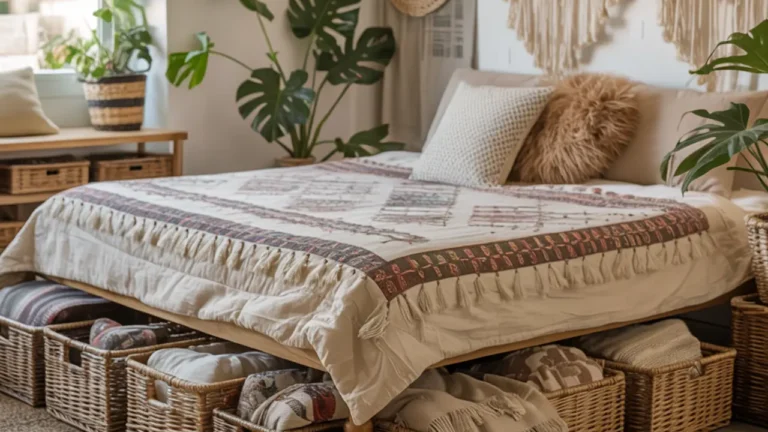
Plus, a low bed creates a distinctly “boho” or “zen” vibe that suits the attic aesthetic perfectly. Pair it with some floor cushions, and you have a chill zone that feels intentional, not forced.
4. Wrap the Wallpaper
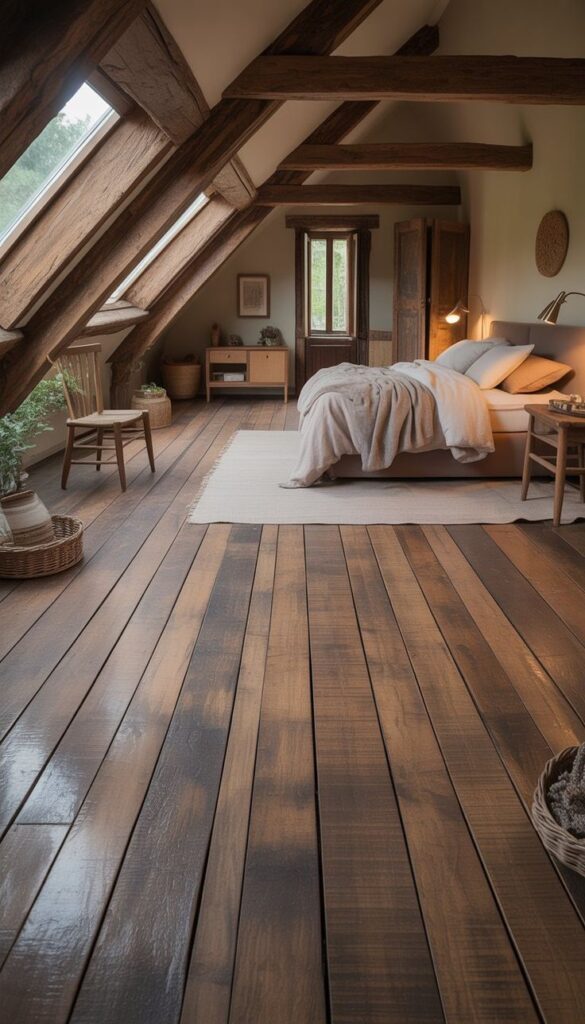
You might think wallpapering a room with crazy angles sounds like a nightmare. Honestly? It can be tricky, but the payoff is huge. Conventional wisdom says to paint the ceiling white to “open it up.” I say break the rules.
Take a bold wallpaper pattern and run it up the wall and across the sloped ceiling. This technique blurs the lines between where the wall ends and the ceiling begins. It tricks the eye. Instead of focusing on the fact that the room is shrinking in on you, you focus on the cohesive pattern.
Tips for attic wallpaper:
- Small Prints: Large patterns can get cut off awkwardly by the angles.
- Vertical Stripes: These visually push the roof peak higher.
- Continuous Wrap: Don’t stop at the crease; keep going!
5. Expose (or Fake) the Beams
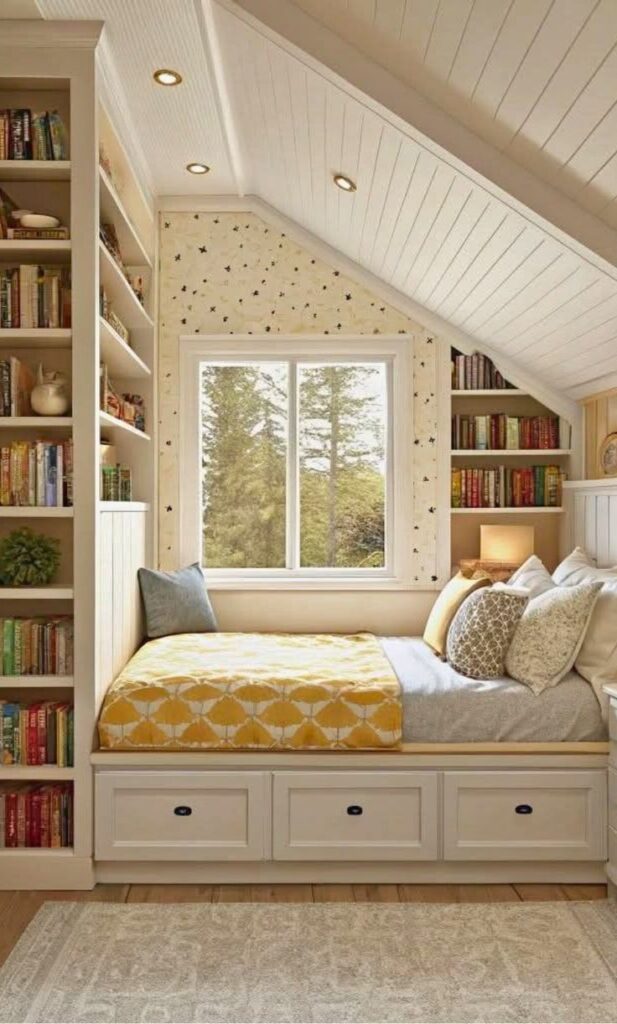
There is something inherently rustic and charming about exposed wood beams in an attic. It gives off instant cottage-core or farmhouse energy. If your attic renovation uncovers original structural beams, sand them down and show them off.
Don’t have real timber hiding behind the drywall? Faux beams are a totally valid option. Just make sure you get high-quality ones. Cheap foam beams look like… well, cheap foam beams. IMO, nothing ruins a room faster than fake wood that looks plastic.
Use beams to accentuate the pitch of the roof. They act as arrows pointing to the highest part of the room, celebrating the architecture rather than hiding it.
6. Create the Ultimate Reading Nook
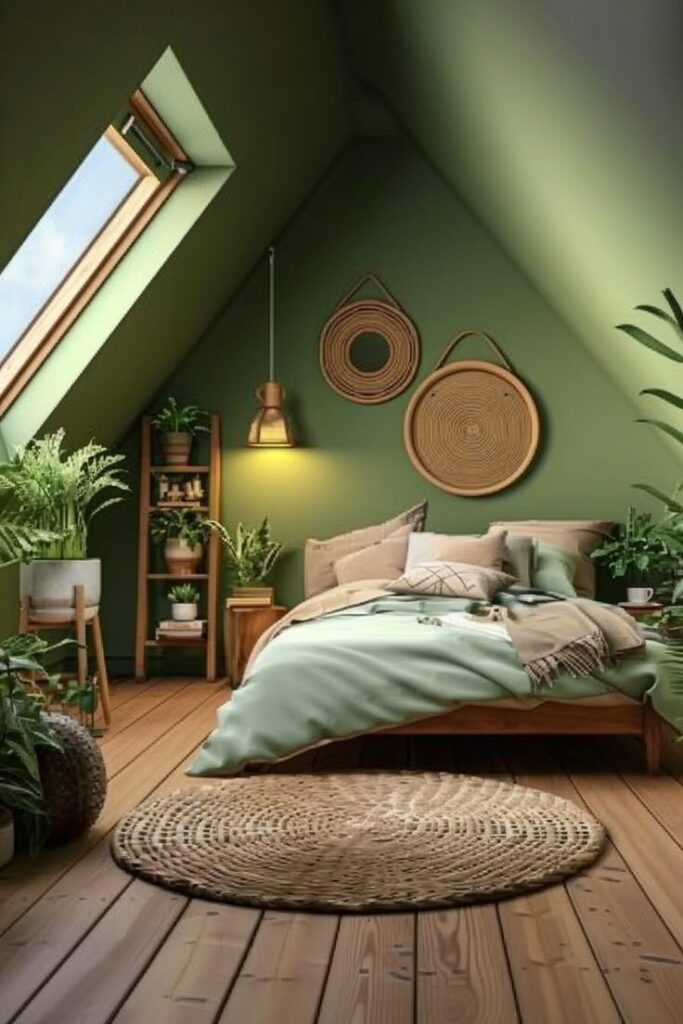
We all have that one corner in an attic that is too low for standing and too small for a bed. It’s the “awkward triangle.” Instead of boarding it off, turn it into a reading nook.
This is my absolute favorite way to use dead space. Throw down a thick, plush rug, add a bean bag or a low armchair, and mount a small reading light. Suddenly, that useless corner becomes the most coveted spot in the house.
Children especially love these hideaways. It feels like a secret fort. But let’s be honest, I want a secret fort too. Who doesn’t?
7. The Monochromatic Color Drench
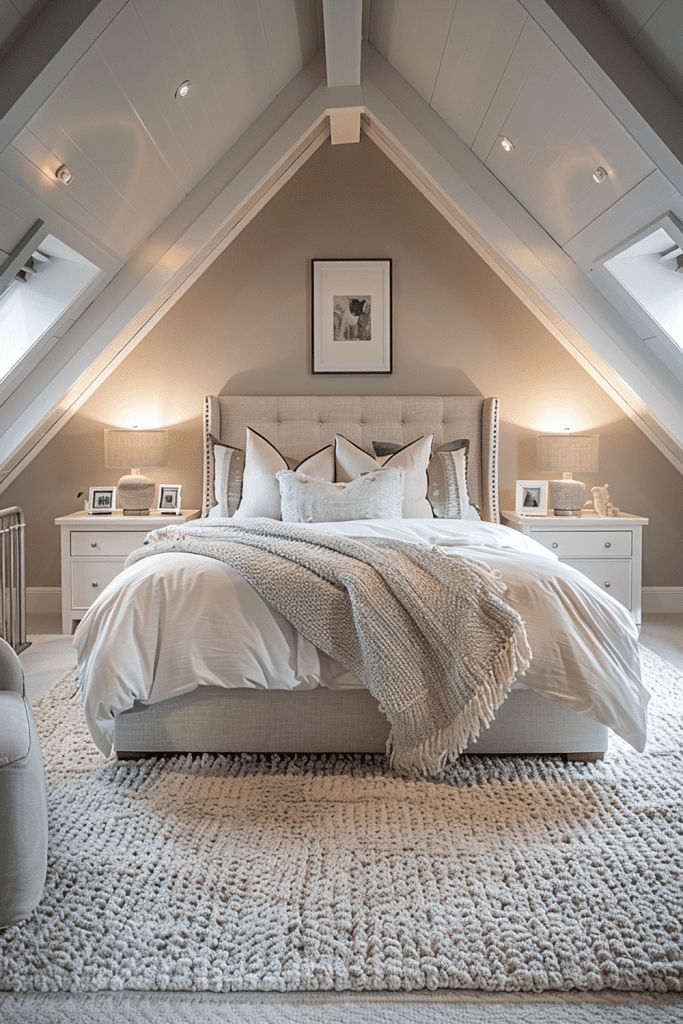
When you have seventeen different angles, corners, and slopes, painting them different colors creates visual chaos. It looks choppy. Paint everything the same color.
I mean everything. The walls, the slopes, the ceiling, maybe even the trim. This technique, often called “color drenching,” unifies the space. It softens the sharp edges and makes the room feel like a cozy cocoon.
Choosing your palette:
- Warm Whites: Keeps it bright and airy but soft.
- Moody Blues/Greens: Embraces the cozy, den-like nature of the attic.
- Soft Greys: A neutral middle ground that feels modern.
8. Strategic Lighting (No Chandeliers Allowed)
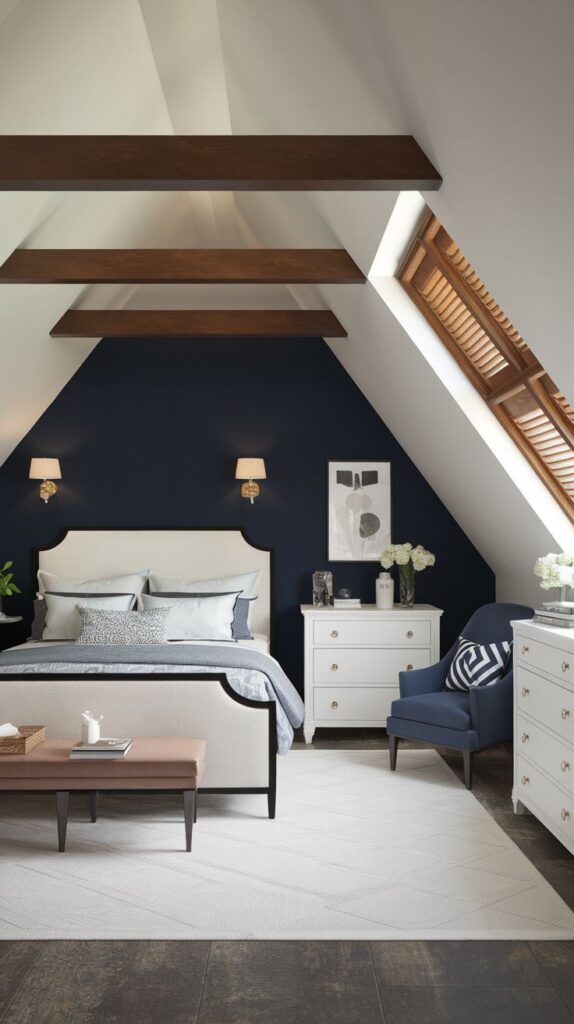
Okay, maybe some chandeliers allowed, but only if you have a massive peak. generally, hanging light fixtures in an attic is a risk. You don’t want to play dodgeball with a light bulb every time you walk across the room.
Swap pendants for sconces and recessed lighting. Wall sconces are the MVP of attic bedrooms. They save precious floor space (no need for bedside tables) and provide task lighting right where you need it.
I recently visited a friend who installed LED strips along the top of the collar ties (the horizontal beams). It cast a soft, ambient glow upward that illuminated the whole peak without a single harsh bulb in sight. It looked sleek and modern.
9. The Window Seat Solution
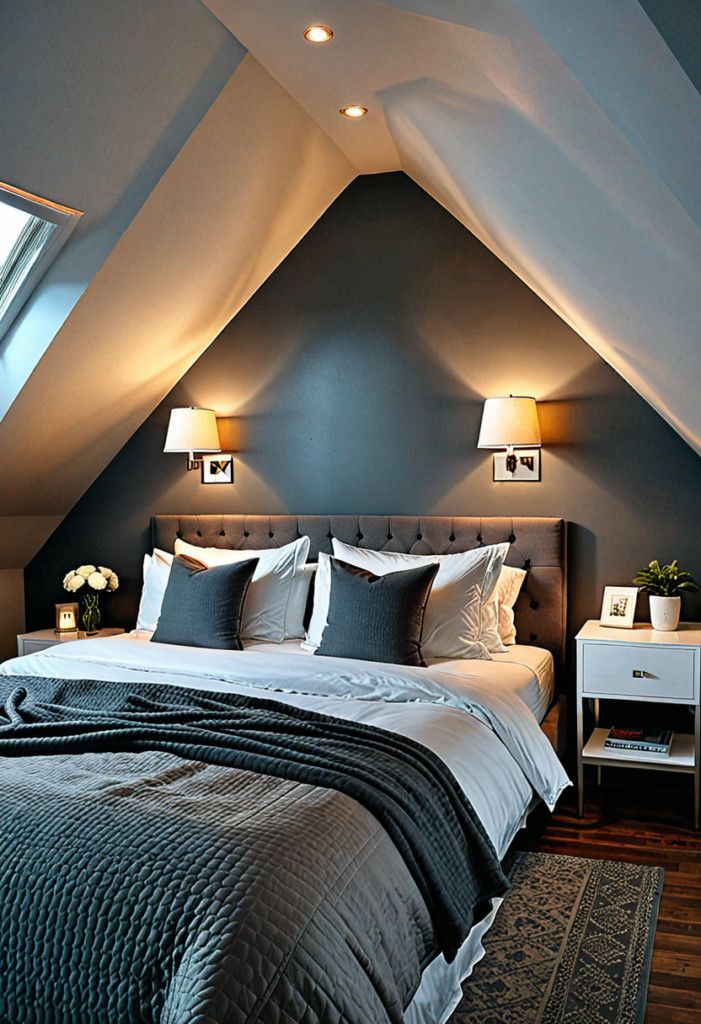
If you are lucky enough to have a dormer window (that little pop-out section that gives you a vertical window), you have the perfect spot for a window seat.
Build a bench directly under the window. This serves two purposes. First, it gives you a romantic spot to sit and look out. Second, you can build storage inside the bench seat. See the pattern here? Storage is gold in an attic.
Make it comfy with a custom cushion and throw pillows. It draws the eye to the window and makes the room feel wider.
10. Zone Your Space with Rugs
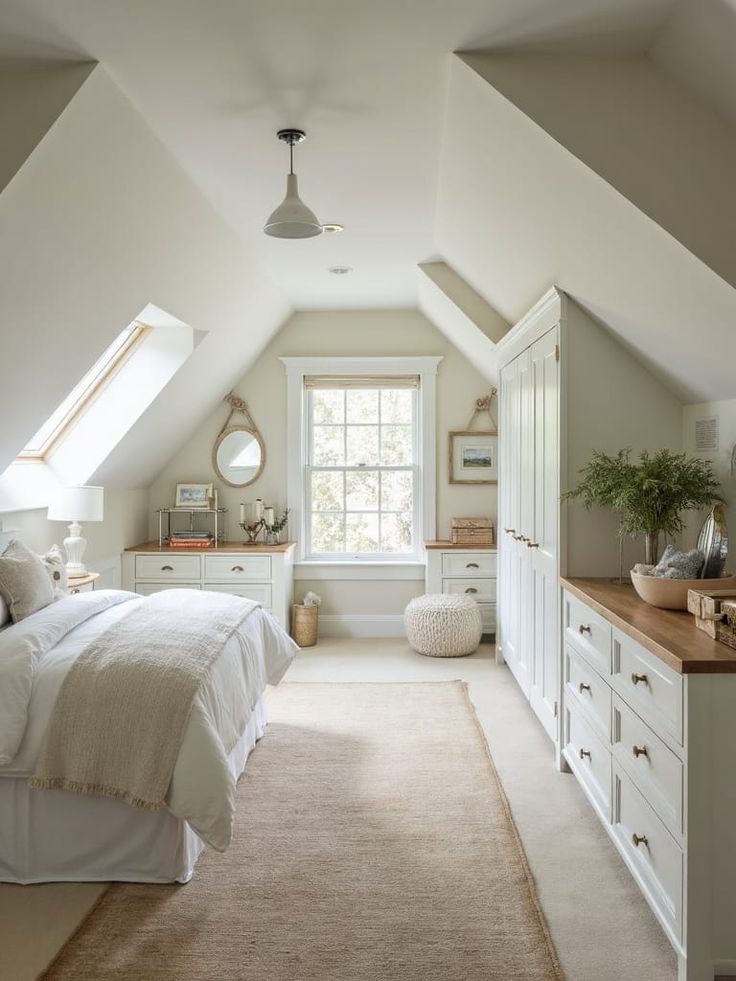
Attics often have long, narrow footprints. If you just throw furniture against the walls, it feels like a bowling alley. Use area rugs to define different zones.
Place a large rug under the bed to anchor the sleeping area. Put a smaller, round rug under your reading chair or desk. This visual separation breaks up the “tunnel” effect.
Rugs also add sound dampening. Attics often have thin subfloors, and nobody downstairs wants to hear you stomping around like a herd of elephants. Rugs keep the peace with the floor below.
11. Soften the Angles with Textiles
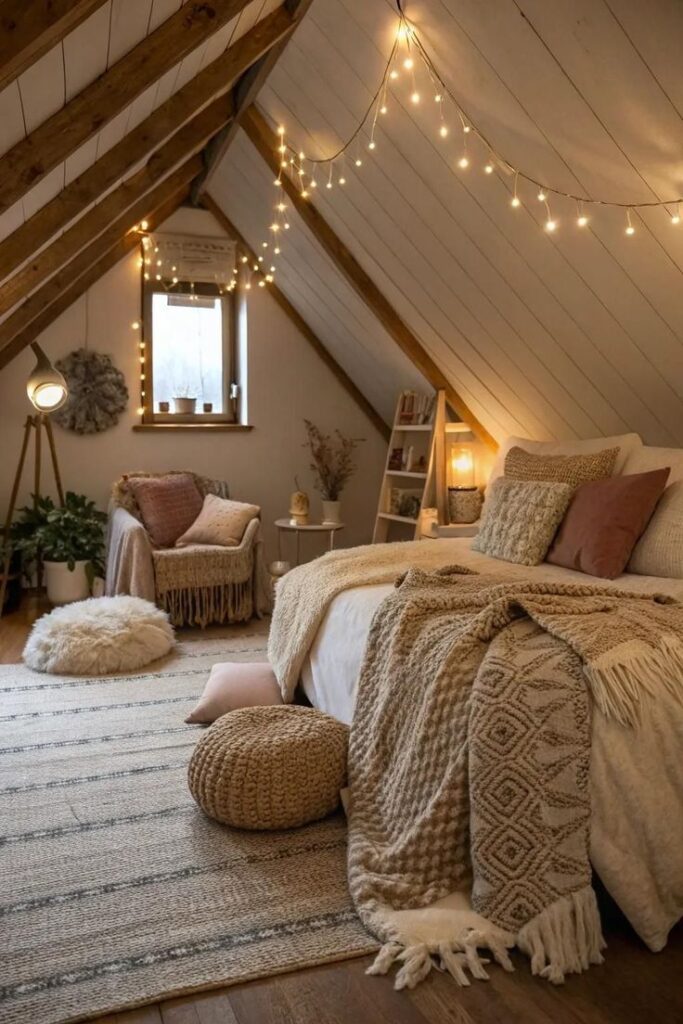
Attics are full of hard lines and sharp geometry. To counter this, you need texture. Think soft, fluffy, and rounded.
Avoid stiff, boxy furniture. Choose a headboard with curves or upholstery. Layer the bed with chunky knit blankets and plenty of pillows. Hang breezy curtains even if the windows are small.
I always suggest adding a sheepskin throw (faux is fine!) or a high-pile rug. These organic textures contrast beautifully with the rigid lines of the roof. It creates a balance that makes the room feel welcoming rather than stark.
12. Minimalist Mindset
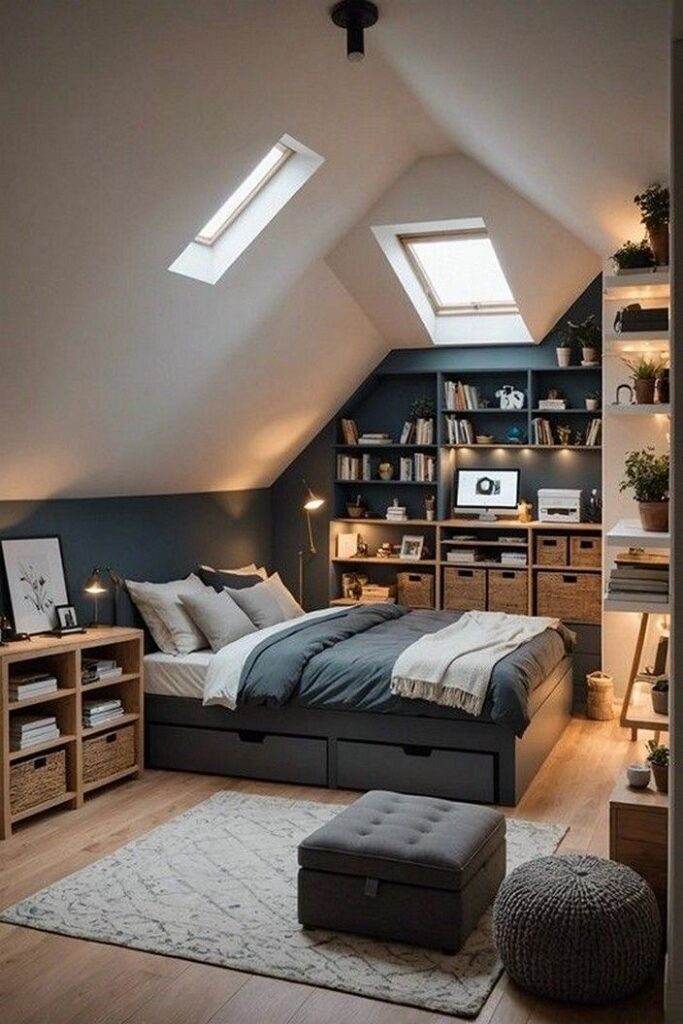
Here is the hard truth: clutter kills an attic bedroom faster than anything else. Because the walls slope in, the room already feels physically smaller. If you fill every surface with knick-knacks, it will feel suffocating.
Adopt a minimalist approach. Keep surfaces clear. If you don’t need it, don’t bring it up the stairs.
This doesn’t mean the room has to be boring. It just means you choose your decor intentionally. A single beautiful piece of art or one stunning plant makes a bigger impact than twenty tiny trinkets gathering dust. FYI, keeping it clean is way easier when you have less stuff. 🙂
Final Thoughts: Look Up and Dream
Transforming an attic takes a bit more brainpower than painting a square box of a bedroom. You have to wrestle with angles, fight for light, and get creative with storage. But that’s exactly why these spaces steal the show.
They have personality. They tell a story.
Whether you go for the moody, dark-academia vibe or the bright, airy scandi-loft look, the key is working with the architecture, not against it. Don’t try to pretend the slopes aren’t there. Highlight them. Love them.
So, grab a tape measure, watch your head, and start planning. Your dream sanctuary is just one flight of stairs away. Now, seriously, go check if you can stand up in your attic before you buy a king-sized mattress. You can thank me later.