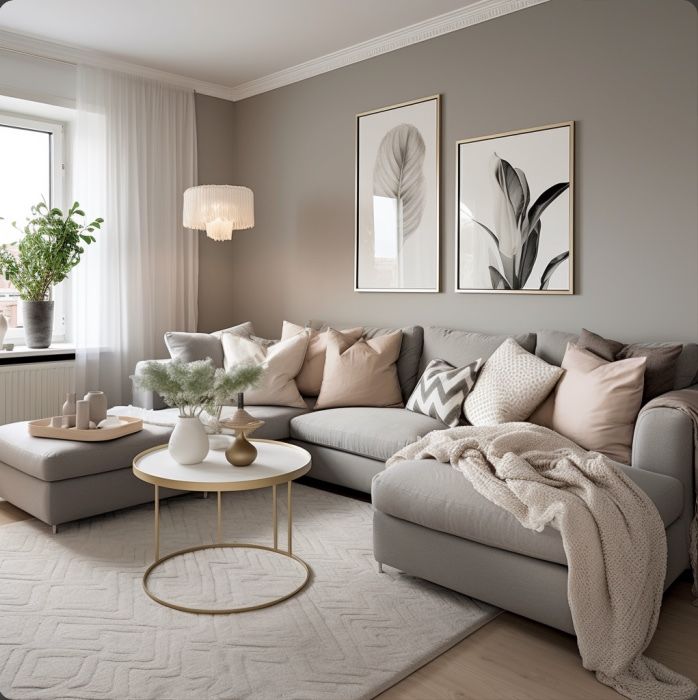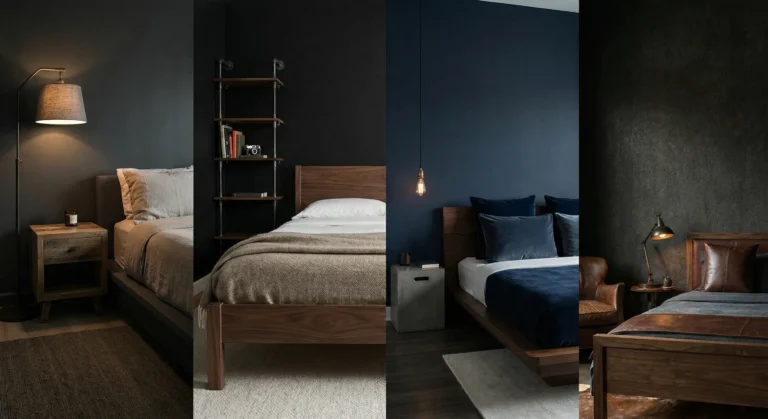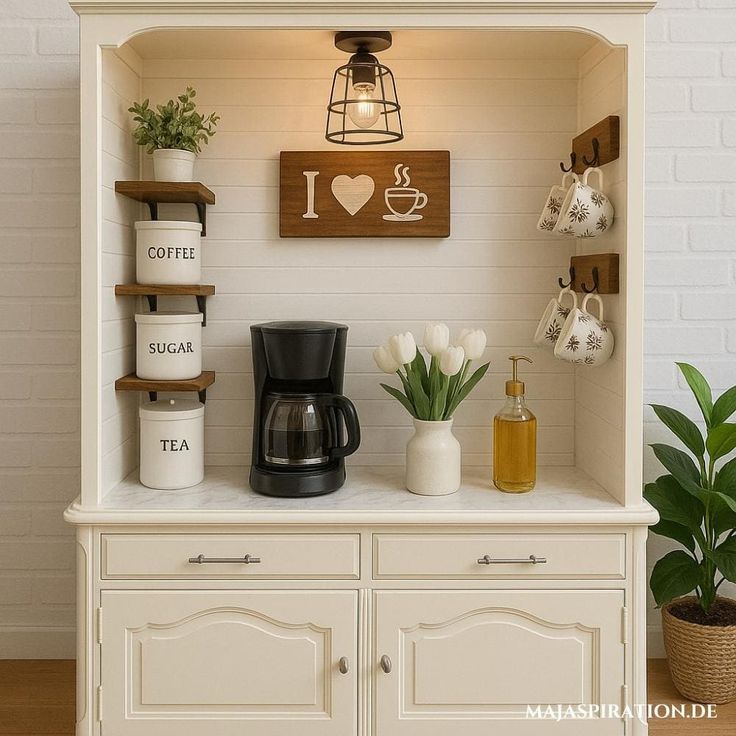
12 Essential Living Room Lighting Ideas for Every Ambiance
Your living room probably wears more hats than you do.
One minute you binge a show, the next you host a game night, and then you crash for a nap.
Lighting decides whether that same room feels like a cozy retreat or a washed-out waiting area.
You control that vibe completely, and you don’t even need a degree in interior design to fix it.
I obsessed over living room lighting for way too long in my own place, and I learned a few things the hard way.
I once trusted a single overhead light, and my friends politely Described the space as “very… bright.”
So let’s fix that for you with 12 essential living room lighting ideas for every ambiance that actually feel doable.
1. Layer Your Living Room Lighting Like a Pro
Ever turn on all your lights and still feel like something looks off?
You probably miss layered lighting.
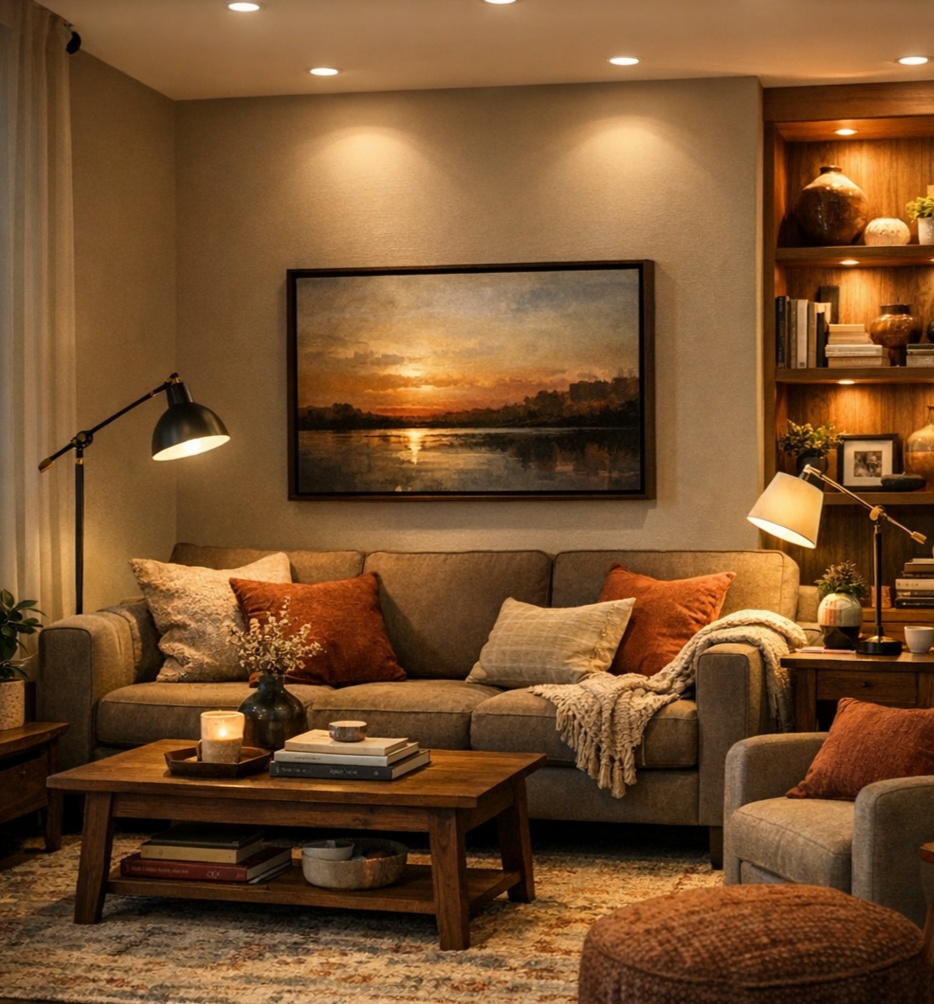
You create three main layers:
- Ambient lighting – your general overall light
- Task lighting – focused light for reading, working, etc.
- Accent lighting – decorative light that highlights features and adds drama
When you mix these layers, your living room suddenly feels intentional instead of random.
You don’t rely on one sad ceiling fixture anymore; you use several smaller, well-placed lights instead.
Ambient Lighting: Your Base Layer
Ambient light sets the overall brightness.
You build this with:
- Ceiling fixtures (chandeliers, pendants, flush mounts)
- Recessed lights
- Large floor lamps that throw light upward
You aim for soft, even light that reaches most corners without blinding anyone.
Think “comfortable daylight” and not “airport security.”
Task Lighting: The Practical Stuff
Task lighting saves your eyes and your sanity.
You use it for reading, working on a laptop, or playing board games.
Great task lights include:
- Table lamps near sofas and chairs
- Adjustable floor lamps with directional heads
- Swing-arm wall lamps near seating
You place these where you actually sit and do things.
You avoid sticking a reading lamp across the room and then pretending your eyes enjoy the challenge.
Accent Lighting: The Mood Maker
Accent lighting adds personality and depth.
You use it when you want your living room to feel like a magazine spread instead of a furniture store.
Try:
- Picture lights over art
- LED strips on shelves or behind the TV
- Spotlights on plants, fireplaces, or textured walls
You treat accent lights like jewelry for your room.
They don’t carry the whole outfit, but they complete it.
2. Install Dimmers and Control the Mood
If you install one thing after reading this, install dimmer switches.
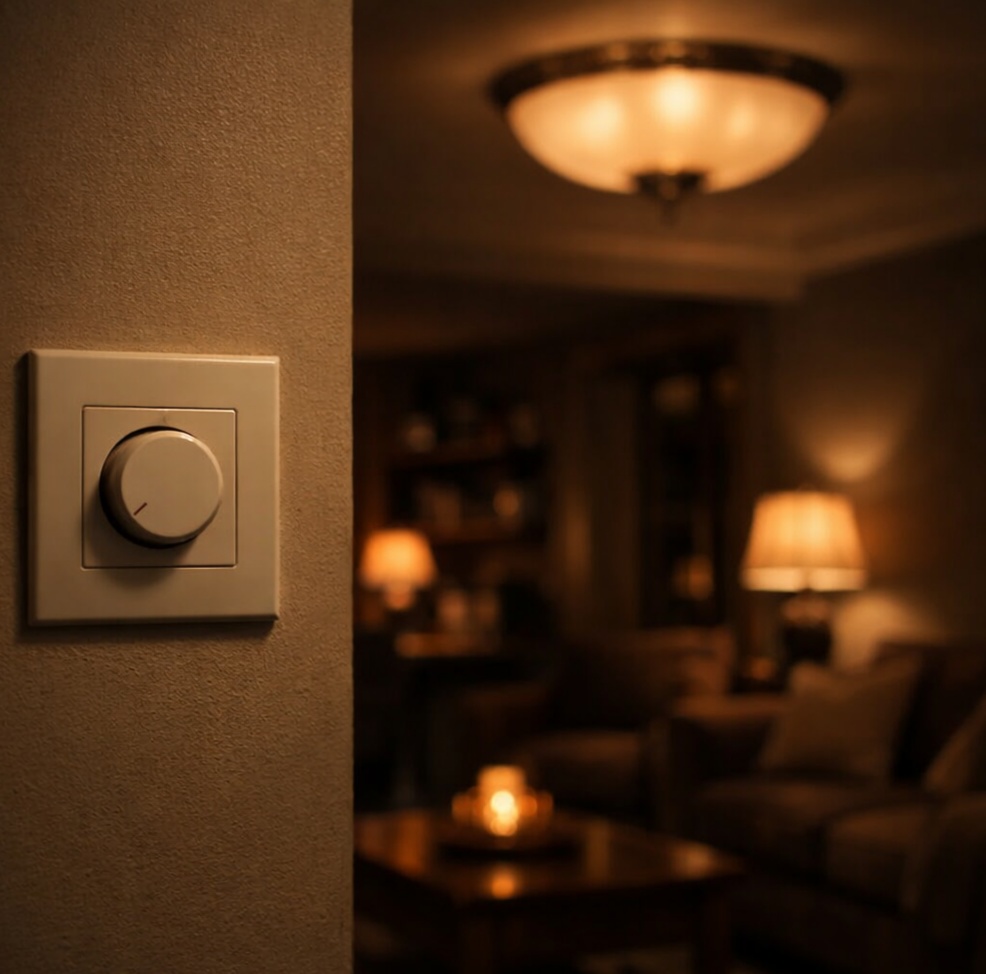
They cost little, but they change everything.
You:
- Turn lights brighter for cleaning or work
- Soften everything for movie night
- Set a mid-level glow for guests
Ever notice how restaurants always nail the mood?
They play with dimmers constantly, and you can copy that trick at home.
Pair dimmers with warm bulbs (around 2700K–3000K) and your living room instantly feels more relaxed.
3. Use a Statement Ceiling Light (But Choose Wisely)
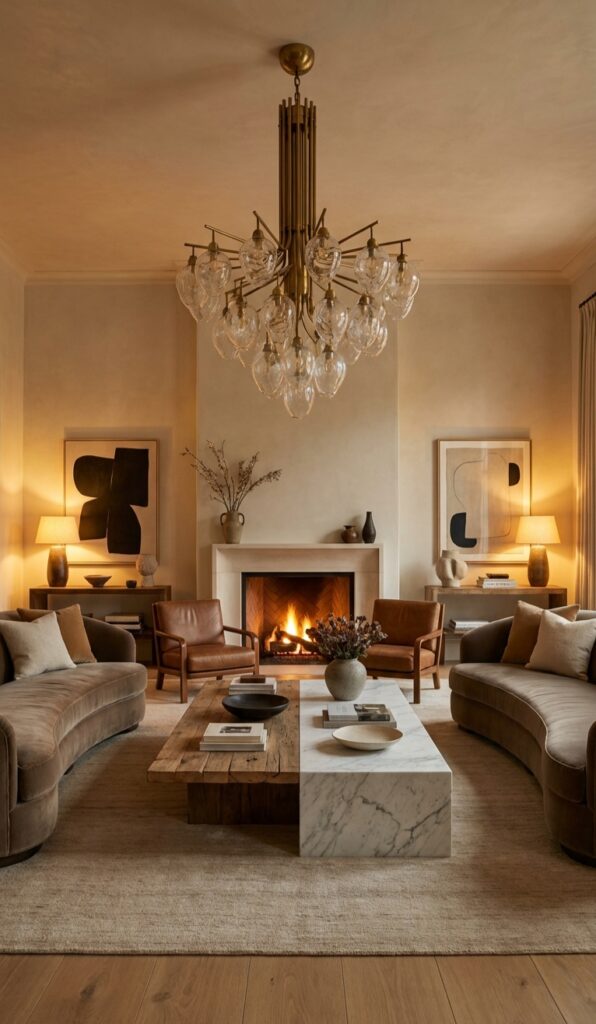
A ceiling light still matters, but it doesn’t need to act alone.
You treat it like a centerpiece, not your only light source.
You can choose:
- Chandeliers for drama and height
- Pendants for modern or casual style
- Flush or semi-flush mounts for low ceilings
Match the scale to your room.
A tiny pendant in a big living room looks awkward, and a huge chandelier in a small space feels like it might fall on your head.
Here’s a simple rule:
For an average living room, you choose a fixture that measures roughly half the room’s width in inches (e.g., 12 ft wide room → around 24″ wide fixture).
You adjust slightly to taste, but this rule keeps you close.
4. Add Floor Lamps That Actually Do Something
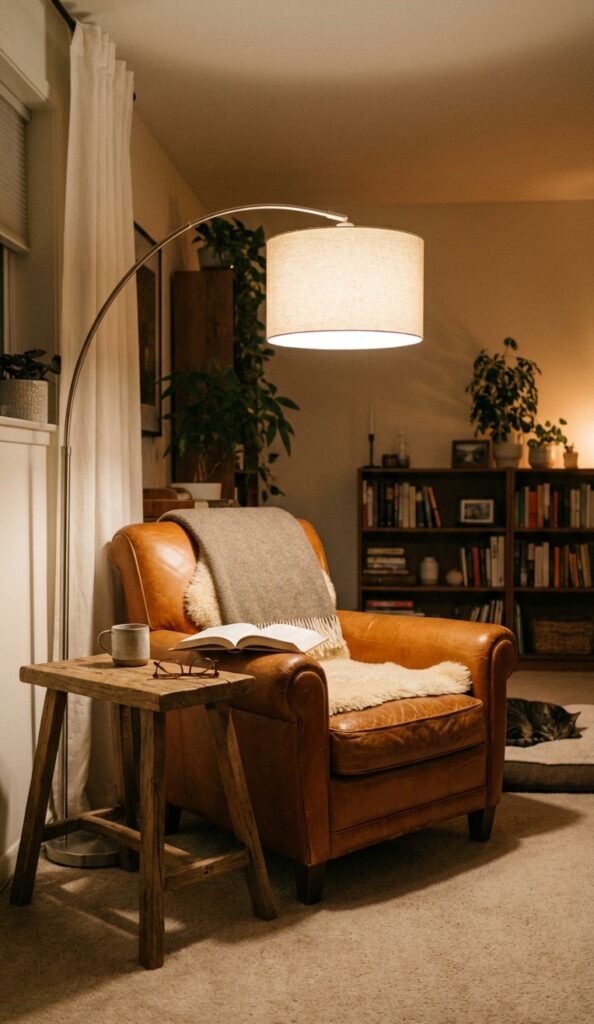
Floor lamps save you when your ceiling wiring annoys you.
They bring light exactly where you need it.
You can use:
- Arc lamps to pull light over a sofa or sectional
- Tripod lamps for a stylish corner anchor
- Reading lamps with adjustable heads for chairs
You place floor lamps:
- Behind or beside sofas
- In dark corners
- Next to reading chairs
I treat floor lamps like cheats for rental spaces.
You skip electricians, and you still create serious living room lighting upgrades.
5. Use Table Lamps for Warm, Cozy Ambiance
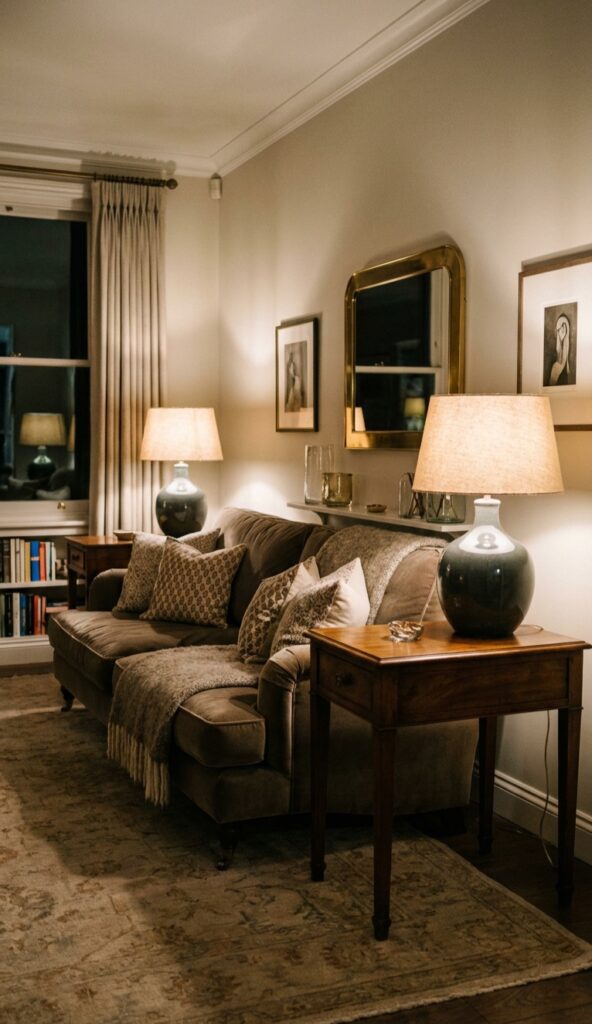
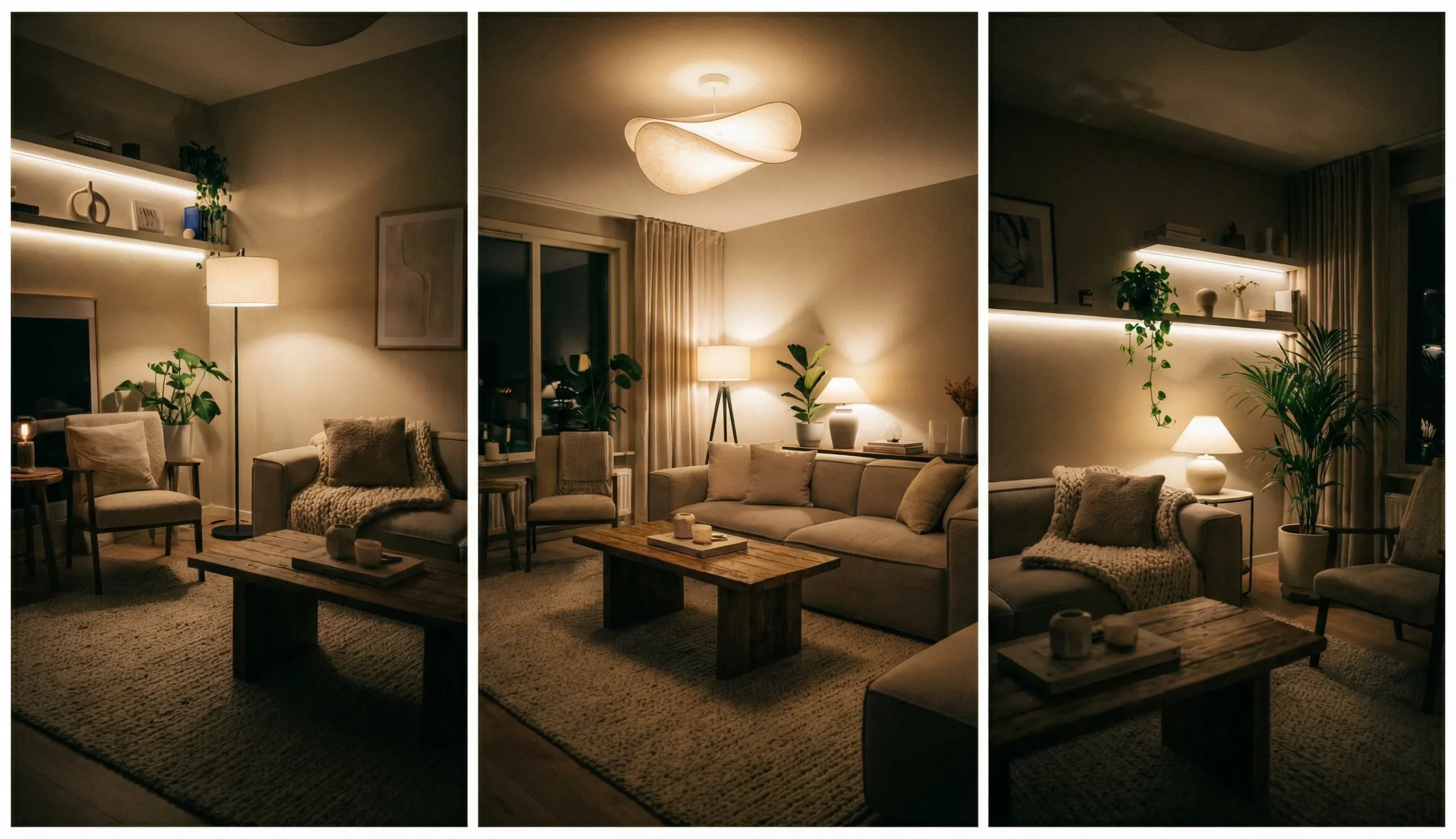
Table lamps carry cozy vibes better than almost anything.
You place them on side tables, consoles, or media units.
For a balanced look, you:
- Keep lamp height around 24″–30″ on average
- Choose fabric shades for a softer glow
- Use warm white bulbs for evening comfort
Ever notice how one small lamp can change the entire room at night?
You turn off the overheads, leave two or three table lamps on, and suddenly your living room feels like a calm lounge instead of a showroom.
When I set up my space, I tested three different lamp shades.
The right shade finally removed that “lamp pointing in your face” feeling and spread a warm pool of light instead.
6. Mount Wall Sconces for Style and Space-Saving
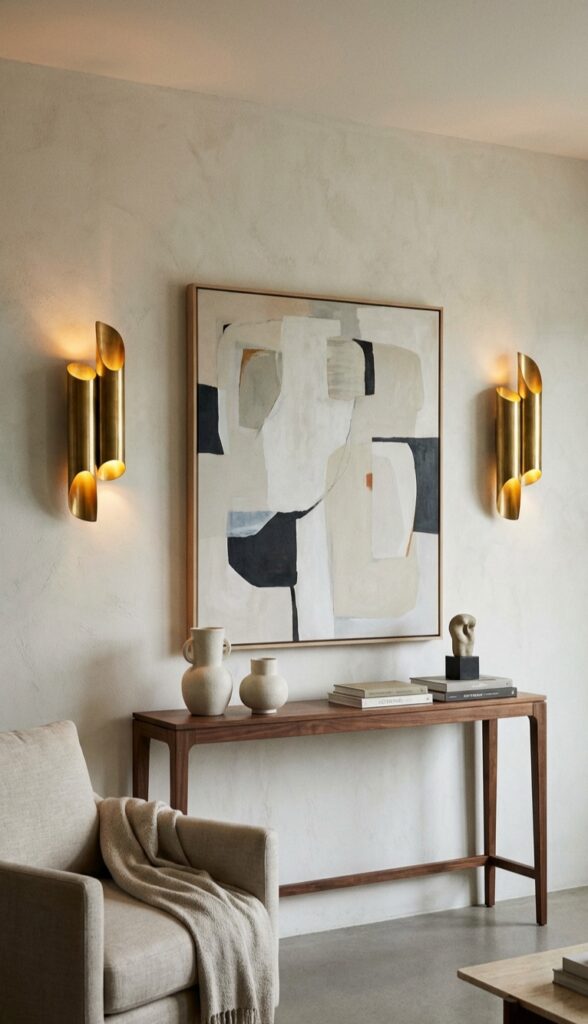
Wall sconces help when you lack floor space but still want layered light.
You mount them near seating, above side tables, or beside art.
You pick from:
- Plug-in sconces (perfect for renters)
- Hardwired sconces (cleaner look if you own the place)
- Swing-arm sconces (awesome next to a sofa or reading chair)
You keep them at about 60″–66″ from the floor so they sit near eye level.
You also use dimmers or lower-wattage bulbs so they glow instead of glare.
Wall sconces add that “this room belongs in a design magazine” energy.
You toss a pair on each side of a fireplace or TV, and the whole wall feels more intentional.
7. Play with LED Strip Lights and Backlighting
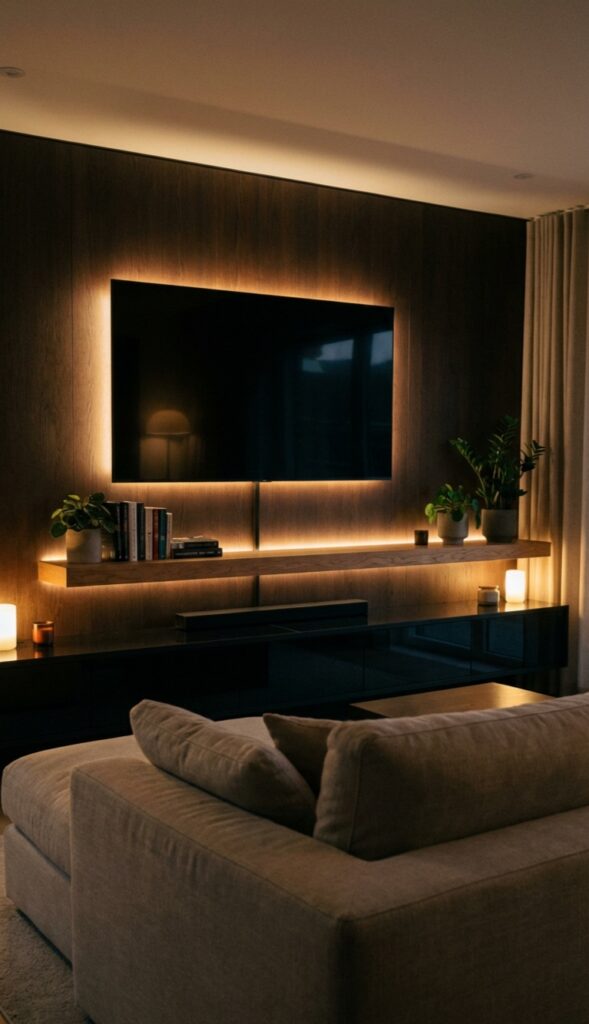
LED strips look subtle or dramatic, depending on how you use them.
You tuck them out of sight and let the glow do the work.
You can stick LED strips:
- Behind the TV for softer contrast
- Under floating shelves
- Along the back of a console
- Under a ledge or cove
You choose warm white strips for living rooms (no harsh blue nightclub vibes, unless that’s your thing).
You also pick dimmable or smart strips so you adjust brightness and color temperature.
FYI, I once tried full rainbow color strips behind my TV.
I lasted about two days before I switched them to warm white and never looked back 🙂
8. Use Recessed Lighting Sparingly (and Smartly)
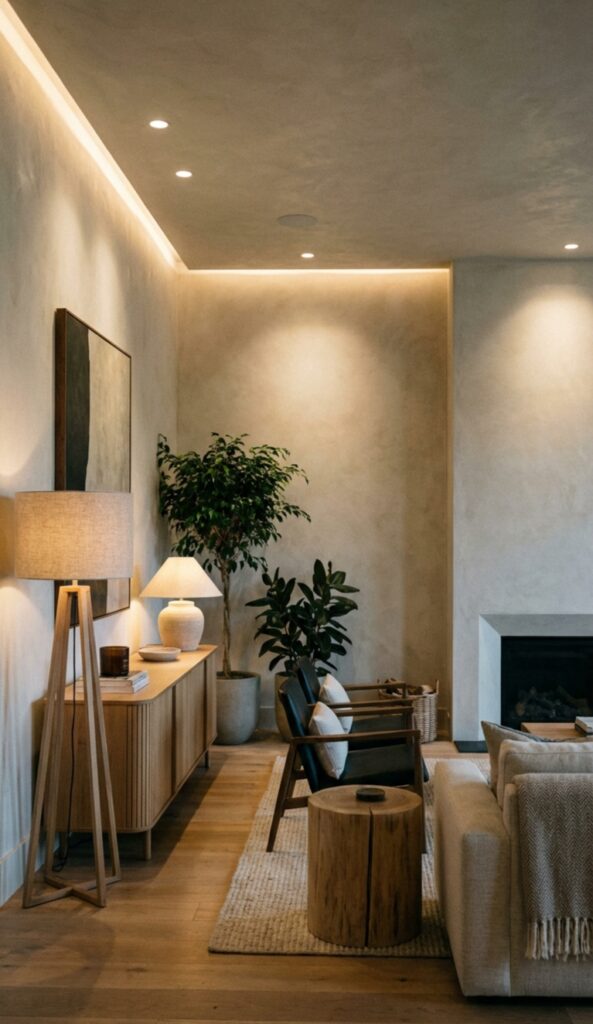
Recessed lighting helps when you want a clean ceiling and good general light.
You just avoid turning your ceiling into Swiss cheese.
You aim them where you actually need light:
- Around the room perimeter, not just in the center
- Toward art, shelves, or seating areas
- Away from directly over your forehead on the sofa
You space recessed lights about 4–6 feet apart, depending on ceiling height and bulb spread.
You always connect them to dimmers so you soften the effect.
In my opinion, recessed lights work best as part of a bigger plan, not as the only light source.
Use them for background brightness, then let lamps and sconces handle the atmosphere.
9. Upgrade to Smart Lighting and Scenes
Smart lighting sounds fancy, but it just makes your life easier.
You control everything from your phone or a voice assistant instead of running around the room like a stagehand.
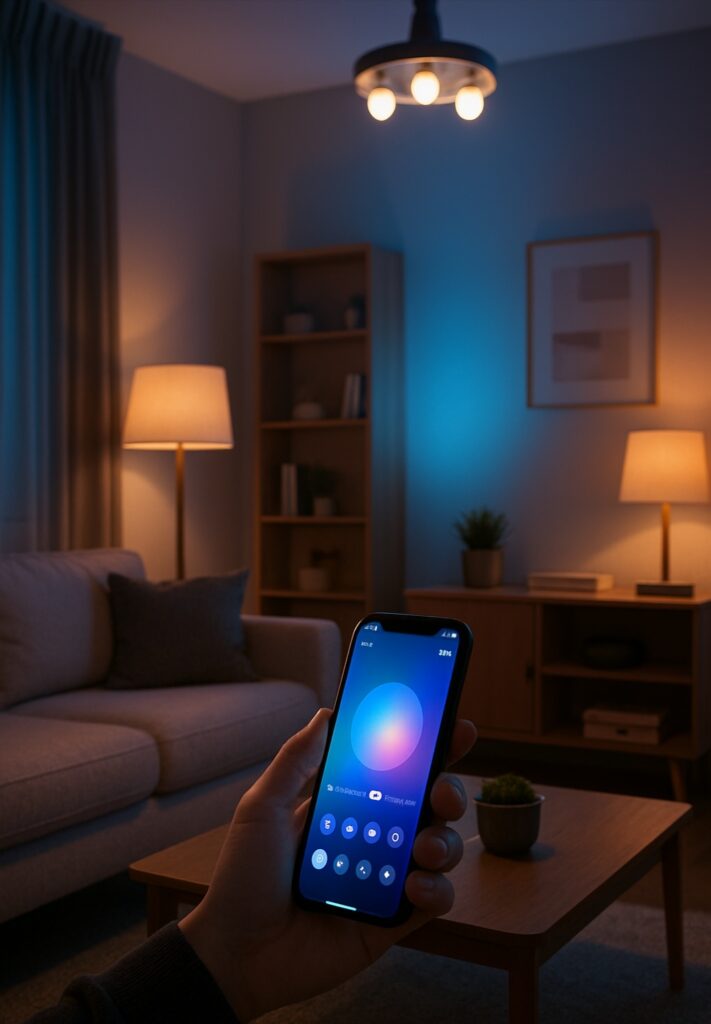
You set lighting scenes for different moments, such as:
- “Movie Night” – low overheads, bright backlighting, warm lamps
- “Reading” – strong task lights, softer background
- “Party” – brighter general light, accent lights on
You can choose smart bulbs, smart plugs, or smart switches.
Smart bulbs change color and brightness individually, while smart plugs and switches control regular lamps and fixtures.
IMO, smart lighting becomes addictive once you set up your first scene.
You tap one button or speak a phrase, and the whole room snaps into the perfect ambiance.
10. Maximize Natural Light During the Day
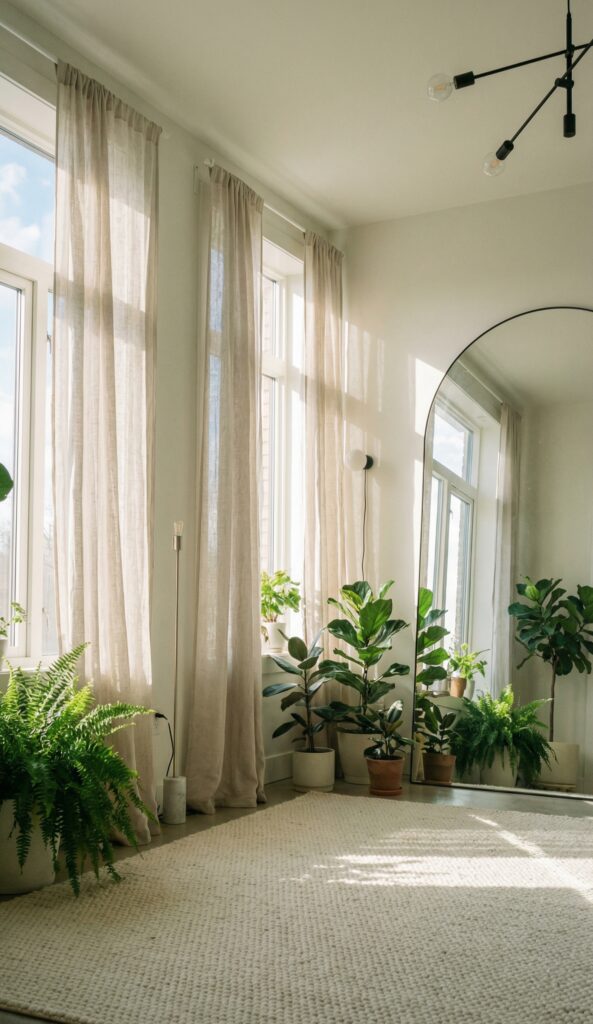
Not every lighting idea needs a plug.
Your windows already carry huge potential.
You boost natural light when you:
- Use sheer curtains instead of heavy drapes during the day
- Keep window sills clear of clutter
- Add mirrors opposite or beside windows
- Choose light-colored walls and rugs
Mirrors matter a lot here.
You bounce light around and make the living room feel bigger and brighter without a single new bulb.
You think of natural light as your free, high-quality light source.
Then you use artificial lighting to support it at night or on gloomy days.
11. Highlight Art, Plants, and Architectural Features
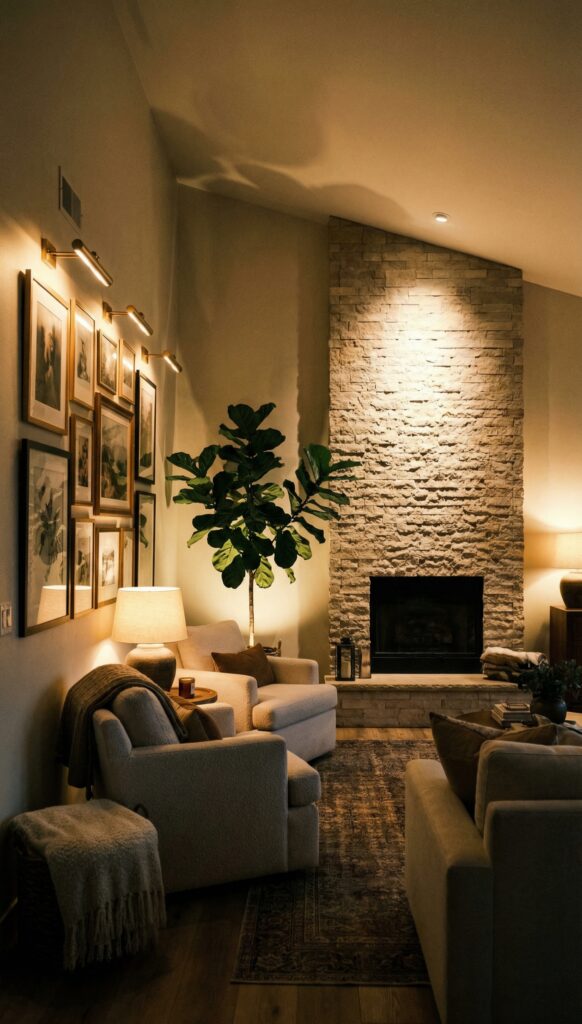
Your living room probably hides at least one cool feature.
You just need accent lighting to show it off.
You can:
- Mount picture lights over artwork
- Use spotlights or up-lights at the base of plants
- Aim track heads or adjustable spots at brick, stone, or textured walls
- Place a small table lamp on a console with decor around it
When you light vertical surfaces, the whole room feels more layered and interesting.
You avoid a flat, boring look and create depth and focal points.
12. Lean Into Cozy Ambiance with Soft, Low-Level Lighting
Sometimes you just want your living room to feel like a warm hug.
For that, you lower the light level and warm up the color.
You can add:
- Candles (real or LED) on coffee tables and mantels
- String or fairy lights around shelves or windows
- Small, low-wattage lamps on sideboards or window sills
- Salt lamps or decorative glowy objects
You keep the light source below eye level for maximum coziness.
You also avoid anything harsh or direct.
I keep a tiny lamp on a timer on my media console.
It clicks on in the evening, and my living room shifts into “relax” mode automatically, even when I still scroll emails :/
Key Technical Tips for Perfect Living Room Lighting
You don’t need to memorize a manual, but a few numbers help.
You use them as guides, not strict rules.
Color temperature (Kelvin):
- 2700K–3000K – warm white, best for cozy living rooms
- 3000K–3500K – slightly cooler, still comfortable and modern
Brightness (lumens per bulb, roughly):
- 450–800 lumens – table and floor lamps
- 800–1600 lumens – main ceiling fixtures, recessed lights
You also stick with high CRI bulbs (CRI 90+) when possible.
They show colors more accurately, so your sofa actually looks like the color you chose at the store.
Wrapping Up Your Living Room Lighting Makeover
Lighting transforms your living room faster than almost any other change.
You don’t always need new furniture; you just need better, layered light.
You:
- Layer ambient, task, and accent lighting
- Use dimmers and smart controls to shift the mood
- Mix floor lamps, table lamps, sconces, and accents
- Match bulb color and brightness to the ambiance you want