12 Mini Garage Gym Ideas That Don’t Take Over Your Parking Space
You want a garage gym, but you also want to park your car inside like a civilized human. You don’t want to play nightly Tetris with barbells, bikes, and a bumper plate that somehow rolls into every corner. I built my first “mini garage gym” in a single-car garage, and I learned fast that space-saving decisions beat big dreams.
So let’s set you up with mini garage gym ideas that keep your workouts legit and your parking spot intact. Sound impossible? You just need smarter gear, better storage, and one tiny mindset shift: your gym should fold, roll, or hang.
Ever noticed how the best garage setups look clean even when people train hard? Let’s steal that energy.
1) Mark a “Gym Lane” So Your Parking Space Stays Sacred
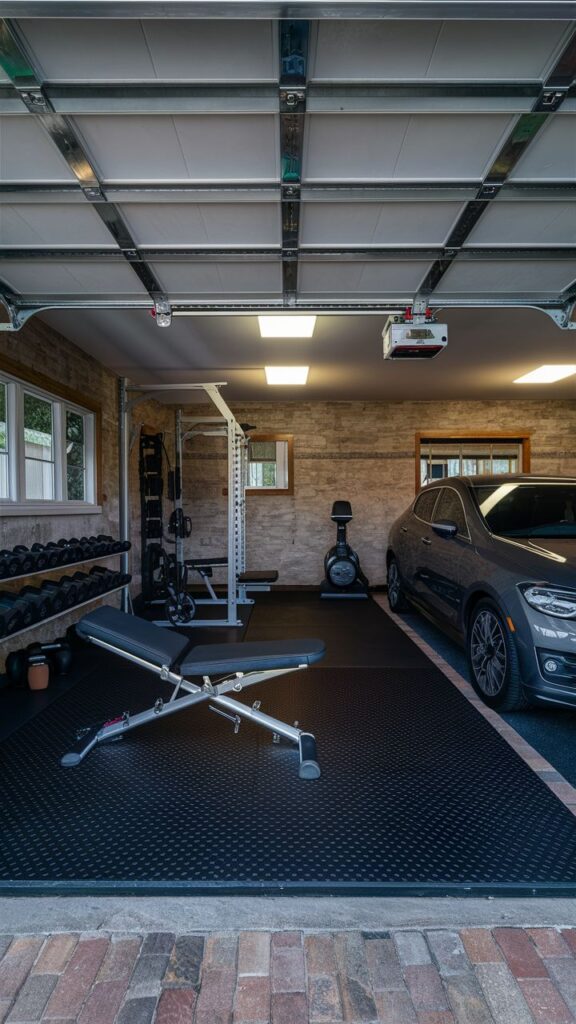
Start with the least sexy trick that changes everything: tape on the floor. I use painter’s tape to mark a parking zone and a training zone, and my brain stops negotiating every time I lift. You can keep it simple with two rectangles and a center line.
Try this quick layout:
- Car zone: full width where your tires land
- Gym lane: a 3–4 ft strip along one wall
- Lift zone: a 6×8 ft “island” that you clear only when you train
Do you want to guess where most garage gyms fail? People “temporarily” place gear in the parking area, and that temporary choice turns permanent in about six days.
2) Install a Wall-Mounted Folding Squat Rack (The Space Saver MVP)
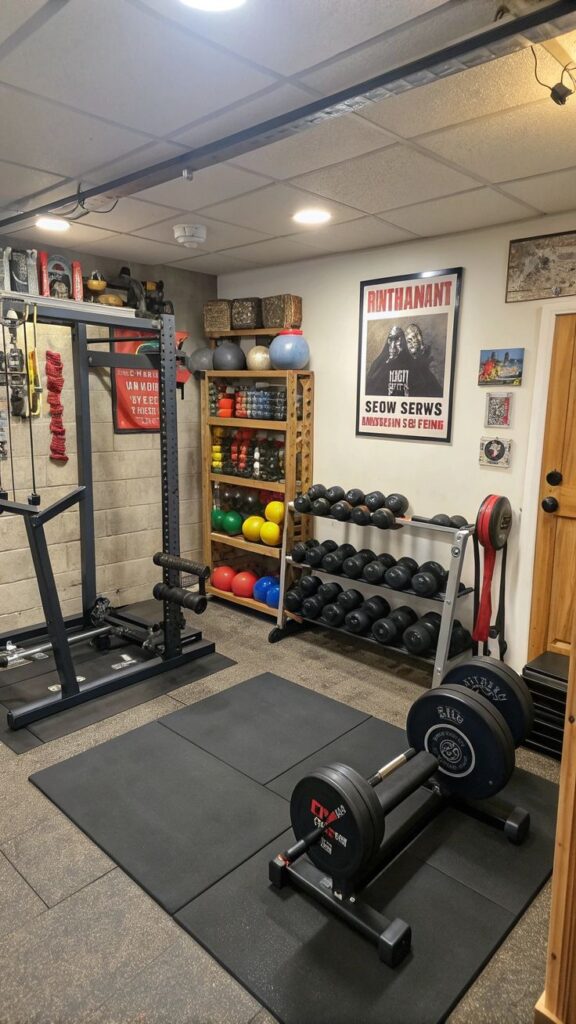
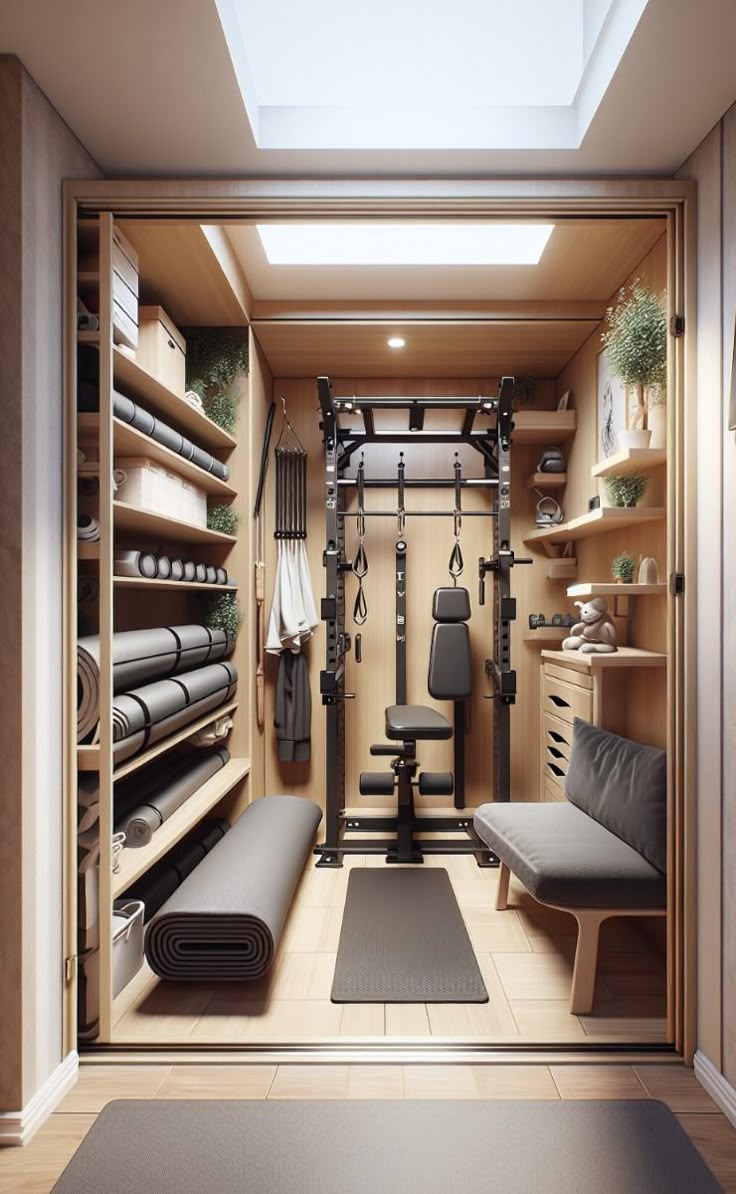
A folding squat rack gives you real barbell training without giving your car an eviction notice. I prefer a folding rack over a full power rack in tight garages because I fold it flat in seconds. You still squat, bench, and press like normal, and you reclaim wall space right after.
Here’s what I look for when I compare folding racks:
- Sturdy steel + good hardware (cheap racks wobble like they feel scared)
- J-cups and safeties that adjust fast
- Depth that fits your wall (some racks stick out more than you expect)
IMO, a folding rack beats a squat stand in a small garage because it stays predictable and stable. Ever rushed a set because the setup feels sketchy? Yeah, I don’t miss that.
3) Add a Ceiling-Mounted Pulley for Lat Pulldowns and Triceps Work
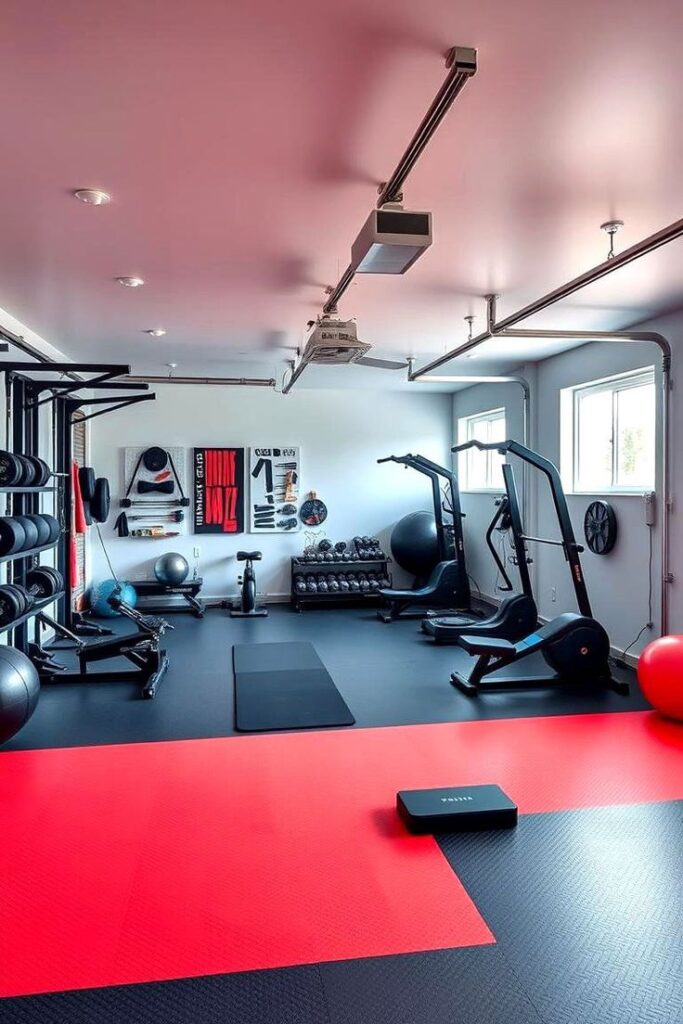
A ceiling-mounted pulley turns dead space into strength work. You hang a pulley, run a cable, and attach a loading pin or a band. You get lat pulldowns, triceps pushdowns, face pulls, and rows without dedicating floor space.
Keep the setup clean with:
- One pulley, one carabiner, and one cable
- A loading pin or a small plate stack alternative
- A quick-clip handle set (rope, straight bar, single handle)
You can train your back hard with this, and you don’t need a giant cable machine that screams “commercial gym” in your garage.
4) Choose Adjustable Dumbbells Instead of a Whole Rack
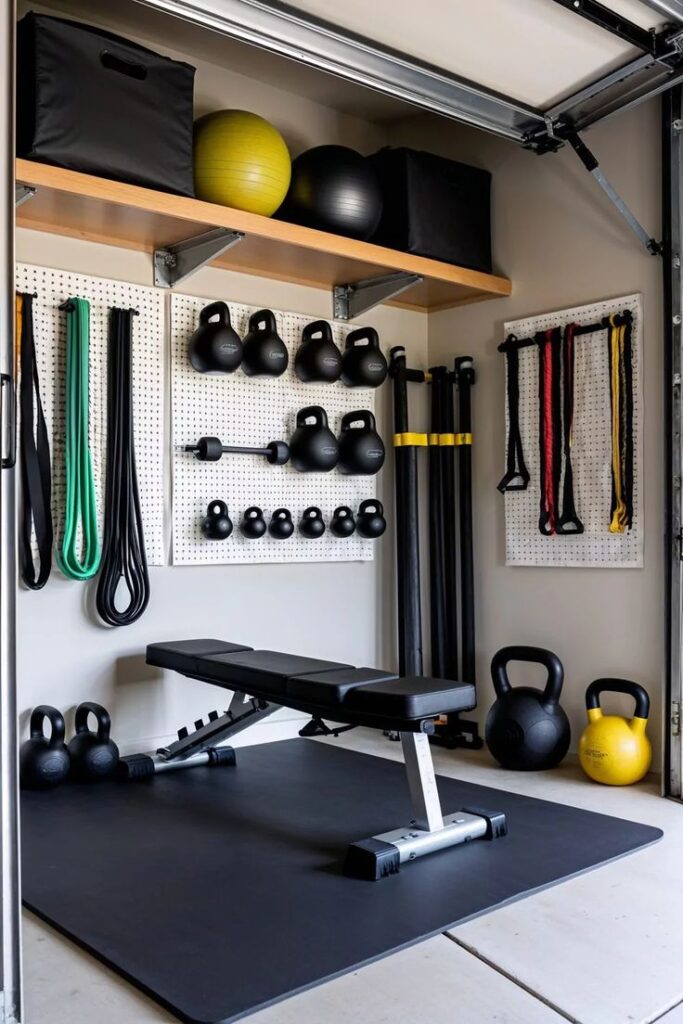
Adjustable dumbbells scream “mini gym” in the best way. You get a ton of exercises—presses, rows, lunges, RDLs—without buying ten pairs of dumbbells and a dedicated rack. I started with fixed dumbbells, and I tripped over them constantly, which really added danger to my warm-ups.
When you compare options, focus on:
- Speed of changes (dial systems feel fast; spin locks feel cheap but take longer)
- Max weight you actually plan to use
- Storage stand that keeps them off the floor
Want a garage gym that feels bigger than it looks? Adjustable dumbbells help more than almost anything else.
5) Pick a Fold-Flat Bench and Hang It on the Wall
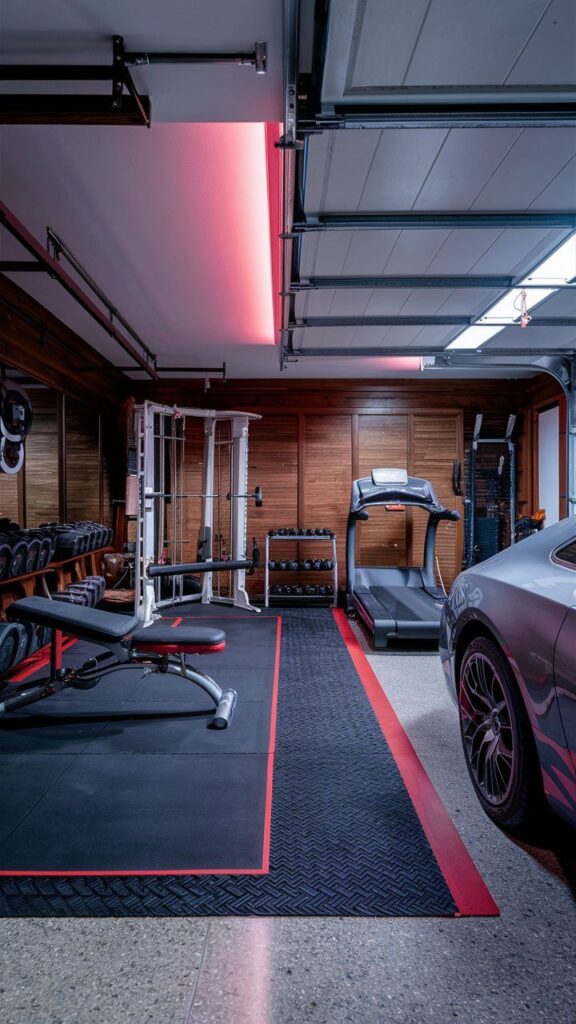
A bench eats space when it sits out all day. A folding weight bench fixes that by collapsing into a slim profile, and you can hang it on a wall hook. I love this because I keep my floor clear, and I stop bumping into bench legs like I live in an obstacle course.
Look for these bench features:
- Stable frame that doesn’t rock during presses
- Transport wheels so you roll it out quickly
- Fold-flat design that stores vertically
FYI, some benches claim they fold “flat,” but they still take up a chunky footprint. Measure before you buy, unless you enjoy returning boxes the size of small refrigerators.
6) Mount Plate Storage on the Wall (And Stop the Plate Pile Madness)
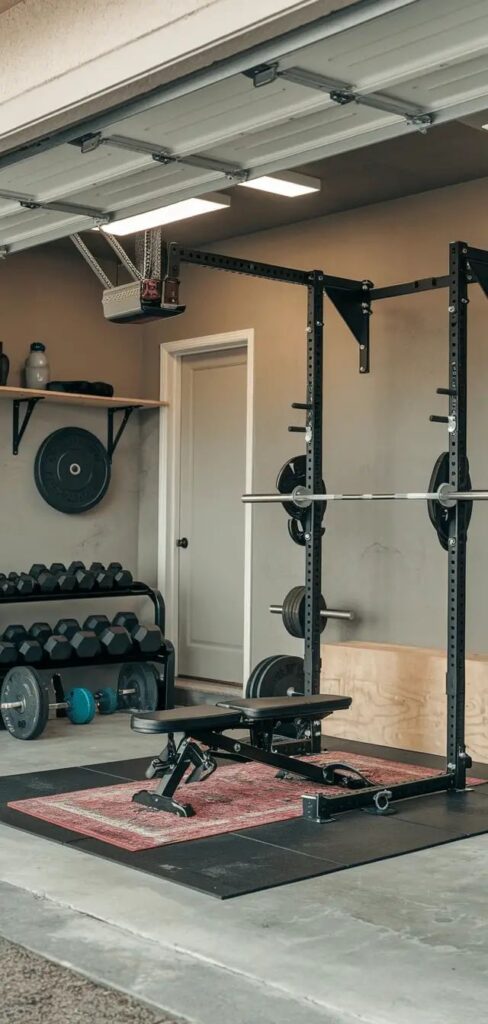
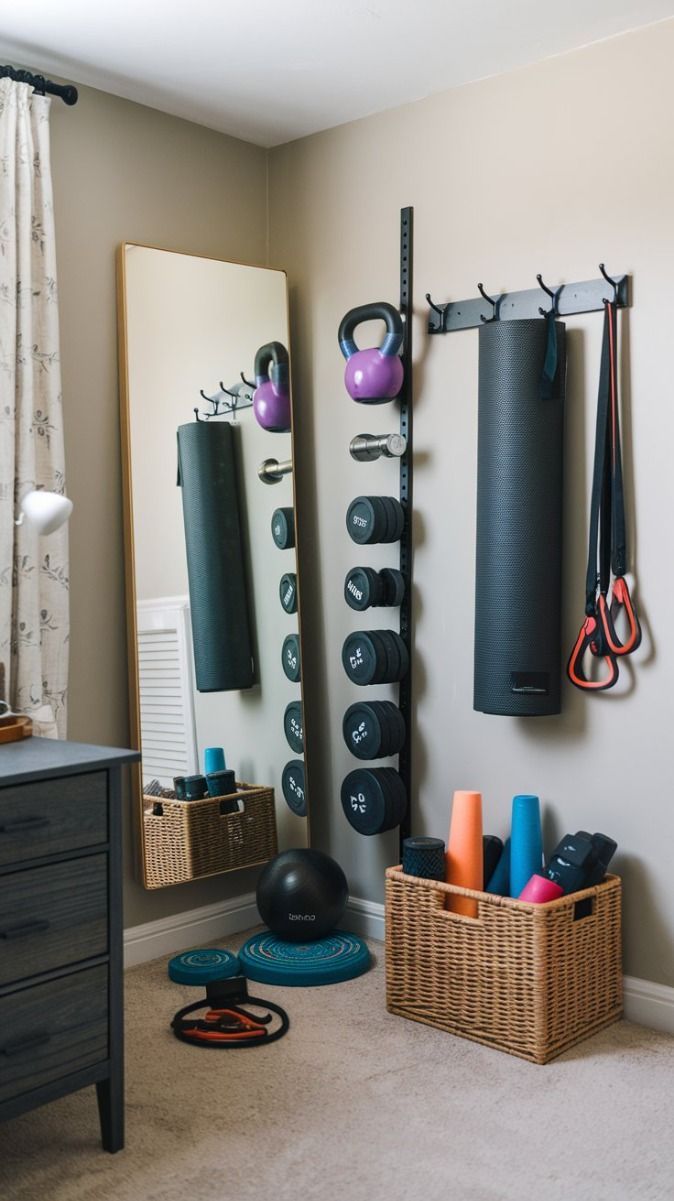
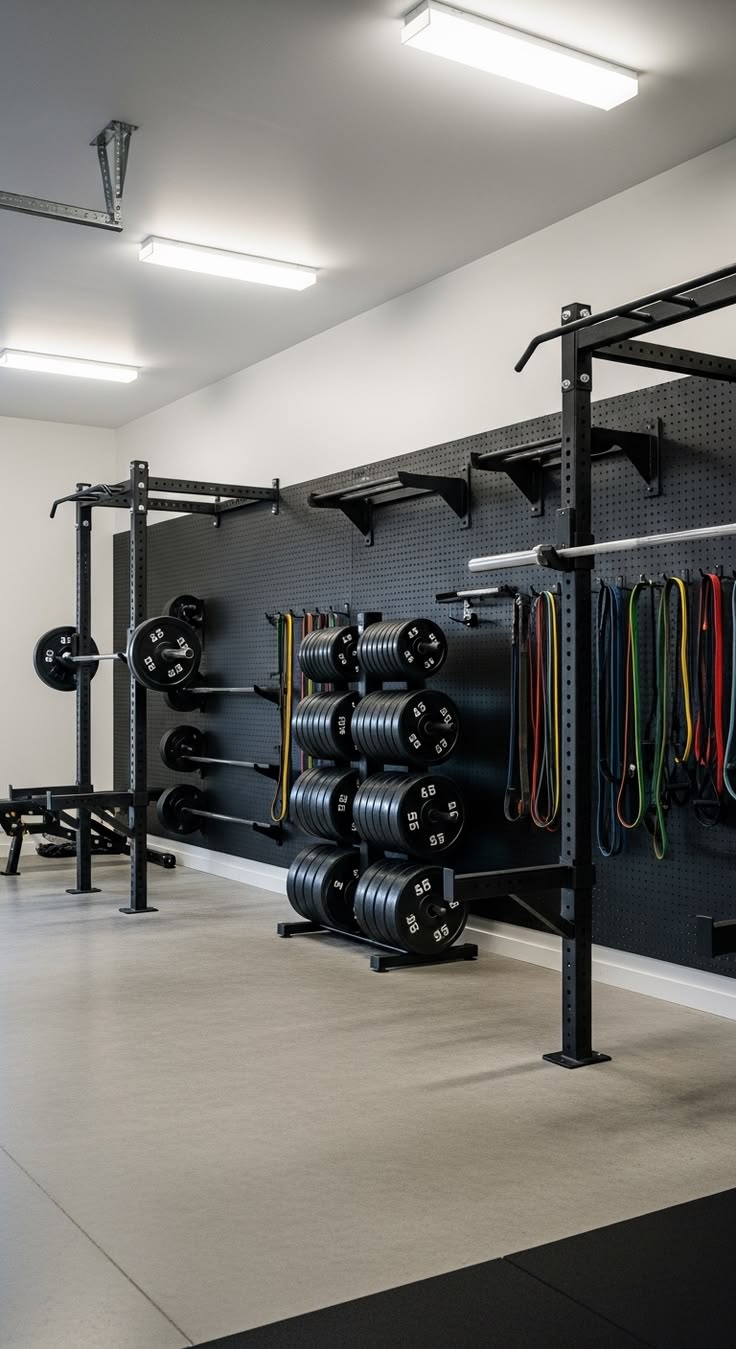
Plates on the floor create clutter fast. Wall pegs or a wall-mounted plate tree keeps plates organized and keeps your training zone open. You also protect your toes, and your toes deserve nice things.
I like this setup:
- Two or three wall pegs for bumpers
- One peg for change plates
- A vertical barbell holder next to the plates
Do you want to lift more consistently? Make your setup easy to reset after a workout. You finish the session, rack the plates, and you don’t stare at a mess tomorrow.
7) Build a Resistance Band Wall Station for Fast Accessory Work
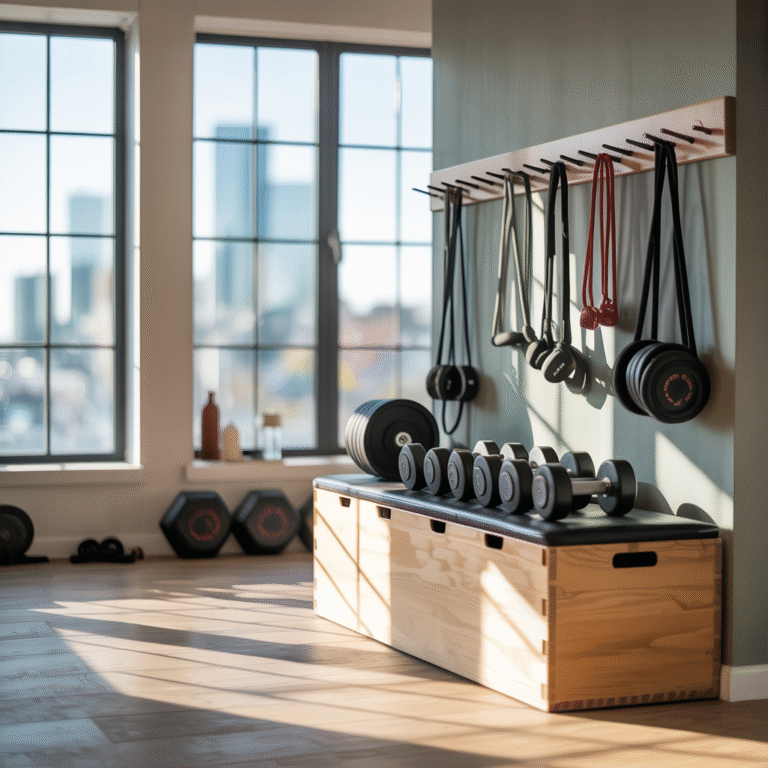
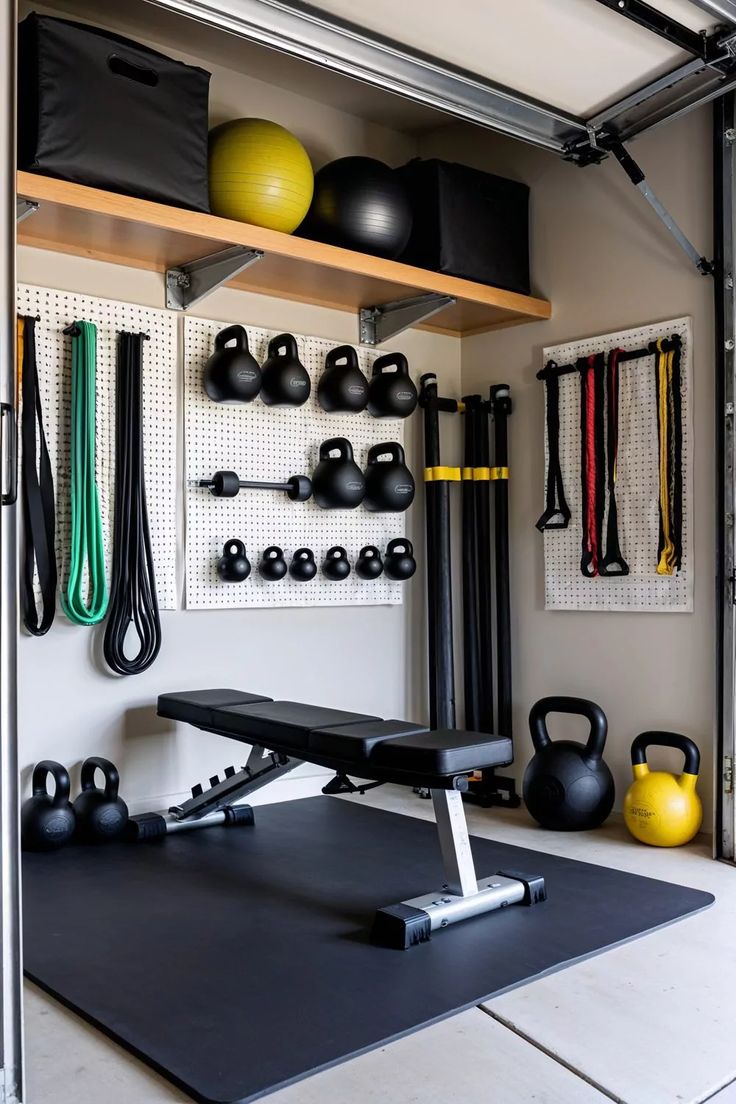
Bands give you a ridiculous amount of training for almost no space. I keep mine on wall hooks, and I use them constantly for warm-ups, shoulder work, glute activation, and finishers. You can also hook bands to a wall anchor and train rows and presses without dragging gear around.
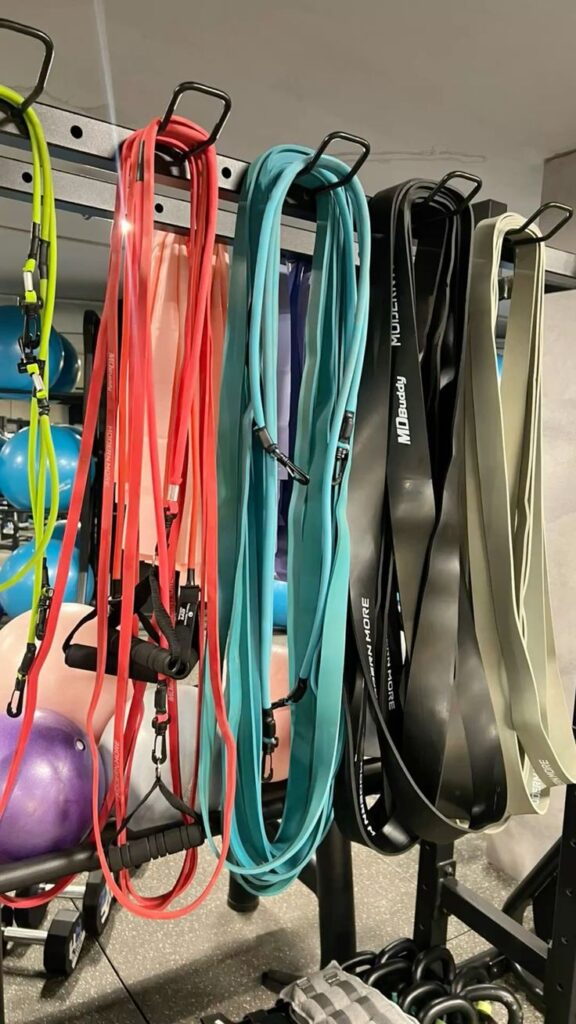
Stock your band station with:
- Mini loops for hips and glutes
- Long bands for rows, pulldowns, and assistance
- A door or wall anchor for consistent angles
Ever skipped accessory work because it felt annoying to set up? Bands remove that excuse in about five seconds.
8) Choose Compact Cardio That Stores Vertically or Folds
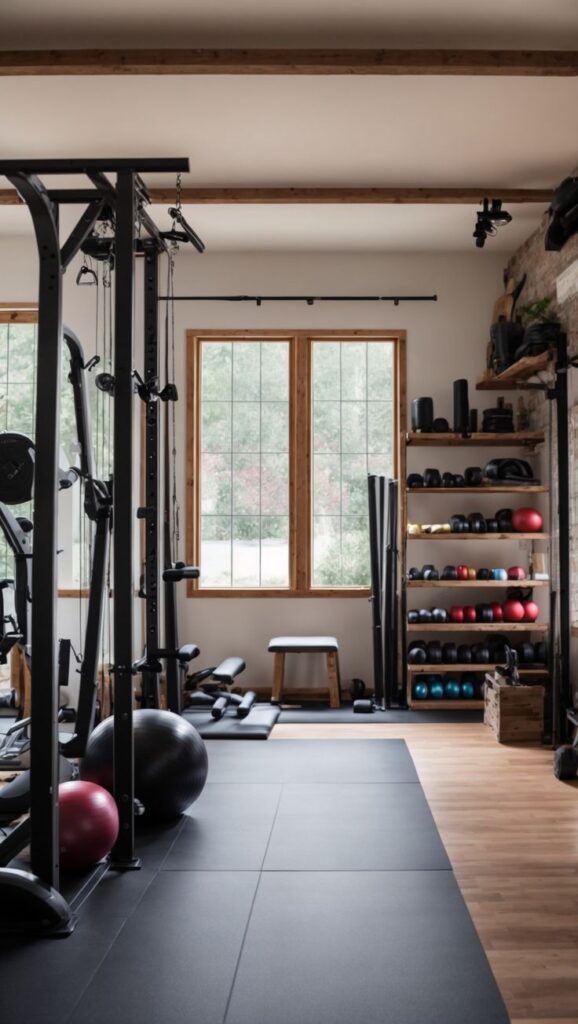
Cardio machines love floor space. They hog it. They claim they won’t. Then they do. If you want cardio in a small garage gym, pick something that stores upright or folds.
My honest comparison:
- Vertical rower: stores tall, feels smooth, trains legs and back
- Folding air bike: hits conditioning hard, stores smaller than most bikes
- Jump rope: costs almost nothing, demands headroom and tolerance for suffering
I like a vertical rower when I want full-body work without impact. I like jump rope when I want to feel athletic and slightly attacked by my own coordination.
9) Create a Rubber Flooring “Island” Instead of Covering the Whole Garage
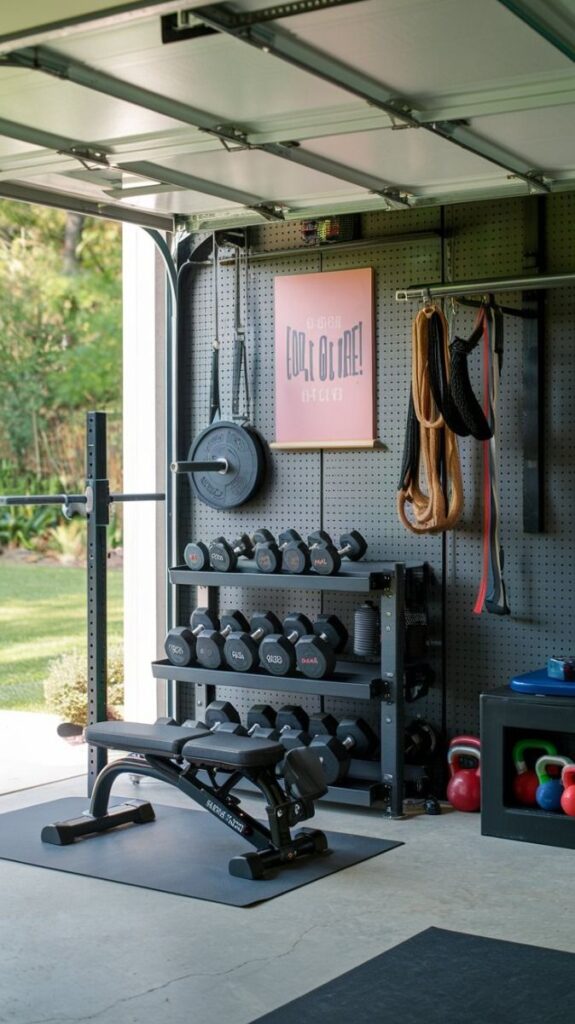
You don’t need to rubberize the entire garage like you run a secret CrossFit box. You need a flooring island where you lift and move. I use stall mats or interlocking rubber tiles in a tight rectangle, and I keep the rest of the garage bare for parking and storage.
Try this simple approach:
- One 4×6 or 6×8 rubber area for lifting
- One thinner mat for stretching or kneeling
- Edge tape or a transition strip to avoid catching corners
Do you want the garage gym to feel intentional? A flooring island makes the space look clean, and it signals “training happens here.”
10) Use a Rolling Gym Cart That “Parks” Under a Shelf
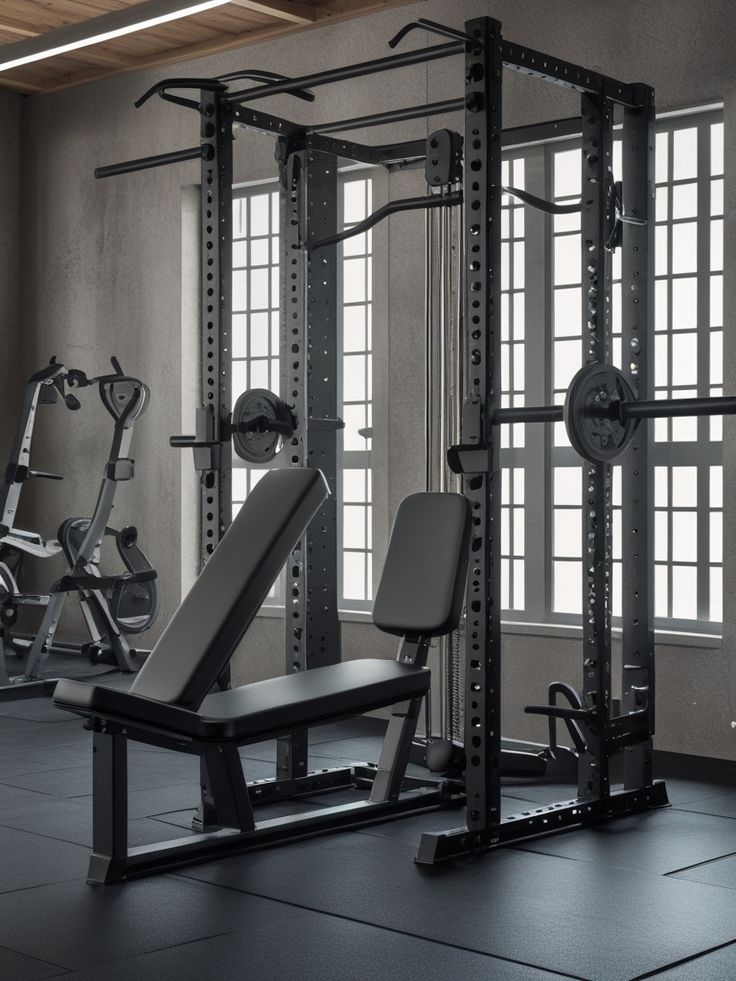
A rolling cart sounds boring until you live with one. You toss your collars, chalk, bands, jump rope, and small accessories into one mobile home. Then you roll it into a corner or under a workbench when you finish.
I suggest this cart loadout:
- Top tray: chalk, straps, timer, small tools
- Middle tray: bands, handles, wraps
- Bottom tray: cleaning wipes, tape, spare collars
You keep everything together, and you stop hunting for your collars like they play hide-and-seek for sport.
11) Add a Mirror, Bright Lighting, and a Fan (Yes, This Counts as a Gym Idea)
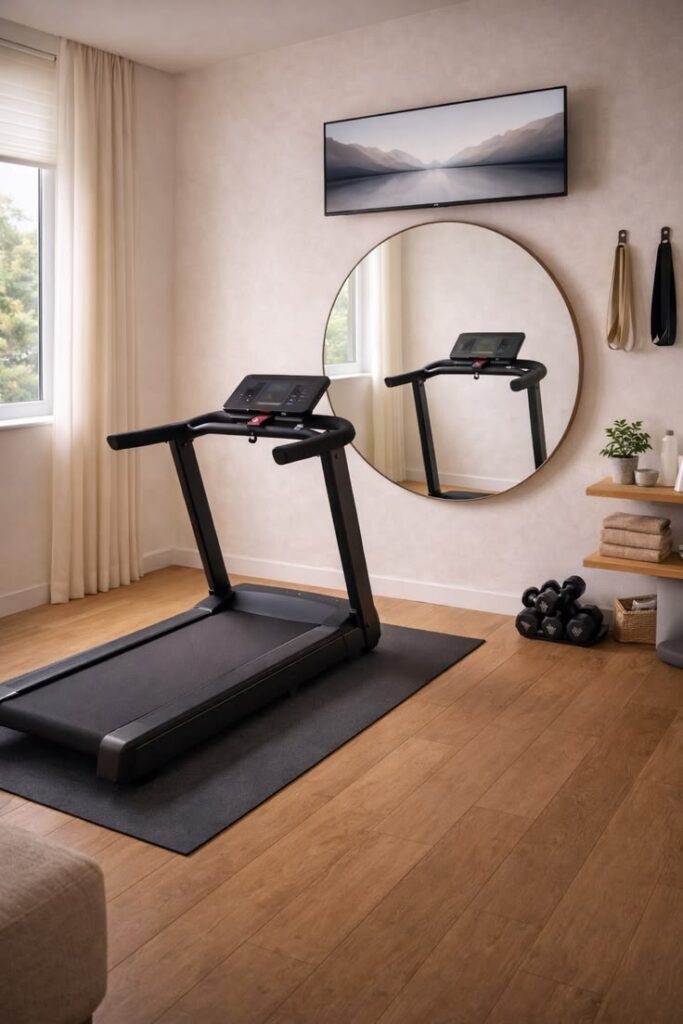
This “idea” doesn’t sound hardcore, but it changes how the garage gym feels. Good lighting helps you check form and stay awake, and a mirror gives you quick feedback on squats, hinges, and presses. A fan saves you from that sticky garage air that makes every set feel like a sauna audition.
I’d prioritize:
- Bright LED shop lights overhead
- One wall mirror near your rack or open floor
- A strong fan pointed at your training lane
Do you want to train more often? Make the space comfortable enough that you don’t dread walking in there.
12) Control Noise and Vibration So You Lift Heavy Without Drama
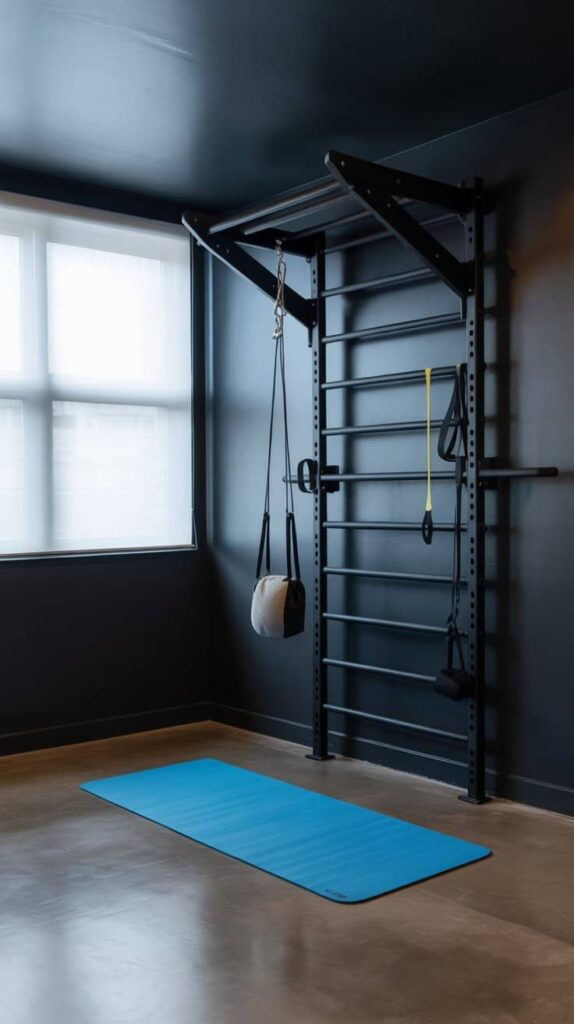
You can lift hard and still keep peace with your house, your neighbors, and your own ears. I learned this after I dropped a loaded deadlift one time and watched dust fall from a shelf like a cartoon. You can reduce noise a lot with the right layers and habits.
Use these noise-control moves:
- Crash pads for deadlifts and heavy lowering
- Thick stall mats under your platform area
- Rubber-coated plates when possible
- Controlled reps instead of “oops I dropped it” reps
You can still train heavy, and you don’t need to announce every set to the entire block. Your neighbors will still judge you for other reasons, so you might as well remove this one.
Conclusion: Keep the Garage Gym Small, Smart, and Actually Usable
You can build a mini garage gym that supports real training and still leaves room to park. You just need folding and wall-mounted equipment, vertical storage, and a layout that respects your parking zone. Start with a folding rack, adjustable dumbbells, a fold-flat bench, and a small flooring island, and you’ll cover a ton of strength work without clutter.