12 Minimalist Bedroom Ideas for a Calm, Clutter-Free Home
You know that moment when you walk into your bedroom, look around, and think, “Wow… I live in a laundry pile now”?
Yeah, I hit that point a while ago.
I craved a calm, clutter-free bedroom that didn’t stress me out the second I opened the door. So I shifted to a more minimalist bedroom setup, and honestly, it changed the whole vibe of my home and my brain.
If you want a bedroom that feels like a quiet retreat instead of a storage unit, these 12 minimalist bedroom ideas will help you strip things back, keep what matters, and still make the room look intentional and stylish. Ready to create a space where you actually relax instead of doom-scroll? 😉
1. Start with a Ruthless Declutter

You can’t create a minimalist bedroom if your socks still form a small city on the floor.
I always start with editing, not decorating. You simplify the room before you style it.
Ask yourself for every single thing in your bedroom:
- Do I use this often?
- Do I love this?
- Does this belong in the bedroom at all?
You remove:
- Old chargers, random cables, and mystery electronics
- Stacks of books you never touch
- Clothes that never leave the “maybe later” pile
- Decor that only collects dust
You keep only what you actually use or genuinely enjoy. Everything else? You donate it, recycle it, or trash it without guilt.
You create space first. Style comes later.
2. Choose a Calm, Minimalist Color Palette
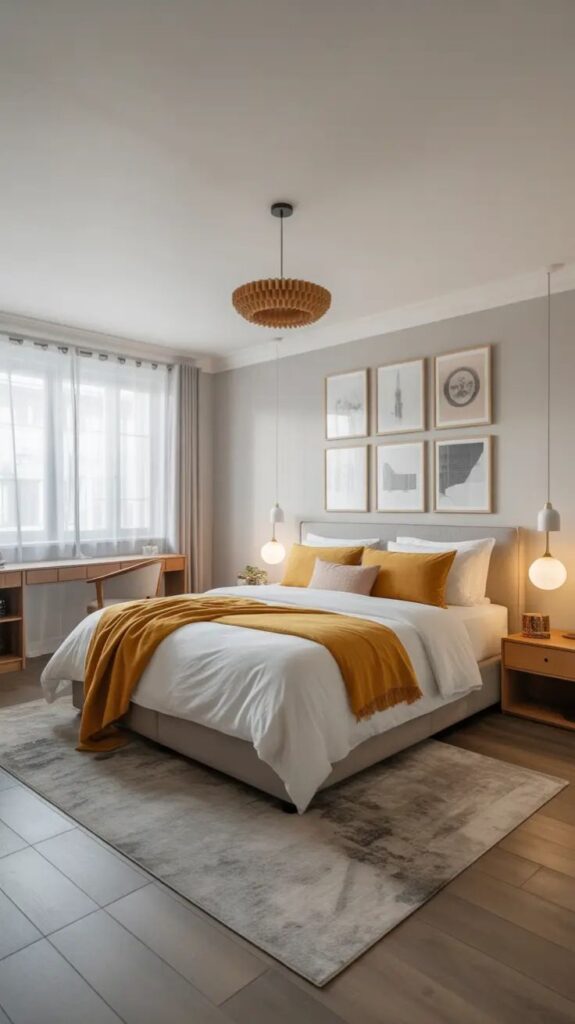
Color controls the mood of your bedroom more than any decor item.
For a minimalist, peaceful bedroom, you stick to a simple palette:
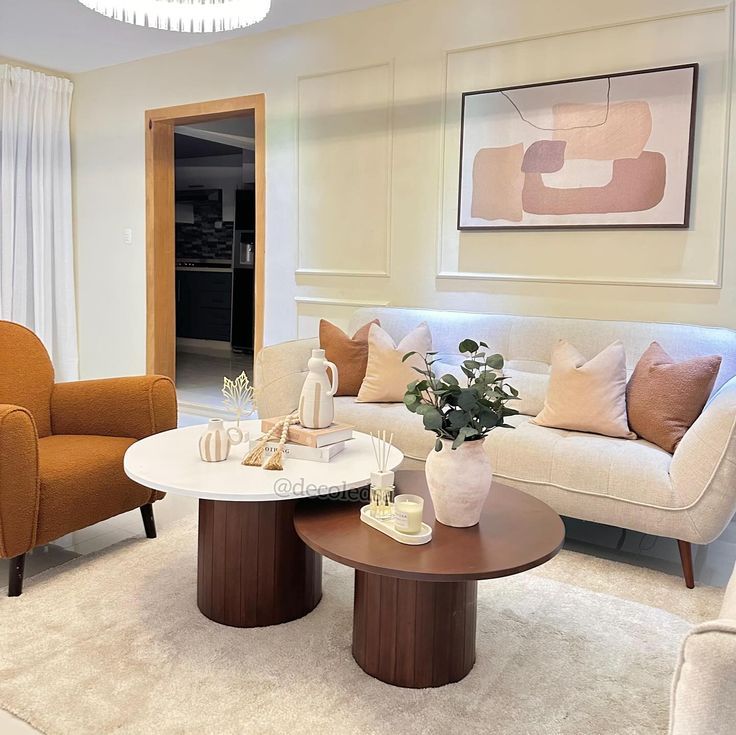
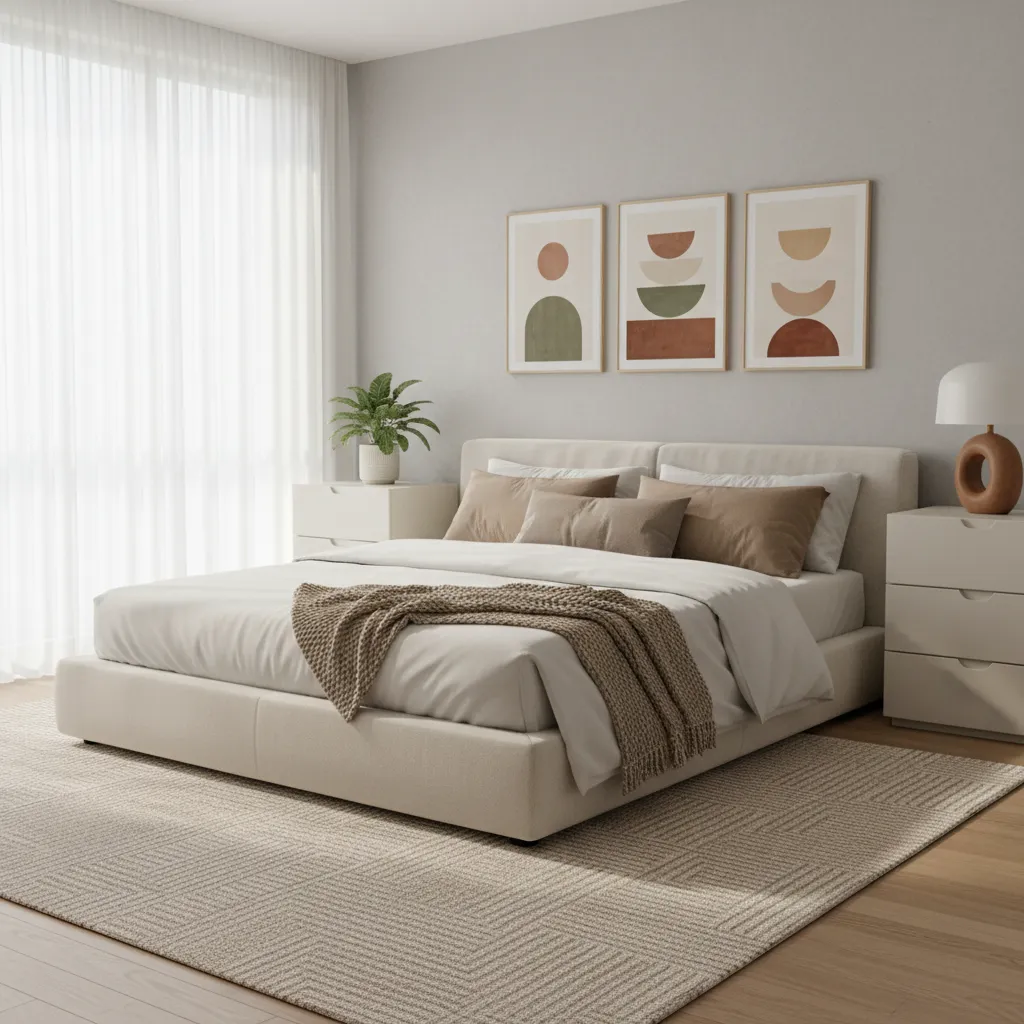
- Soft whites and creams
- Warm beiges or greiges
- Muted grays
- Very soft blues, greens, or blush tones
You limit the number of colors in the room. That choice keeps everything visually quiet. Ever notice how hotel rooms usually stick to two or three colors max? That approach works at home too.
You still play with texture to avoid a boring look:
- Linen or cotton bedding
- A chunky knit throw
- A jute or wool rug
You create interest through texture, not loud patterns. Your eyes relax, and your brain follows.
3. Simplify the Bed: Frame, Headboard, and Layout
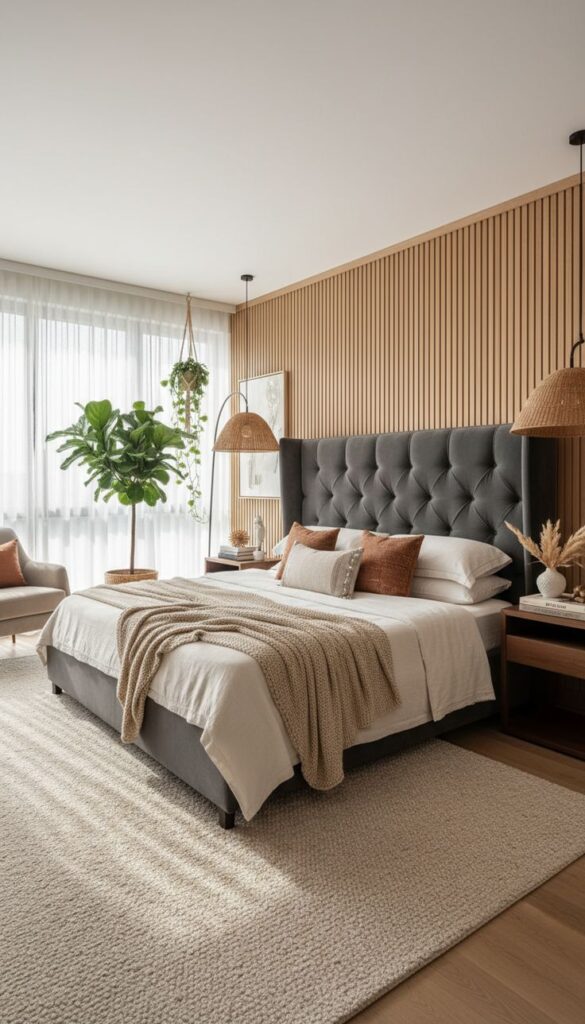
The bed dominates your bedroom, so you treat it as the main minimalist statement.
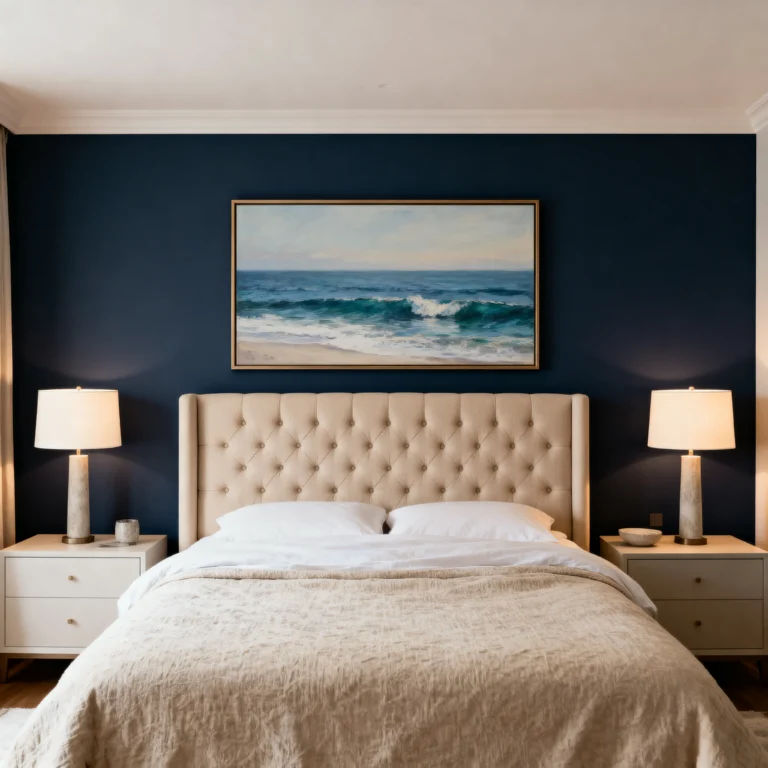
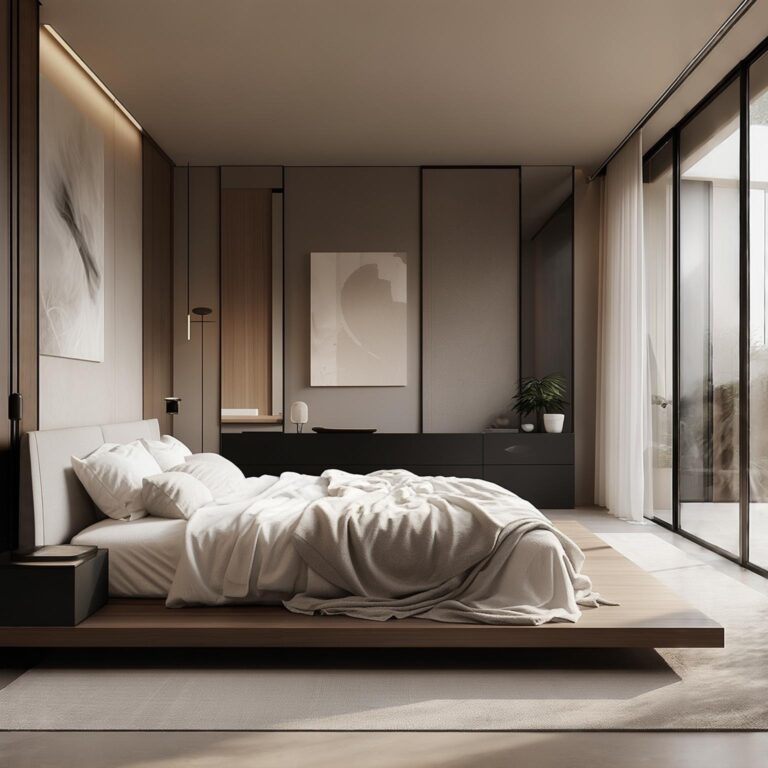
I prefer low-profile bed frames with clean lines. Nothing bulky, nothing ornate, nothing that screams “princess castle.”
Look for:
- Straight, simple legs
- Slim frames without chunky edges
- Upholstered or wood headboards with minimal detail
You skip storage shelves built into the headboard, carved designs, and heavy footboards. Those usually add visual weight and clutter.
You also center the bed, if you can, and give it breathing room on both sides. That layout instantly makes the room feel more balanced and calm. No one enjoys squeezing sideways between the wall and the bed every morning.
4. Keep the Bedding Clean and Minimal
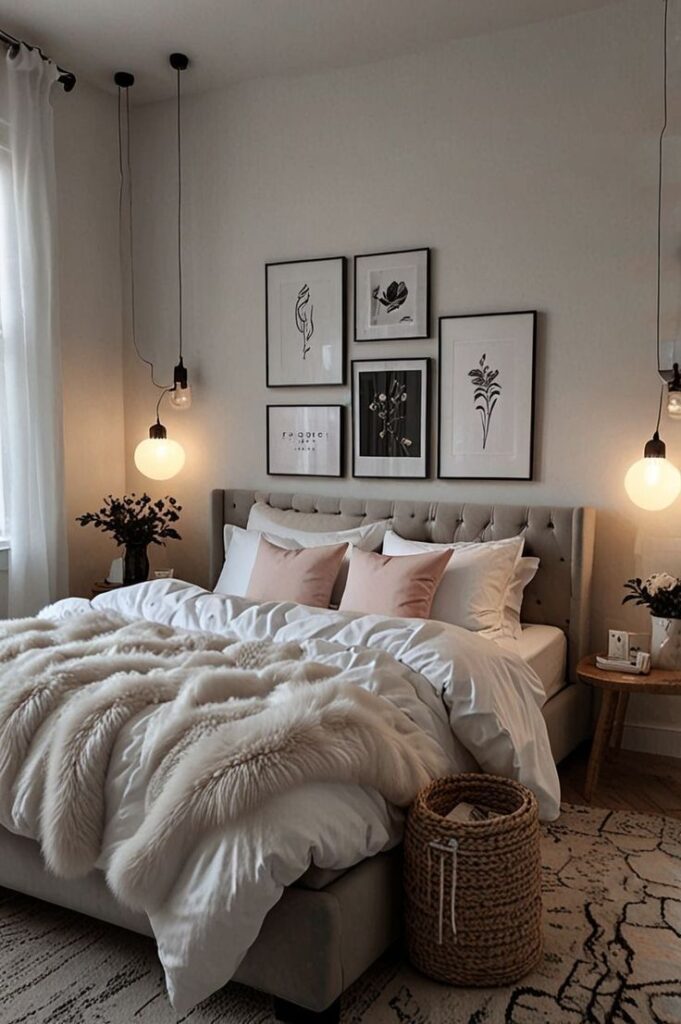
If you stack 12 throw pillows on the bed every morning, you basically sign up for a part-time job you don’t need.
For a minimalist bedroom, you focus on:
- High-quality sheets in cotton or linen
- One duvet or comforter in a solid or very subtle pattern
- Two to four pillows that you actually sleep on
- Maybe one simple throw blanket or one accent pillow
You skip:
- Busy patterns that fight with everything else
- Shiny satin everything
- Pillow mountains that land on the floor every night
When you keep the bedding minimal, the bed looks inviting, not fussy. You create hotel-level calm without hotel-level housekeeping.
5. Pick Simple, Functional Nightstands
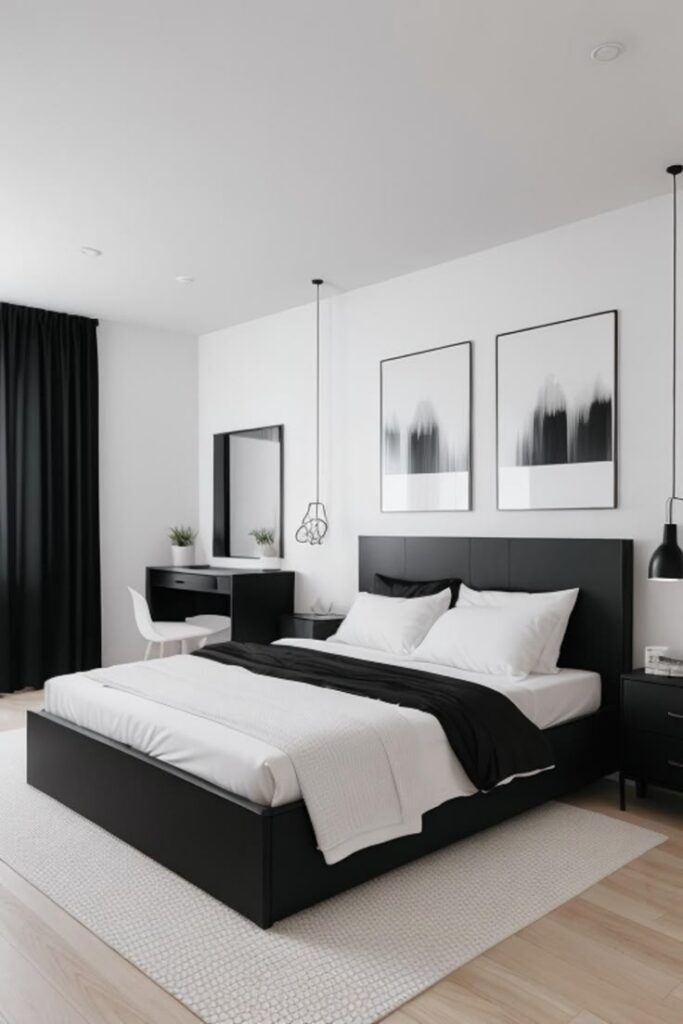
Nightstands turn into clutter magnets faster than any other surface in the bedroom.
You choose nightstands with intention:
- Simple shapes and solid colors
- One or two drawers for hidden storage
- A surface just big enough for essentials
You keep only a short list of items on top:
- Lamp
- Book or e-reader
- Water glass or carafe
- Maybe one small decor piece (a candle, a small plant, or a tray)
You avoid turning your nightstand into a pharmacy, charging station jungle, and library all at once. You stash everything else inside drawers or in another room.
6. Use Smart, Hidden Storage (So Stuff Stops Staring at You)
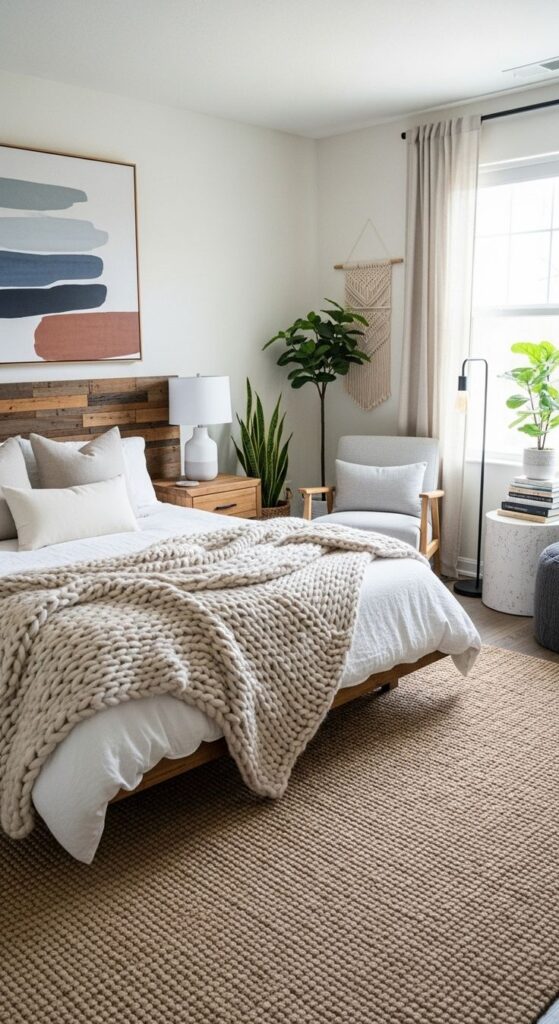
Minimalist bedrooms still hold stuff; they just hide it well.
You organize the storage you already have and add clever options when you need to:
- Under-bed storage boxes for off-season clothes or extra bedding
- Slim dressers with enough drawers but simple fronts
- Closet organizers with bins and dividers for categories
- Storage benches at the foot of the bed for blankets or pillows
You label bins or boxes clearly, so you actually know where things live. You create a spot for everything, so clutter doesn’t wander around and camp out on your floor.
When you open your closet and see order instead of chaos, your brain thanks you.
7. Limit Decor to a Few Intentional Pieces
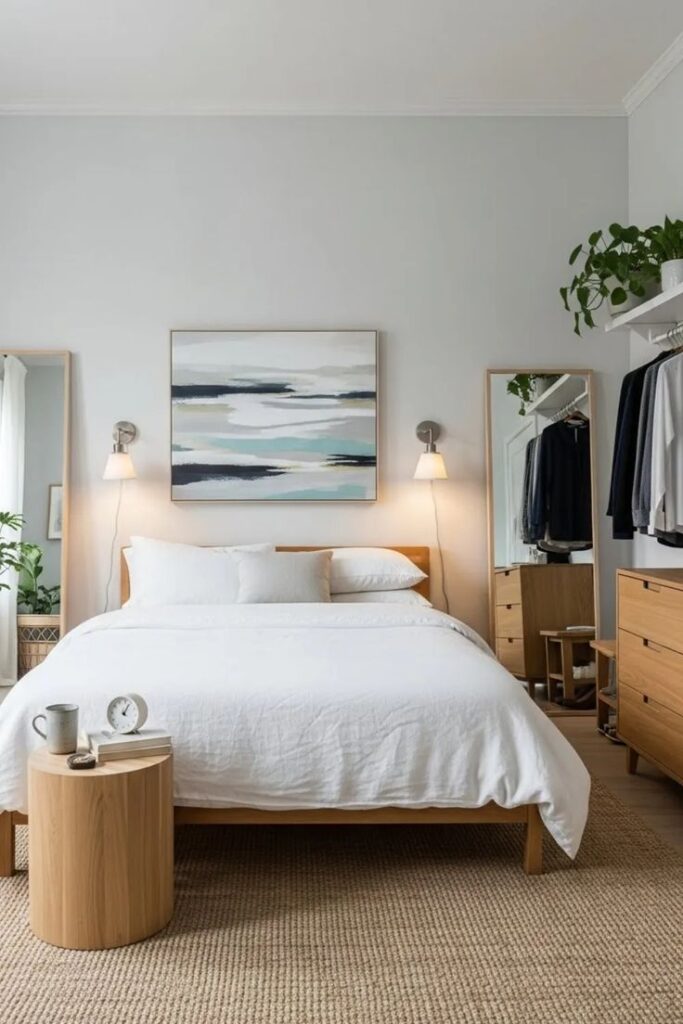
Minimalism doesn’t mean you move into a beige prison. You still decorate. You just decorate with meaning.
Instead of loading every surface with trinkets, you pick a few intentional pieces:
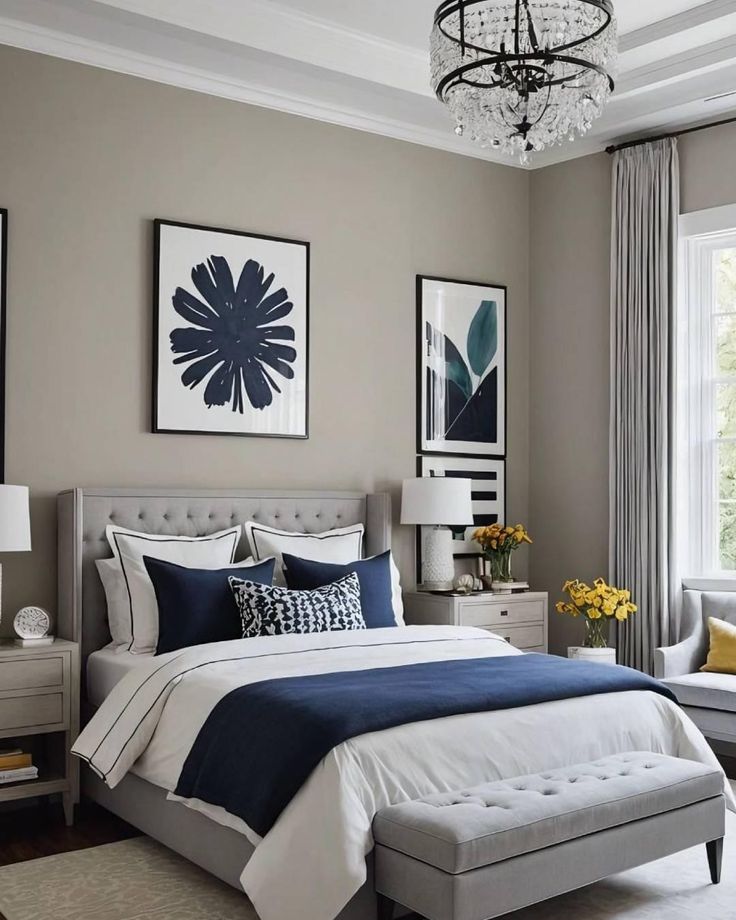
- One or two art prints above the bed
- A small stack of favorite books
- One plant or vase on a dresser
- A sculptural object or candle on the nightstand
You skip the “gallery wall of 27 frames” in the bedroom, unless you love visual noise (and you probably don’t, or you wouldn’t read this).
IMO, the best rule: if everything stands out, nothing stands out. So you let a few things shine and give them space.
8. Embrace Clean Lines and Simple Shapes
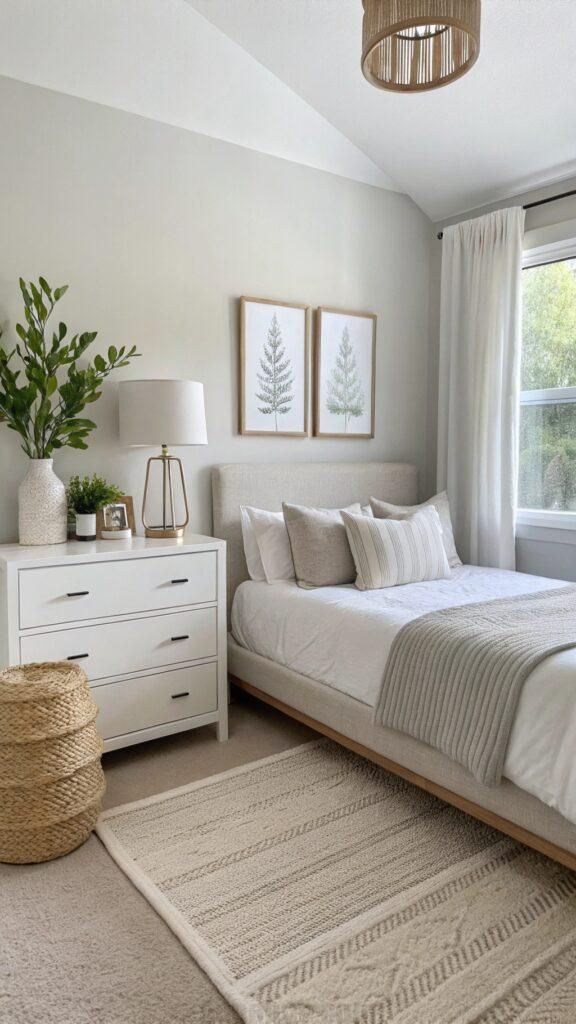
You create a minimalist bedroom faster when you stick to clean lines and simple shapes.
You choose furniture with:
- Straight edges instead of heavy curves
- Flat-front drawers instead of ornate panels
- Sleek handles or even handle-less push-to-open designs
You keep patterns simple: stripes, grids, or solid colors. You avoid busy florals, wild geometrics, or anything that buzzes visually.
Ever notice how your eyes feel tired when you stand in a super busy room? Simple lines reduce that visual noise and help your brain actually rest.
9. Keep Tech Under Control (Your Sleep Will Love You)
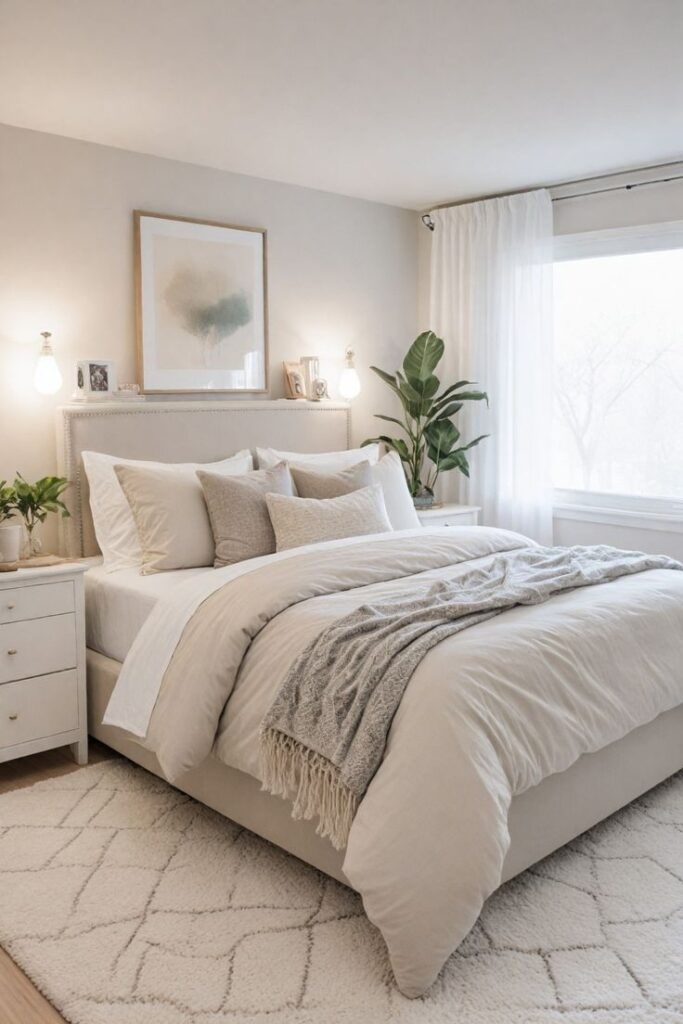
If your bedroom looks like a mini command center, your brain refuses to relax.
You reduce tech in the bedroom, not because minimalism demands it, but because your sleep improves when you do.
You try:
- Moving the TV out of the bedroom (I know, harsh, but it helps)
- Charging your phone in another room or across the room
- Using a simple alarm clock instead of your phone
If you still keep tech around, you use:
- Cord organizers
- Cable boxes
- Charging stations that look clean and minimal
You create a rule: no random gadgets on nightstands. Because nothing kills a calm mood faster than a tangle of wires and blinking lights :/
10. Let Light Work for You: Natural and Artificial
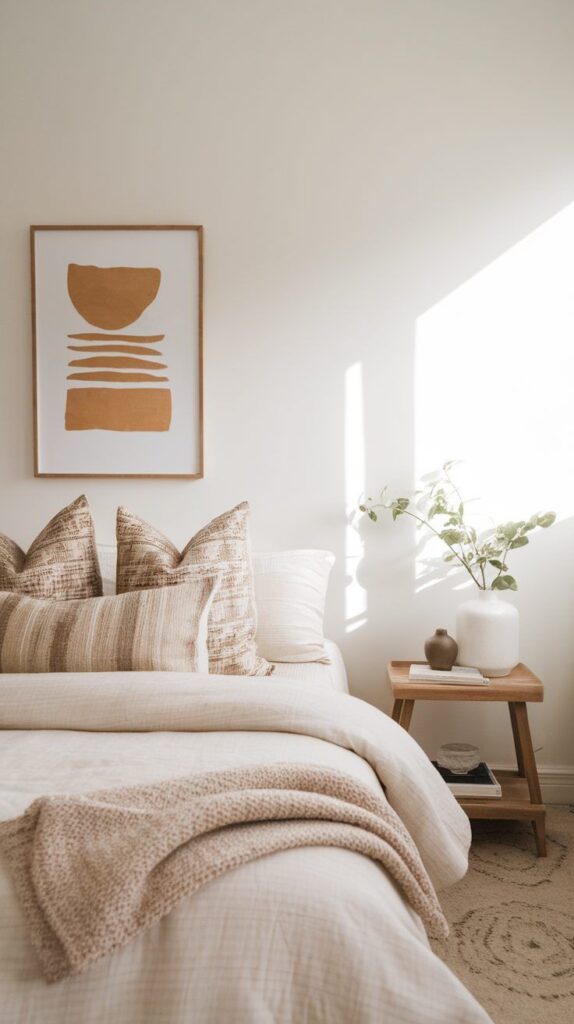
Light controls how your minimalist bedroom actually feels.
You invite natural light as much as possible:
- Use light, sheer curtains instead of heavy drapes if privacy allows
- Keep window sills clear
- Place mirrors opposite windows to bounce light around
For artificial lighting, you layer a few simple sources:
- A ceiling light or pendant for general lighting
- Bedside lamps or sconces for reading
- Maybe one soft, warm accent light (like a small table lamp or floor lamp)
You use warm white bulbs (around 2700K–3000K) to keep the room cozy, not clinical. FYI, harsh blue light from cool bulbs or screens tricks your brain into “day mode” and fights your sleep.
11. Create a Clear-Surface Habit
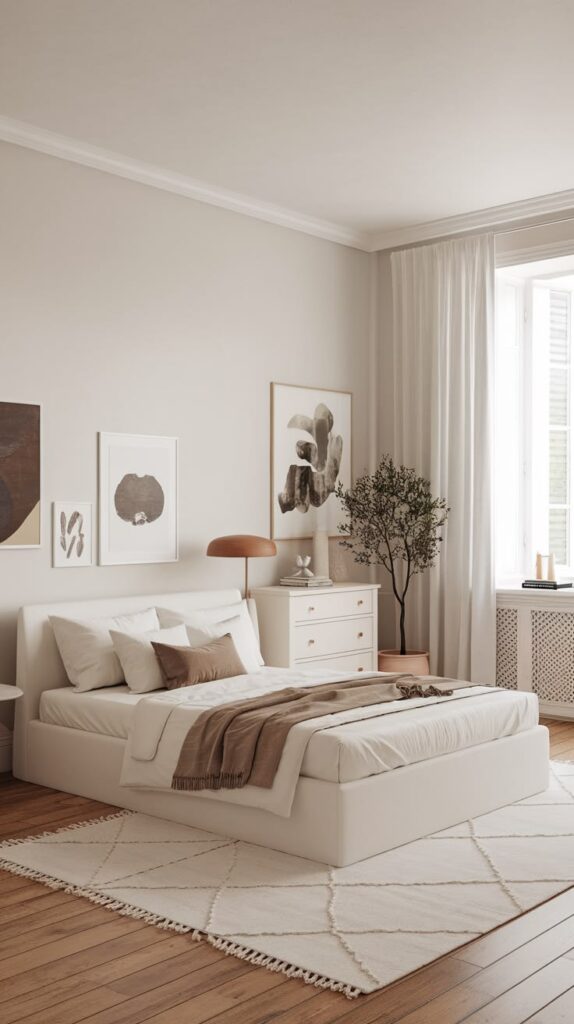
Minimalist rooms stay minimalist only if you maintain them. Wild concept, I know 🙂
You create a quick daily reset ritual that keeps surfaces clear:
Every evening, you:
- Hang or fold clothes instead of dropping them on the chair
- Clear the nightstand of random items
- Put books, glasses, and chargers back in their spots
- Toss trash and recycle paper immediately
You spend five minutes on this. That tiny habit saves you from overwhelming weekend cleanup sessions.
When you walk into a bedroom with clear surfaces, the room feels larger, calmer, and more intentional—without any extra furniture or decor.
12. Add Warmth with Natural Materials and a Few Plants
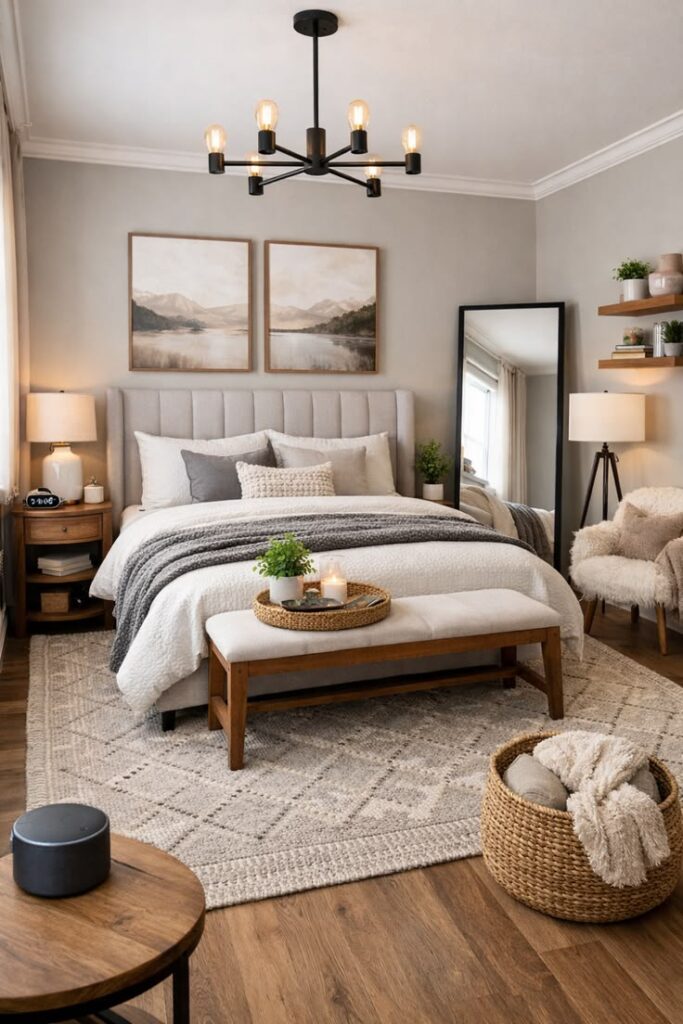
Minimal doesn’t equal sterile. You add warmth with natural materials and a little greenery.
You mix in:
- Wood furniture or accents (oak, walnut, birch)
- Natural fiber rugs like jute, wool, or cotton
- Linen or cotton for bedding and curtains
- One or two indoor plants (snake plant, pothos, peace lily)
You stay selective. You don’t turn the bedroom into a jungle; you just use plants like decor that also clean the air a bit.
Natural elements balance all the clean lines and neutral colors. They keep your minimalist bedroom from feeling cold and make it feel like a calm, grounded retreat instead. 🙂
Putting It All Together: Your Calm, Clutter-Free Bedroom
You don’t need a complete renovation to create a calm, clutter-free, minimalist bedroom. You just stack a few smart choices:
- Declutter hard and keep only what matters
- Choose a soft, simple color palette
- Simplify the bed and bedding
- Use hidden storage, not visible piles
- Limit decor and let a few pieces shine
- Control tech and lighting so the room supports rest
- Maintain clear surfaces with a simple daily routine
You can start small. Clear your nightstand tonight. Sort one drawer. Remove one decor piece from each surface and see how the room feels.
Your bedroom doesn’t need perfection. It just needs space to breathe and a layout that supports rest instead of chaos. When you walk into that calmer, more minimal room and feel your shoulders drop a little, you’ll know you moved in the right direction.