13 Space-Saving Mini Gym Ideas for Studio Living
Your studio apartment probably nails the “cozy” vibe a little too hard, right?
You try to roll out a yoga mat and suddenly your coffee table turns into an enemy combatant.
I get it. I live in a tiny place too, and I still refuse to give up my workouts.
So I built a space‑saving mini gym that actually fits inside my studio without turning it into a storage unit with a bed.
You want the same thing: real workouts, minimal clutter, zero angry neighbors, and no squat rack in your kitchen (tempting though).
Let’s build that mini gym together.
Why a Mini Gym Works Perfectly for Studio Living
You don’t need a full room to stay strong and fit.
You just need smart, compact gear and a layout that works with your space instead of fighting it.
A good studio-friendly mini gym usually:
- Fits in one corner or under the bed
- Stores vertically or folds flat
- Handles full-body workouts
- Keeps noise low so your downstairs neighbor stays calm
Once you think in terms of multi-use, foldable, and stashable, the whole “no space” excuse disappears fast. 🙂
Ready to upgrade that 400-square-foot empire?
1. Foldable Adjustable Dumbbells: Heavy Weight, Tiny Footprint
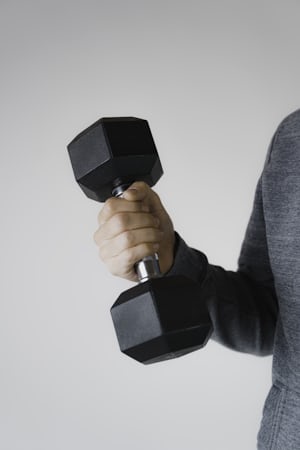
Adjustable dumbbells basically cheat the laws of space.
Instead of 10 pairs of regular dumbbells, you grab one pair that adjusts from light to heavy with a dial or pin.
Why they crush it in a studio:
- They replace an entire rack of weights.
- They often sit on one small stand or tuck under your bed.
- You hit strength, hypertrophy, and conditioning with one setup.
I use a pair that goes from 5 to 52.5 lbs.
I slide them next to my TV stand, and they take up less space than my laundry basket, which says a lot about my laundry habits.
Look for:
- Weight range: At least 5–50 lbs per side for versatility.
- Shape: More compact designs feel better for presses and rows.
- Locking system: Make sure plates stay put when you move fast.
Ever try goblet squats, lunges, rows, presses, and carries in one session with just two dumbbells? You’ll feel like you own a full gym… without the lease.
2. Resistance Bands: The Ultimate “Stuff in a Drawer” Gym
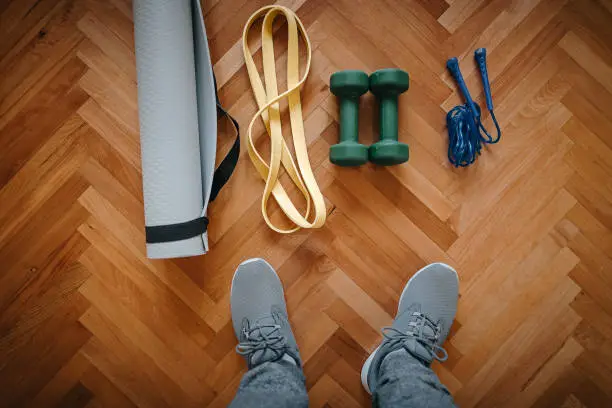
If you own zero bands, your tiny gym misses its MVP.
Resistance bands handle warm-ups, strength work, mobility, and even full workouts when you feel lazy about dragging out anything heavy.
Perks for studio living:
- They fit in one drawer or small box.
- They weigh almost nothing.
- You anchor them to doors, tables, or furniture.
I keep a set of loop bands and handle bands in a shoebox under my bed.
That little box turns into a full home gym for travel, rehab, and high-rep burnouts.
Grab:
- Long tube bands with handles for rows, presses, pulldowns.
- Short loop bands for glute work and shoulder stability.
- Heavy long loops for assistance on pull-ups or added resistance on squats.
FYI, bands humble a lot of “strong” people when they try slow, controlled reps. Just saying.
3. Walking Pad or Under-Desk Treadmill: Cardio Without a Giant Machine
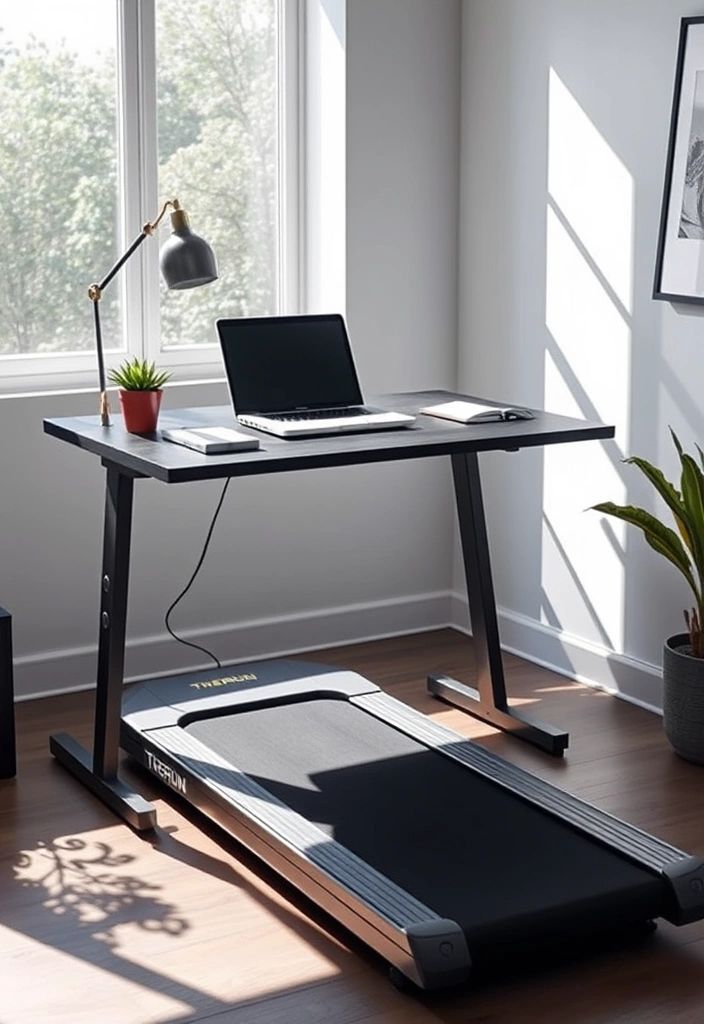
You probably don’t want a full treadmill dominating your living room like some awkward shrine to cardio.
A walking pad solves that.
These flat, low-profile treadmills slide under your couch or bed when you finish walking.
Why they shine in a mini gym:
- They fold or stay flat and tuck away.
- They work for walking workouts, step goals, or slow walking while you watch Netflix.
- They create almost no impact noise on most floors.
I roll mine out between my couch and TV stand. I walk for 30–40 minutes while I watch a show, then I slide it away. No permanent footprint.
Check for:
- Speed range: At least up to 3–4 mph for brisk walks.
- Weight capacity: Make sure it suits your body weight.
- Storage height: Measure under-bed or couch clearance.
Who needs a long walk outside when the weather throws tantrums?
4. Foldable Workout Bench: Big Lifts, Tiny Storage

A foldable bench boosts your mini gym instantly.
You unlock bench presses, rows, hip thrusts, Bulgarian split squats, step-ups, and more, without adding a bulky object that hogs your floor forever.
Why a foldable bench works:
- It folds flat and fits under the bed or behind a door.
- It supports heavy lifting if you pick a sturdy model.
I fold my bench and lean it behind my clothing rack. I barely notice it until chest day comes around and I suddenly act like a powerlifter again.
Key features:
- Weight rating: Aim for 600 lb+ total capacity for durability.
- Locking pins: You want solid clicks, not wobbly joints.
- Transport handle or wheels: Makes quick setup easier.
Ever tried incline dumbbell presses in a studio with no bench? Floor presses only carry you so far.
5. Doorway Pull-Up Bar: Serious Upper Body, Zero Floor Space
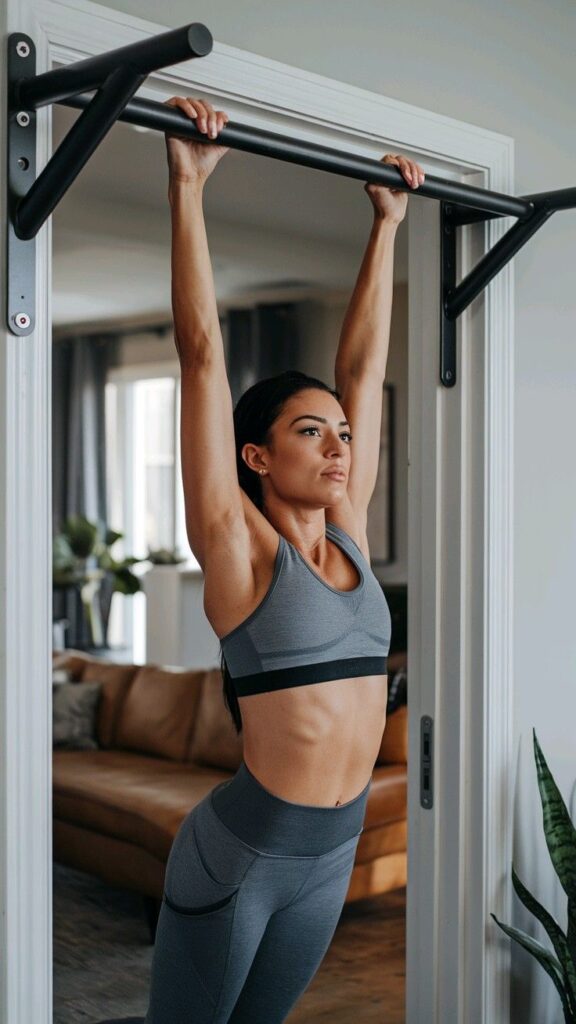
The classic doorway pull-up bar still proves itself every time.
You attach it to a sturdy door frame, crush pull-ups, then remove it in seconds.
Why it fits studio life:
- It uses vertical space, not floor space.
- It stores in a closet, under the bed, or between furniture.
- It unlocks pull-ups, chin-ups, hanging leg raises, and isometric holds.
I hang my pull-up bar in the bedroom doorway. I knock out a few reps every time I walk through, which feels nerdy but works absurdly well.
What to watch:
- Door frame depth and width: Match it to your doorway.
- Padding: Protects trim and paint.
- Multiple grip options: Neutral, wide, close grips hit more muscle.
You want wider lats and a stronger grip? You don’t need a big cable machine; you just need one decent doorway.
6. Suspension Trainer: Full Gym From One Strap
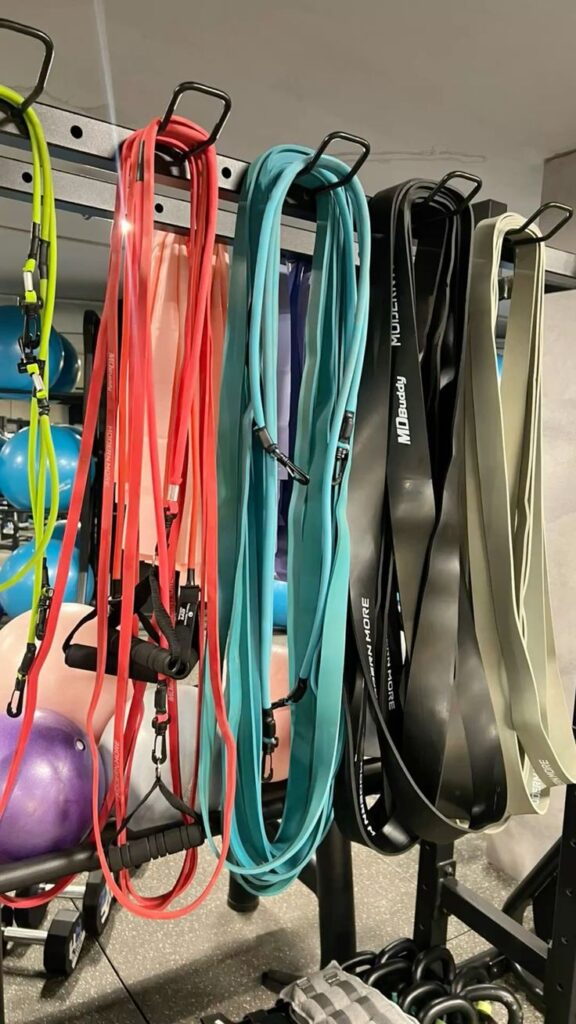
A suspension trainer (like TRX-style straps) turns your door, ceiling beam, or sturdy bar into a functional training station.
You adjust your body angle and crush rows, push-ups, lunges, core work, curls, triceps, and more with one piece of gear.
Why it rocks for studio living:
- It packs into a small pouch.
- It attaches to doors, beams, or outdoor anchors.
- It suits all levels, from beginner to savage.
I hang mine from a door anchor and run through rows, one-leg squats, and fallouts. My core hates me but in a good way.
Buy or set up:
- Adjustable straps with solid buckles.
- Door anchor for quick indoor setup.
- Foot cradles for hamstring curls and core slides.
Ever want a functional-training gym without a cable tower that dominates your room? This solves that.
7. Adjustable Kettlebell: Swings Without the Kettlebell Army
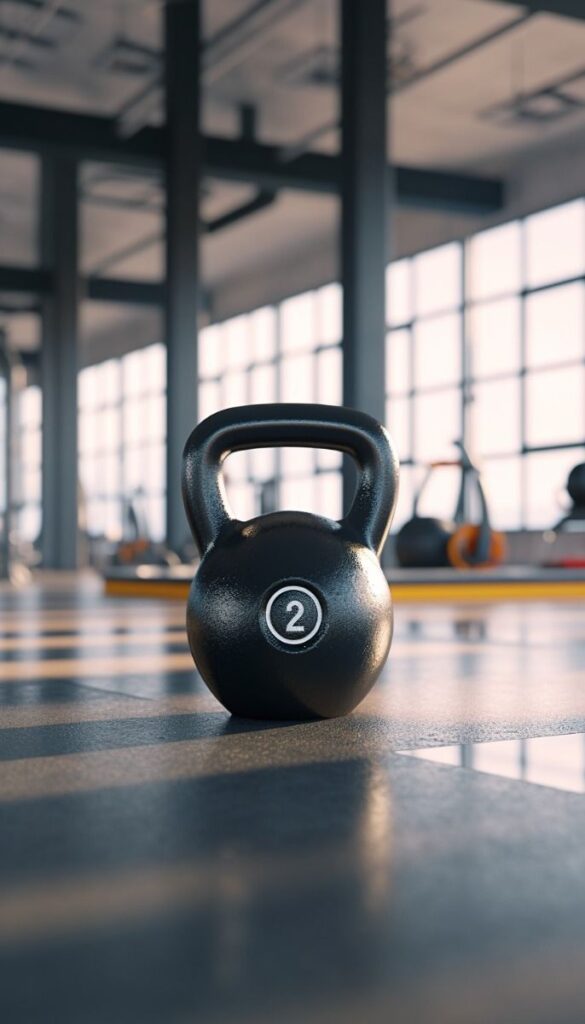
Kettlebells feel amazing for swings, cleans, presses, snatches, carries, and goblet squats.
But multiple kettlebells eat space fast.
An adjustable kettlebell fixes that by stacking plates or using a dial to change the load.
Why a single adjustable bell works:
- It replaces 4–6 kettlebells.
- It covers strength and conditioning.
- It stores easily in a corner.
I keep mine next to my plant. The plant looks fake; the conditioning from heavy swings stays very real.
Important details:
- Weight range: Aim for ~10–40 lbs or more, depending on your level.
- Handle width: You want enough space for two-hand swings.
- Locking mechanism: No loose plates mid-swing, obviously.
When you swing for 30 seconds and gasp for air in your studio, you basically run stadium stairs… without leaving your rug.
8. Yoga Mat + Compact Props: Your Quiet Recovery Zone
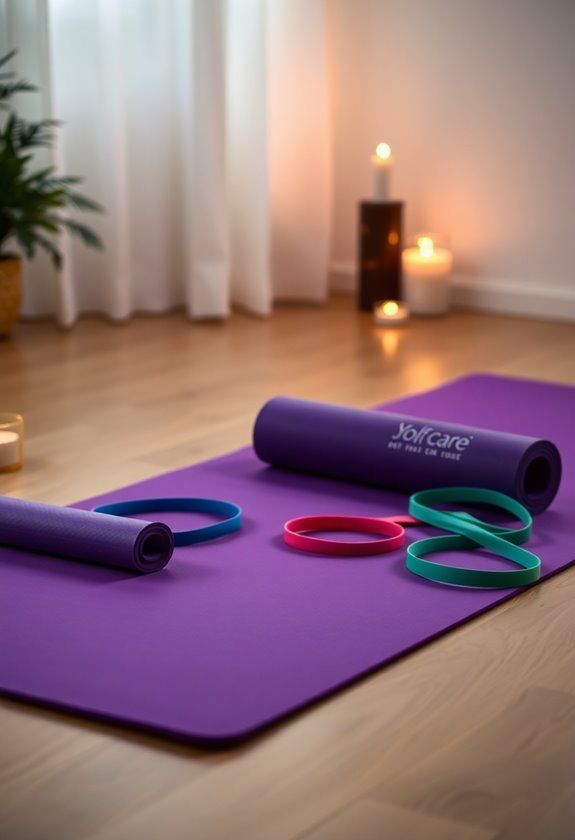
Every mini gym needs a movement and recovery zone, even if that zone fits inside 2×6 feet.
A good yoga or exercise mat plus a couple of small props gives you a base for:
- Stretching
- Core work
- Yoga flows
- Bodyweight training
Why it matters for studio living:
- The mat rolls up and slides behind furniture.
- Props like blocks and straps stack neatly.
- You create a clear “training space” even in one room.
I store my mat in a corner basket. When I roll it out, my brain switches into “workout mode” automatically.
Grab:
- Thick yet firm mat (not too squishy for balance).
- Foam blocks and a strap if you like yoga or mobility work.
- Optional small pillow or bolster for low-back support during stretching.
Ever notice how 10 minutes of stretching after a long day changes your mood more than scrolling for half an hour?
9. Wall-Mounted Storage: Pegboards, Hooks, and Racks
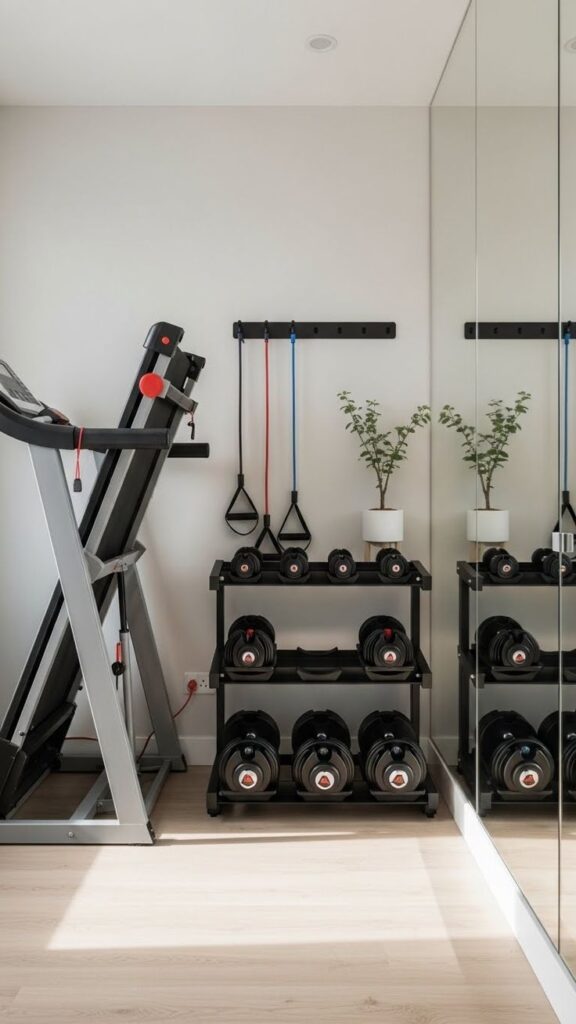
You only own “no space” problems until you start using your walls.
Wall-mounted storage turns dead space into an organized fitness zone.
Ideas that work great:
- Pegboard with hooks for bands, jump ropes, and straps.
- Small wall racks for a mat, foam roller, or bar.
- Floating shelves for sliders, timers, and chalk.
I installed a small pegboard and immediately felt like a slightly more put-together person. All my gear hangs neatly instead of forming a mysterious gear pile.
Benefits:
- You free floor space.
- You see your gear, which reminds you to actually train.
- Your studio looks more like a mini gym, less like a storage closet.
Why shove everything into one overflowing bin when your wall just stands there doing nothing?
10. Mini Stepper or Compact Elliptical: Low-Impact Cardio, Small Space
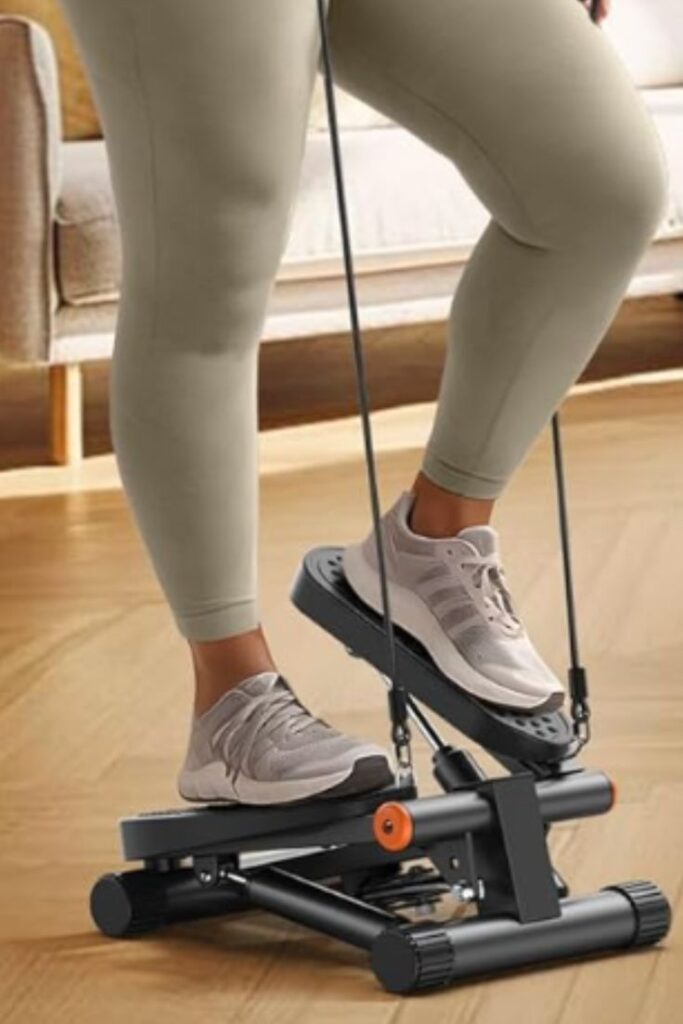
If you want low-impact cardio in your studio, a mini stepper or compact elliptical delivers a lot for its size.
These little machines often fit under a desk or in a corner, but still offer solid heart-rate work.
Why they earn a spot in a mini gym:
- They take up very little floor area.
- They focus on quiet, smooth movement.
- They help on days you don’t want long walks or runs.
I place my mini stepper in front of a window and step for 15–20 minutes while I listen to podcasts. Zero commute, max laziness, still counts as cardio.
What to check:
- Stability: Wide base and non-slip feet.
- Noise level: Important for apartments.
- Resistance options: Adjustable tension for progression.
You want easy, joint-friendly cardio that doesn’t dominate the room? A compact stepper wins.
11. Compact Power Tower Alternatives: Wall-Mounted Strength
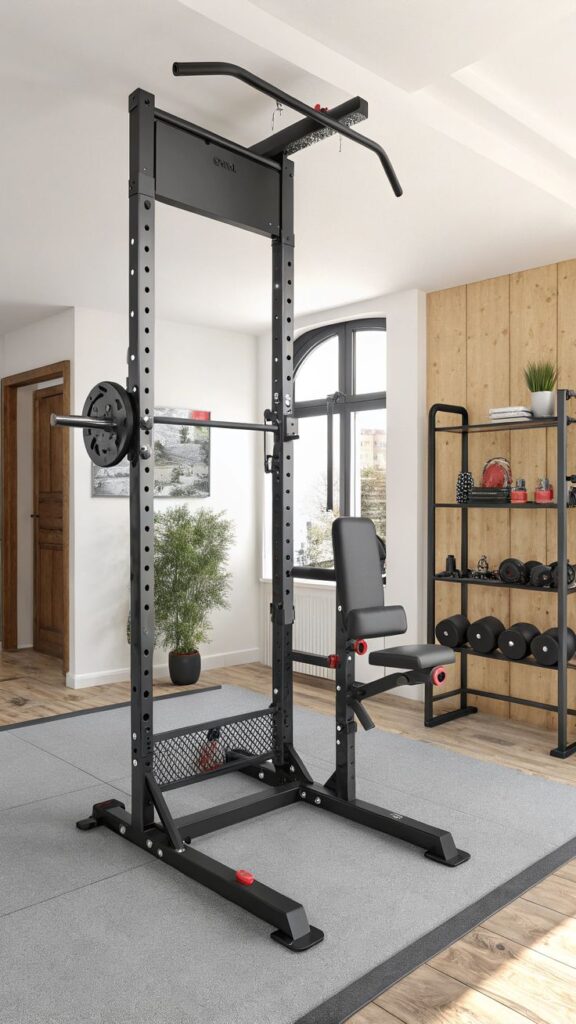
A full power tower eats too much room in most studios.
Instead, you create a modular wall station.
Use:
- A doorway pull-up bar (from earlier).
- Dip handles that attach to the bar or a wall.
- Ab straps for leg raises.
This combo gives you:
- Pull-ups and chin-ups
- Dips
- Hanging core work
I combine a pull-up bar with attachable dip bars. I remove them when I finish, and my doorway goes back to normal human mode.
Tips:
- Confirm your wall or door frame supports your weight.
- Use padding to protect surfaces.
- Keep everything modular, so you remove it quickly.
Why cram a giant metal frame into your living room when a few clever attachments create the same exercises?
12. Storage Ottoman or Coffee Table Gym: Hidden in Plain Sight
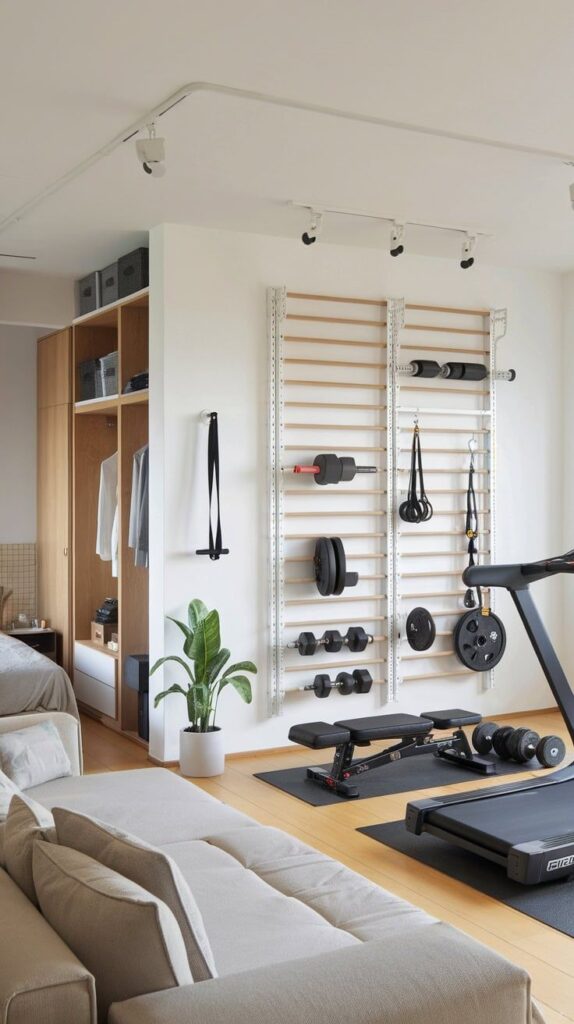
Your furniture can pull double duty.
A storage ottoman or lift-top coffee table hides your gym gear in style.
What you can stash inside:
- Dumbbells
- Bands
- Sliders
- Yoga blocks
- Jump rope
I stuff my bands, sliders, and a couple of lighter dumbbells inside an ottoman. Guests think it just holds blankets. Meanwhile, it holds my leg day.
Benefits:
- You keep clutter invisible.
- You still access your gear in seconds.
- Your room looks clean, not “home gym exploded”.
IMO, this trick matters a lot if you care about aesthetics as much as PRs. 😉
13. Corner Gym Nook: Layout Matters as Much as Gear
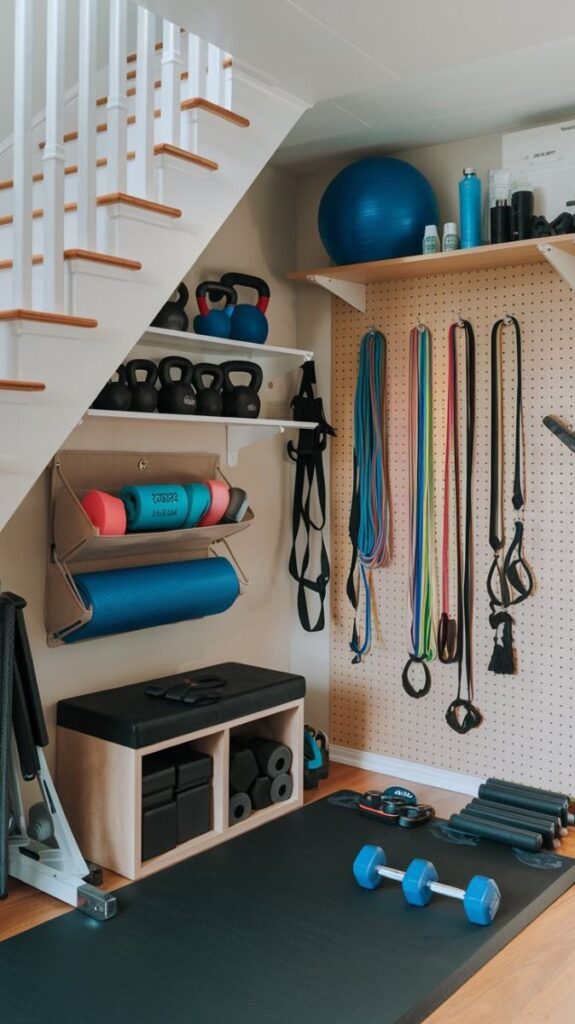
The best space-saving mini gym for studio living doesn’t just rely on equipment choices.
Your layout and habits also matter.
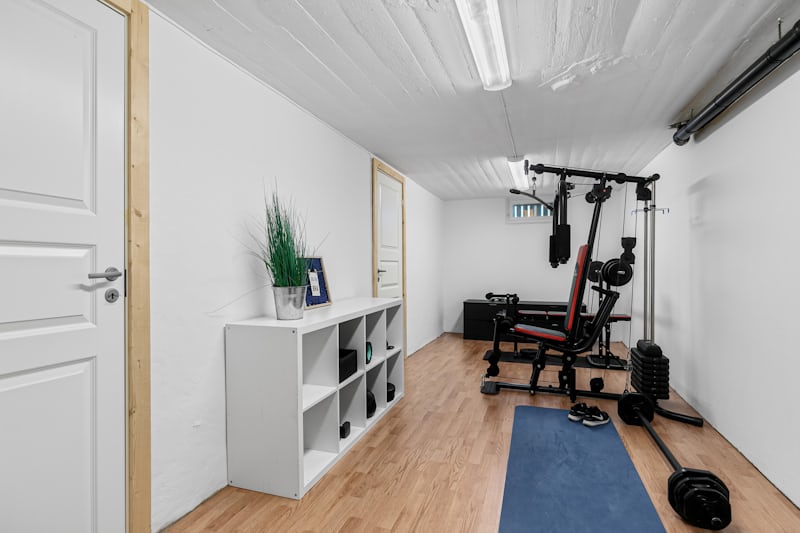
Pick one corner or wall and claim it as your “gym zone.”
Set up:
- A mat as your base.
- A wall rack or storage basket for gear.
- Your foldable bench, adjustable dumbbells, and bands nearby.
My “gym corner” sits next to my window. I roll out the mat, grab what I need, train, then restore everything to its place in under two minutes.
Why a dedicated nook helps:
- Your brain links that corner with workouts, not scrolling.
- You keep gear organized and accessible.
- You avoid spreading equipment all over the apartment.
Ever notice how you train more when your gear stays visible and ready, but not in the way?
Quick Mini Gym Setup Checklist
To build a seriously effective studio mini gym, start with:
- Adjustable dumbbells or kettlebell
- Resistance bands (loop + handle)
- Yoga mat
- Doorway pull-up bar or suspension trainer
- One cardio piece (walking pad, mini stepper, or compact elliptical)
- Foldable bench or at least a sturdy ottoman/box
Then add:
- Wall storage for gear
- Storage ottoman or coffee table for stealth mode
- Corner layout that keeps everything in one spot
You cover strength, cardio, mobility, and core with that setup, and you still walk through your apartment without parkour.