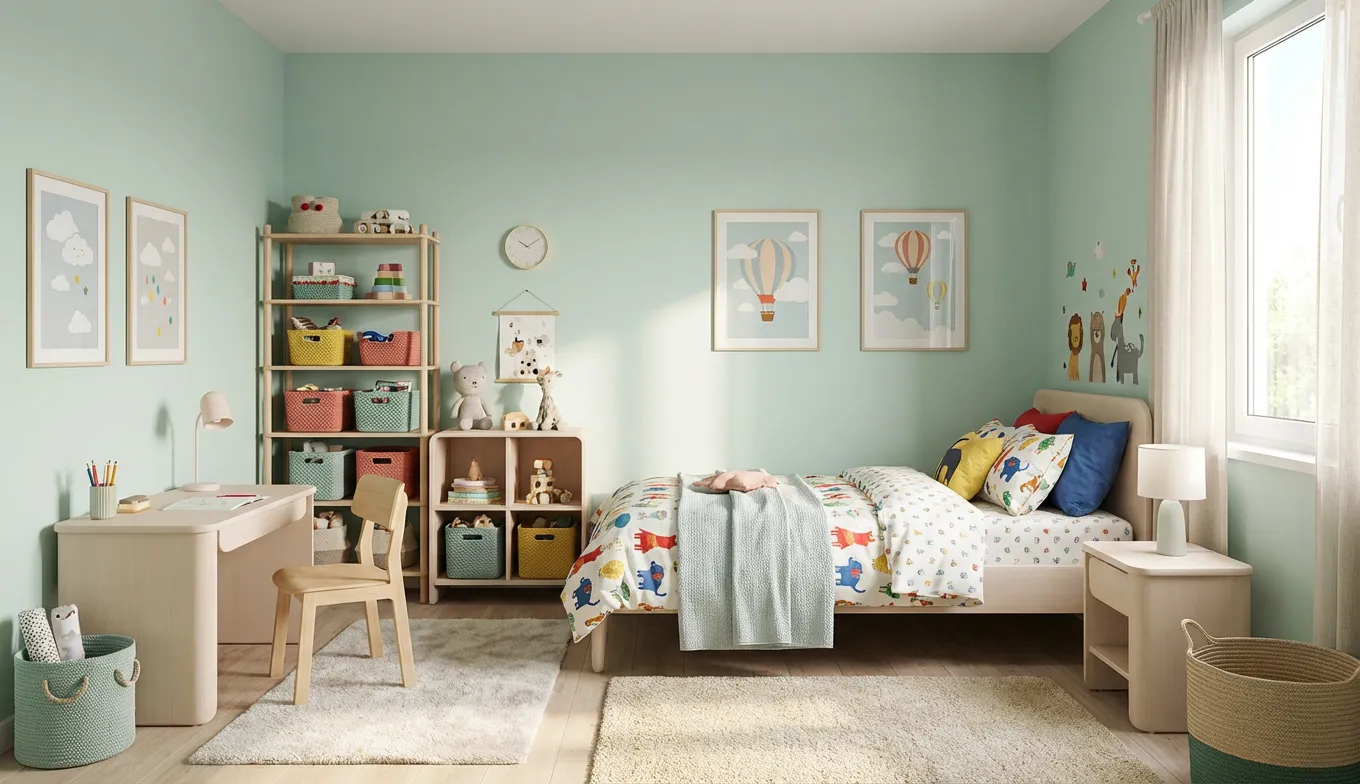
7+ Kids’ Bedroom Ideas for Shared and Small Spaces
Two kids, one tiny room, and roughly nine million toys… sound familiar?
You stare at that small kids’ bedroom and think, “Yeah, this can’t work.”
I get it. I once squeezed two wildly opinionated kids and a hamster cage into a room that felt smaller than my first closet. I tried three layouts, cried once, and then finally found a system that actually worked. So no, you don’t need a bigger house. You just need smarter kids’ bedroom ideas.
Let’s sort that room out together, one clever idea at a time.
1. Start With the Layout (Not the Cute Pillows)
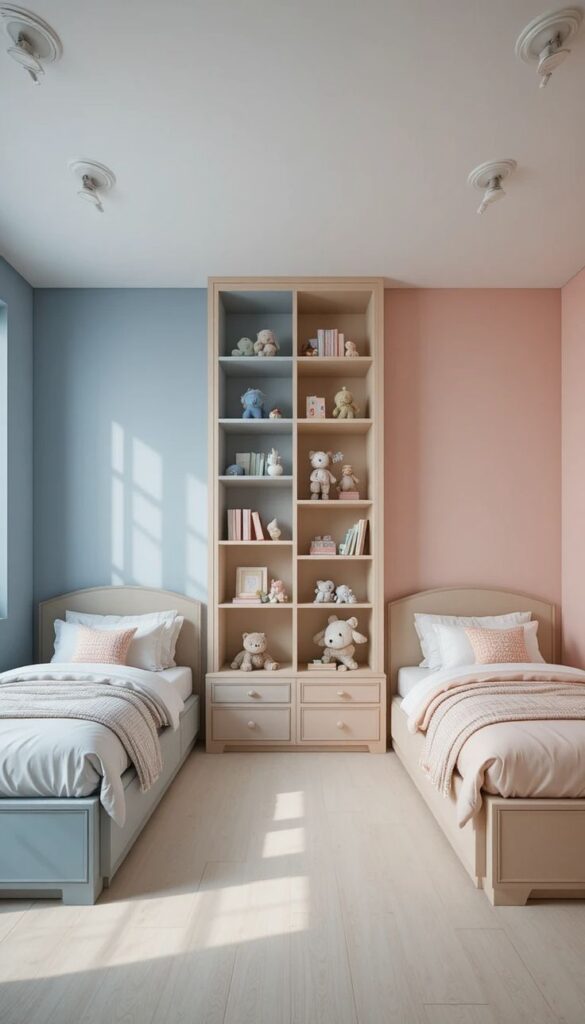
You know that moment when you fall in love with a cute duvet cover, then realize the bed doesn’t even fit where you wanted it? Yeah, that.
Before you shop for anything, plan the layout. A smart layout fixes half your problems in a small shared kids’ bedroom.
Map the room first
Grab a tape measure and note:
- Room size (length, width, height)
- Door swing (where it opens)
- Window position
- Outlets and radiators
Now ask yourself a few things:
- Where can you place the sleep zone so kids don’t stare at bright windows or hallway lights all night?
- Where can you create a play zone that doesn’t block doors or wardrobes?
- Where can you add a tiny study or craft zone when you need it?
I like to sketch two or three layouts on paper. I draw the beds, then I slide them around on the page like Tetris pieces. Ever notice how the room suddenly “grows” when you shift one bed against a wall? Magic.
Quick rule:
Place beds first, storage second, cute stuff last.
If the beds and storage work, everything else stays flexible.
2. Save Floor Space With Bunk and Loft Beds
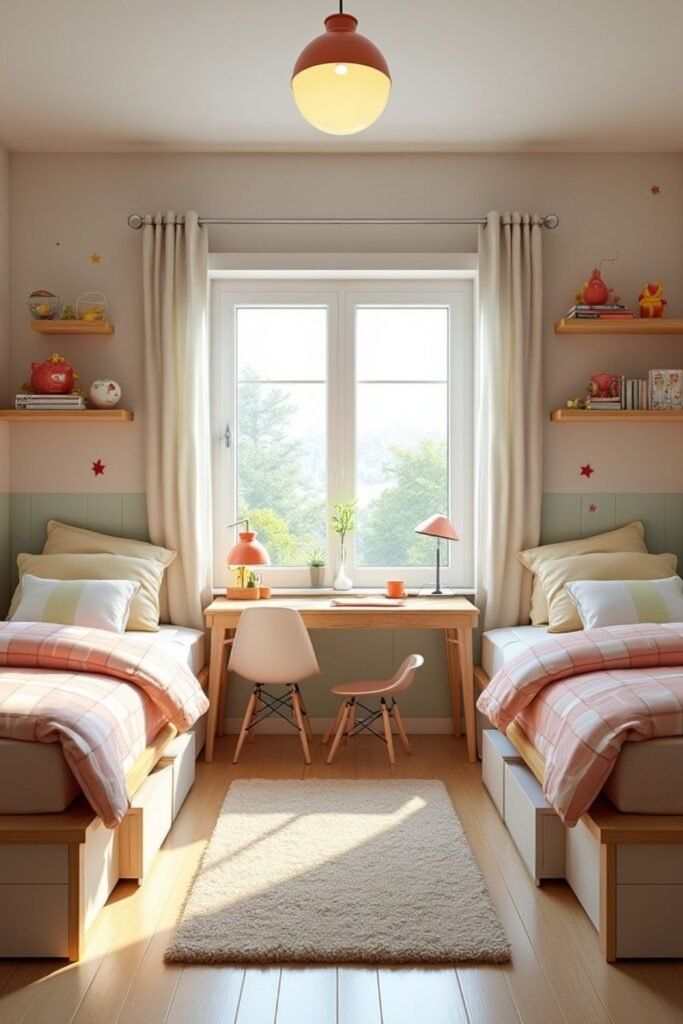
Kids treat bunk beds like amusement park rides, and parents treat them like space-saving superheroes. Everyone wins.
When you share a small kids’ bedroom, vertical space becomes your best friend. Bunks and lofts free floor space for play, storage, or that reading nook you secretly want for yourself.
Bunk bed options that actually work
Classic bunk bed
- Great for two kids with similar ages
- Keeps both beds in the same corner
- Leaves space for a small dresser or toy shelf
Bunk bed with storage stairs
- Stairs feel safer for younger kids
- Each step hides a drawer for clothes, toys, or books
- You pack a lot of storage into one piece of furniture
Loft bed + floor bed
- Perfect when one kid feels braver with a lower bed
- Loft bed gives you space under it for:
- A desk
- A reading nook
- A dresser
- Lower bed can slide slightly under the loft to save space
Safety stuff you should not ignore
You know that child who treats furniture like parkour equipment? I live with that child.
So I always check:
- Guardrails on the top bunk on all open sides
- Mattress height so it sits well below the rail
- Sturdy ladder or stairs that kids can climb without drama
- Ceiling height so the top kid doesn’t headbutt the light
I also keep the younger kid on the bottom bunk, no discussion. They complain once, then they enjoy the easier bathroom trips at night. 🙂
3. Max Out Storage (Without Turning the Room Into a Closet)
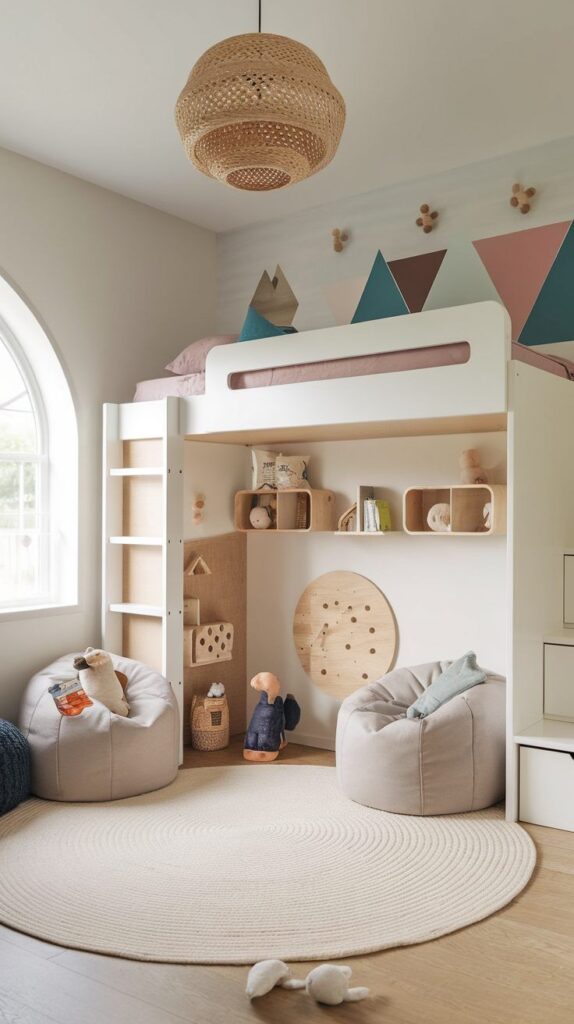
Clutter shrinks a small room faster than anything. Ever step on Lego at 2 a.m. and question your entire life plan? Same.
You fix a small kids’ bedroom by giving every single thing a home. Not a theoretical home. A real, reachable, “yes, you can actually put it away yourself” home.
Use under-bed space like a boss
Skip open space under the bed. That area turns into a black hole.
Try:
- Under-bed drawers for clothes, puzzles, or spare bedding
- Rolling bins for Lego, trains, or bulky toys
- Low flat boxes for off-season clothes or costumes
Label everything with pictures or colors so kids don’t yell “Where does this go again?” every five minutes.
Go vertical, not wide
You own walls. Use them.
- Tall, narrow bookcases instead of wide ones
- Stackable cube storage for toys and books
- Wall hooks for backpacks, hats, dance bags, superhero capes
- Over-door organizers for shoes, art supplies, or tiny dolls
When I added simple wall hooks for backpacks, my hallway stopped looking like a sports store exploded. Highly recommend.
Hide the ugly, show the cute
Not everything needs full display.
- Store messy toys in opaque bins
- Keep books, favorite stuffed animals, and art on open shelves
- Use matching baskets to make the room feel calm and tidy
You create a room that looks styled even when kids shove stuff into bins 10 minutes before guests arrive. FYI, that still counts as “clean.”
4. Create Zones in One Tiny Room
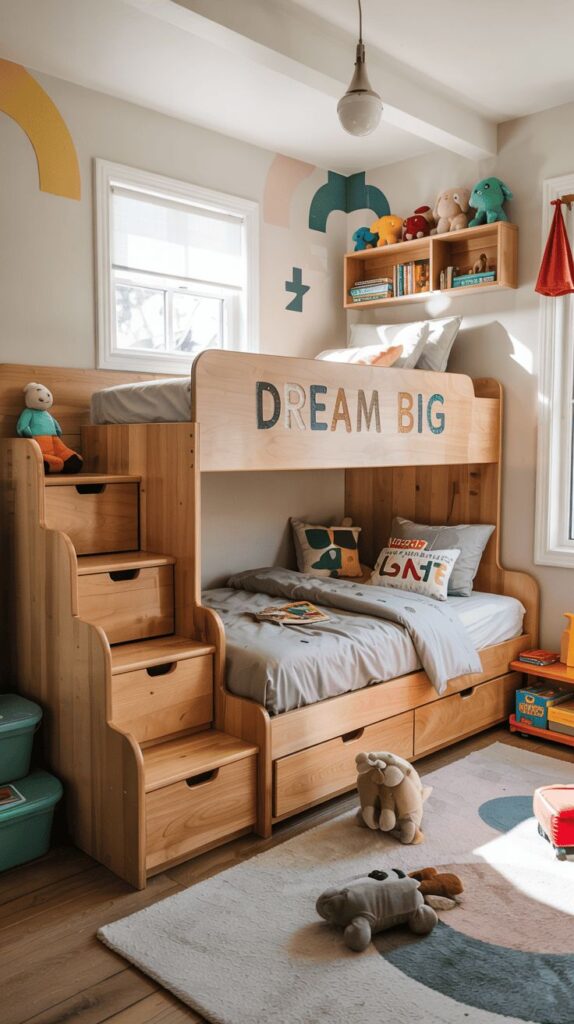
You can turn a small shared kids’ bedroom into a mini studio apartment. Sounds dramatic, but it works.
Kids behave better (usually) when they understand, “I sleep here, I play there, I draw over there.”
Ever notice how they calm down the second they curl up in a cozy corner with books? That’s the power of zones.
Simple ways to zone the room
You don’t need walls. You just need visual cues.
- Use a rug under the play area
- Use a different rug or mat under the reading or study nook
- Hang a wall lamp or string lights over the reading corner
- Use different wall colors or decals on each side of the room
Example layout in a small rectangular room
- Place bunk beds along the shorter wall
- Put a small wardrobe and dresser opposite the beds
- Use the window wall for a slim shared desk or craft table
- Leave the center of the room for a rug and play zone
Kids learn:
- Beds = quiet
- Desk = work or crafts
- Rug = chaos and dinosaurs
That small bit of structure saves your sanity later.
5. Let Each Kid Own a Space (Even in One Shared Room)
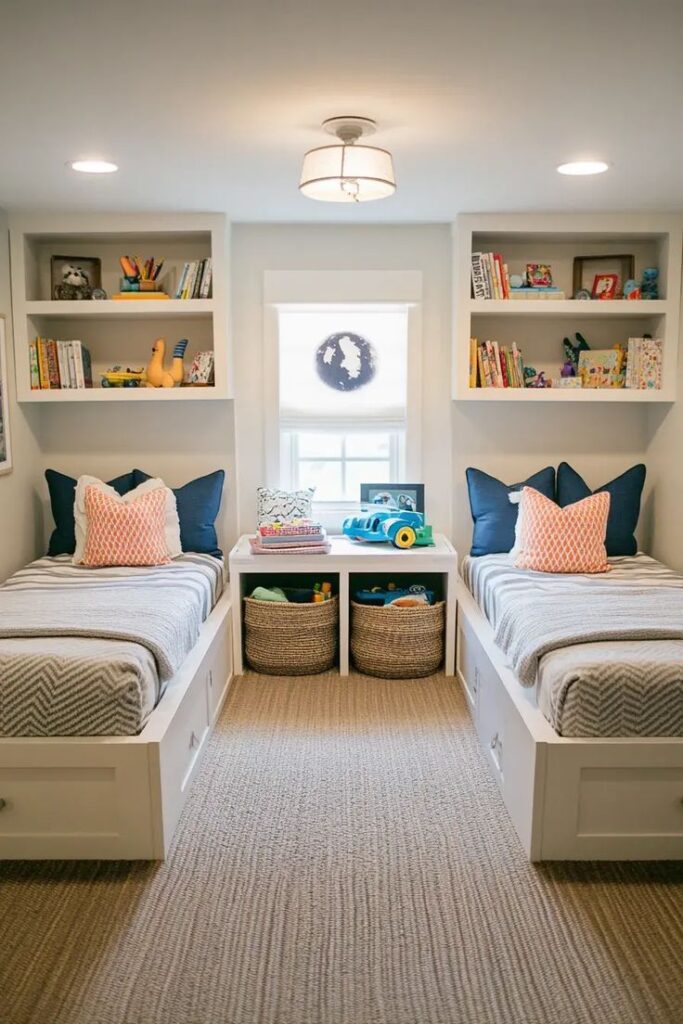
Shared room does not mean shared identity. One kid loves unicorns, the other loves dinosaurs, and you sit there with a neutral paint sample and a headache.
You keep the base neutral and personalize their zones. IMO this trick fixes half the arguments about “This is MY side.”
Give them each a “mini territory”
You can split the room visually without big drama.
Try:
- Different bedding for each kid
- Individual shelves or cubbies for their treasures
- Name signs above their beds
- Different accent colors on each side of the room
You can paint the main walls a soft neutral, then add:
- A soft blue blanket and wall art with space for one child
- A peach or sage blanket and nature art for the other
Both kids feel seen, and the room still looks intentional.
Create private little corners
Even in a small kids’ room, you can sneak in tiny privacy moments.
- Hang a canopy or curtain over one bed
- Add clip-on reading lights for each bunk
- Use a small shelf or pocket organizer next to each bed for secret treasures
Kids love these micro “apartments.” They stash notes, books, or random rocks, and the room suddenly feels more special to them.
6. Use Walls and Ceilings Like Extra Furniture
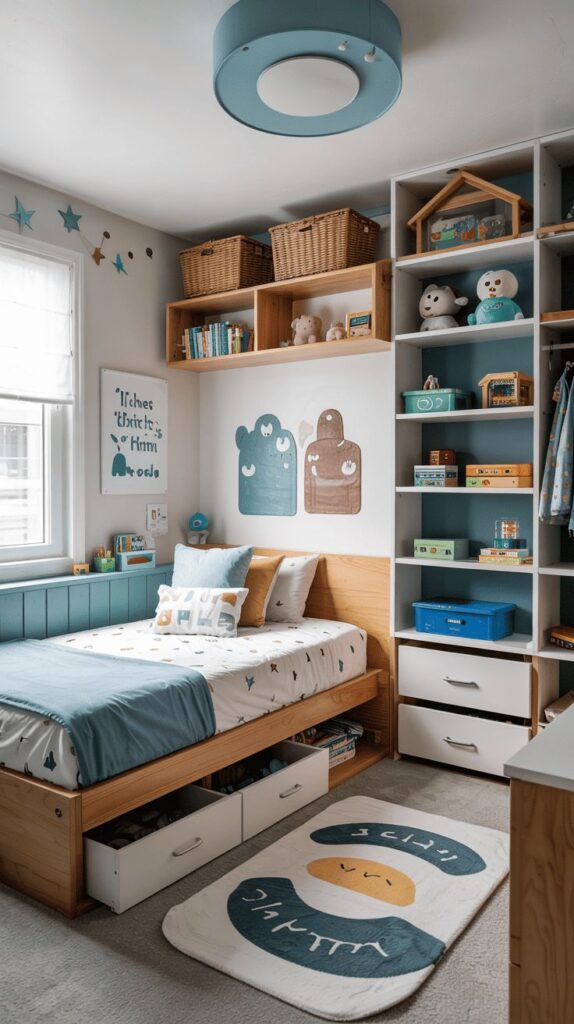
Floor space disappears fast, but walls and ceilings still sit there like unused real estate. So you treat them like extra furniture.
Ever see a room feel bigger just because you lifted lamps and shelves off the floor? That visual trick works very well in small kids’ bedrooms.
Smart wall ideas
Try these:
- Wall-mounted bookshelves near the bed for bedtime stories
- Pegboards for art supplies, small toys, or hair stuff
- Magnetic boards for drawings, photos, and weekly charts
- Hooks at kid-height for robes, hats, and bags
Pegboards became my secret weapon. I rearrange cups, hooks, and shelves as kids grow, and I avoid another random storage unit on the floor.
Use the ceiling too
You can hang:
- Canopies for beds or reading nooks
- Hanging planters with faux plants for a bit of fun
- Nets or hammocks for stuffed animals
Those stuffed animal hammocks save half your bed space, no joke. You sweep all the plush chaos into the net, and the beds finally look like beds again.
7. Keep Clutter Under Control (Without Losing Your Mind)
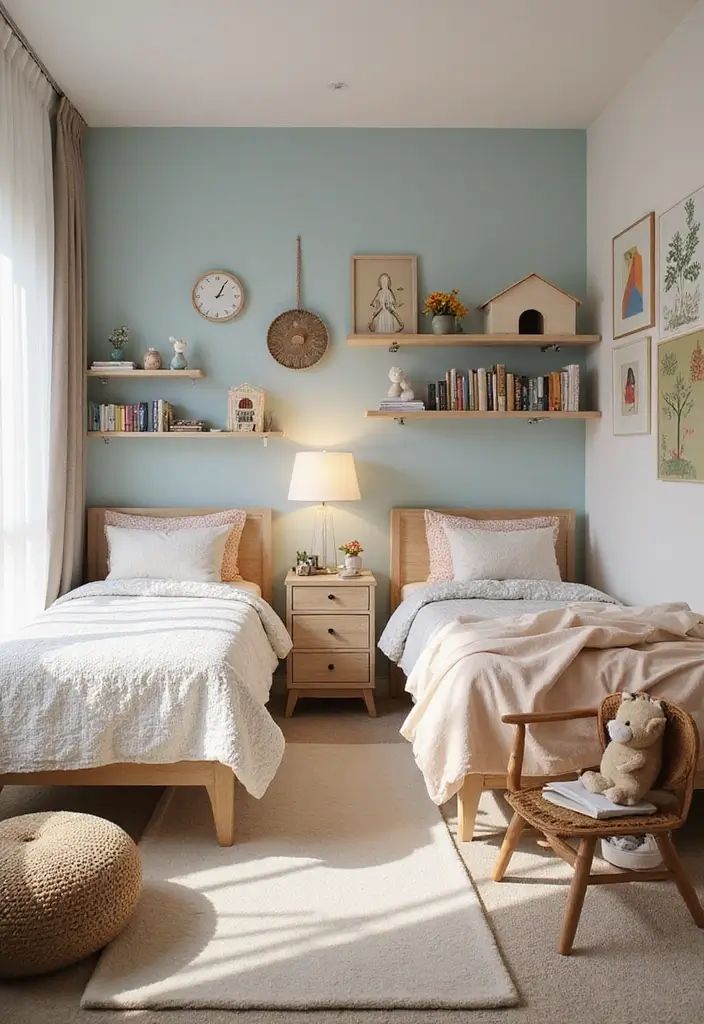
You can set up the best kids’ bedroom ideas on earth, and clutter still sneaks back like glitter. You never completely beat it, but you can set up a system that makes it manageable.
Use toy rotation
Kids play with what they see. So you:
- Keep a small number of toys out on shelves
- Store extra toys in bins in a closet or under the bed
- Swap toys every few weeks
Kids treat old toys like new ones, shelves stay less chaotic, and cleaning takes less time.
Give everything a clear home
You keep this simple:
- Books go on the lowest shelves
- Building toys go in one or two labeled bins
- Art supplies go in a caddy or drawer unit
- Dress-up clothes hang on a low rail or live in a trunk
If you need a rule, use this:
If kids can’t put it away easily, you chose the wrong storage.
Build tiny daily habits
I like a 5–10 minute reset before bedtime.
- Kids toss toys into bins
- Kids stack books
- You straighten blankets and clear the floor
You set a timer and turn it into a race. No one complains about cleaning for 5 minutes, and the room stays more or less under control. Well, most days. 😉
Extra Style Tips That Still Work in Small Spaces
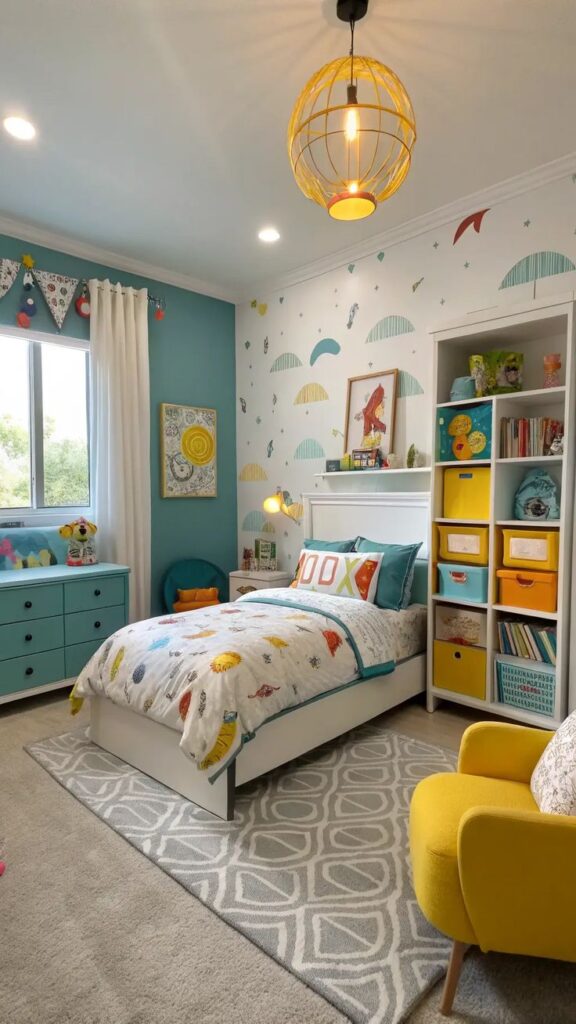
You can still make the room cute, even when you optimize it for function. The trick? Choose things that work hard and look good.
Stick to a simple color palette
You don’t need fifty colors in a tiny room.
Try:
- One main neutral (white, soft gray, beige)
- One or two accent colors that both kids like
- Small pops of brighter colors in art or pillows
A contained palette makes the room feel bigger and calmer, even when toys spread out during playtime.
Choose multi-tasking decor
Look for:
- Pinboards or magnetic boards that display art instead of cluttering walls
- Wall decals instead of heavy art pieces
- Pendant lights or wall lamps instead of table lamps that steal surface space
I also love patterned rugs in shared kids’ rooms. They hide crumbs, marker dots, and that one smear of slime that just appears from nowhere.
Final Thoughts: Small Room, Big Potential
You don’t need a giant playroom to give kids a room they love. You just need a smart plan and a few space-saving kids’ bedroom ideas that match real life.
You:
- Plan the layout before you buy anything
- Use bunk or loft beds to free floor space
- Treat storage like a priority, not an afterthought
- Create zones for sleep, play, and study
- Let each kid own a corner of the room
- Use walls and ceilings like bonus furniture
- Build simple routines that keep clutter in check
You tweak as your kids grow, and the room grows with them. If you feel stuck, sketch the room, move the “furniture” on paper, and start with just one change—maybe bunk beds or better storage. Small moves usually create big wins.