10 Interior Design Living Room Tips from Top Professionals

You stare at your living room, tilt your head, and think, “Why doesn’t this look like the photo I saved?”
I’ve done that too. Many, many times. 🙂
You don’t need a full renovation, a bigger budget, or a magic wand. You just need a few pro-level interior design living room tips that actually work in real homes, not just in perfectly staged catalogs.
Let’s walk through what the pros do, translate it into real-people language, and fix that slightly-chaotic-but-potentially-gorgeous living room of yours.
1. Start with how you actually live in the room
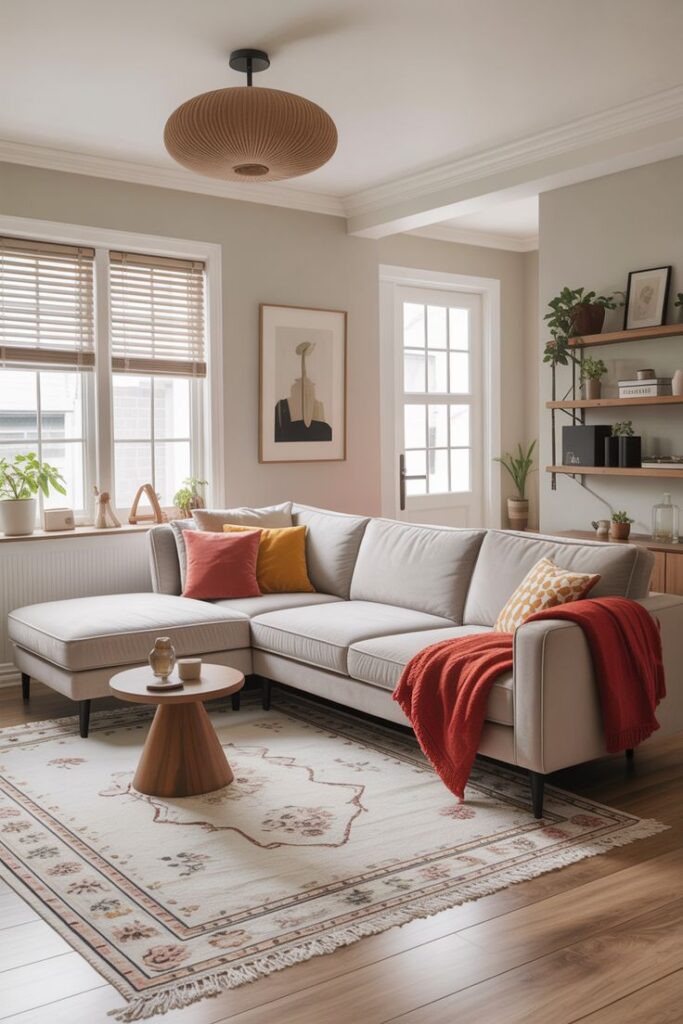
Most people start with a sofa. Pros start with a plan.
Ask yourself a few questions before you buy anything:
- What happens here most? TV, reading, kids’ play, entertaining, naps? (Yes, naps count as a priority.)
- How many people use the room at once? Two? Four? Eight during game night?
- Do you need storage in here? Toys, blankets, books, console clutter?
When you know the function, you design with intention instead of vibes only.
Grab a notebook or your phone and sketch a rough layout.
Mark where you want:
- The main conversation area
- The TV or main focal point
- Walkways so everyone can move without playing furniture hopscotch
You set the rules of the space first, then you invite the furniture. Not the other way around.
2. Pick a strong focal point (and respect it)
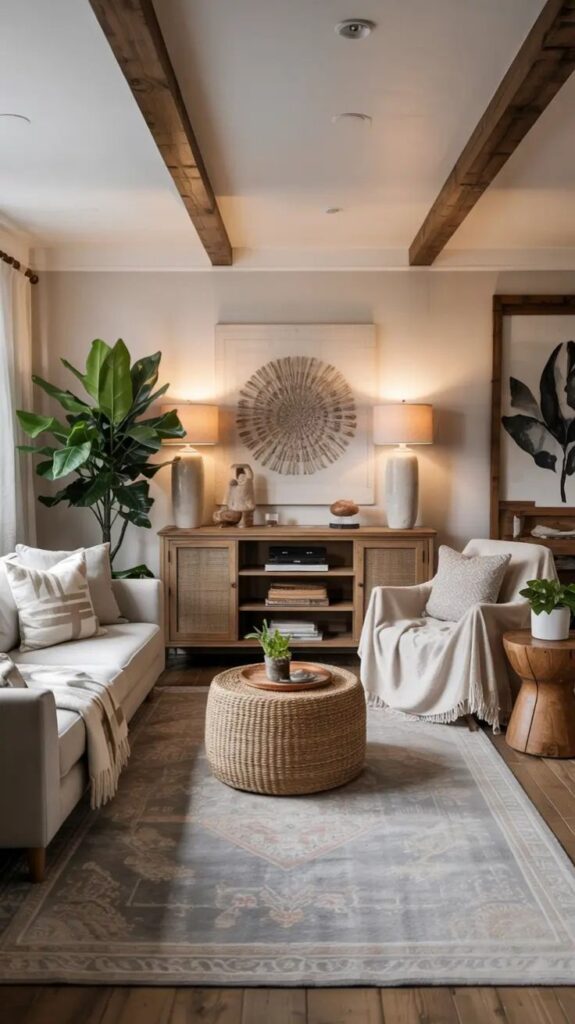
Ever walk into a room and feel your eyes ping-pong between the TV, a random plant, and an oversized mirror? That happens when you skip a clear focal point.
Pros always anchor a living room with one main star:
- A fireplace
- A TV wall
- A huge window with a view
- A bold art piece or gallery wall
- A dramatic built-in or shelving unit
Pick one main focal point. Then aim your main seating toward it.
You can still keep other pretty things in the room, but you treat them as supporting characters.
When your furniture faces the focal point, the room suddenly feels intentional, not chaotic.
3. Nail scale and proportion (so your sofa doesn’t eat the room)
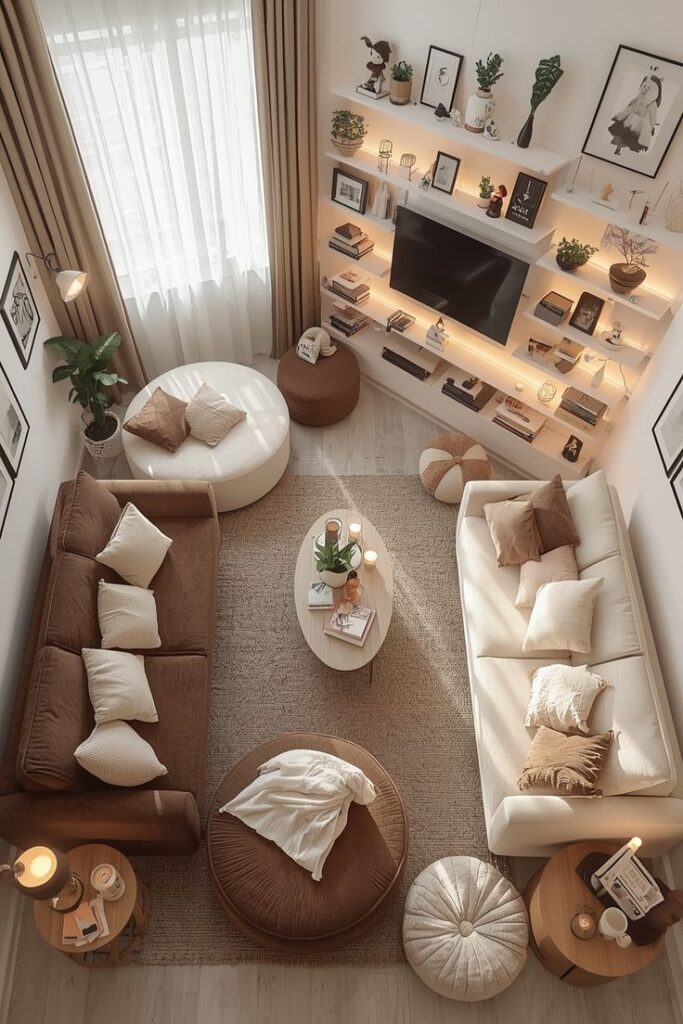
I once dragged home a massive sectional because it looked incredible in the showroom.
My living room then looked like the sofa moved in and allowed me to visit occasionally.
Scale makes or breaks a living room.
Use these quick pro guidelines:
- Leave 30–36 inches of walkway space where people need to pass.
- Choose a coffee table around ½ to ⅔ the length of your sofa.
- Keep the coffee table about 14–18 inches from the sofa.
- Match seat heights of chairs and sofas so no one sits in the “kid chair” by accident.
If your space feels small, choose lower-profile furniture so the room feels more open.
If you own a big room, use generously sized pieces and more seating so the space doesn’t feel like a lobby.
When you respect scale, even budget furniture looks more expensive.
4. Treat lighting like a pro-level secret weapon
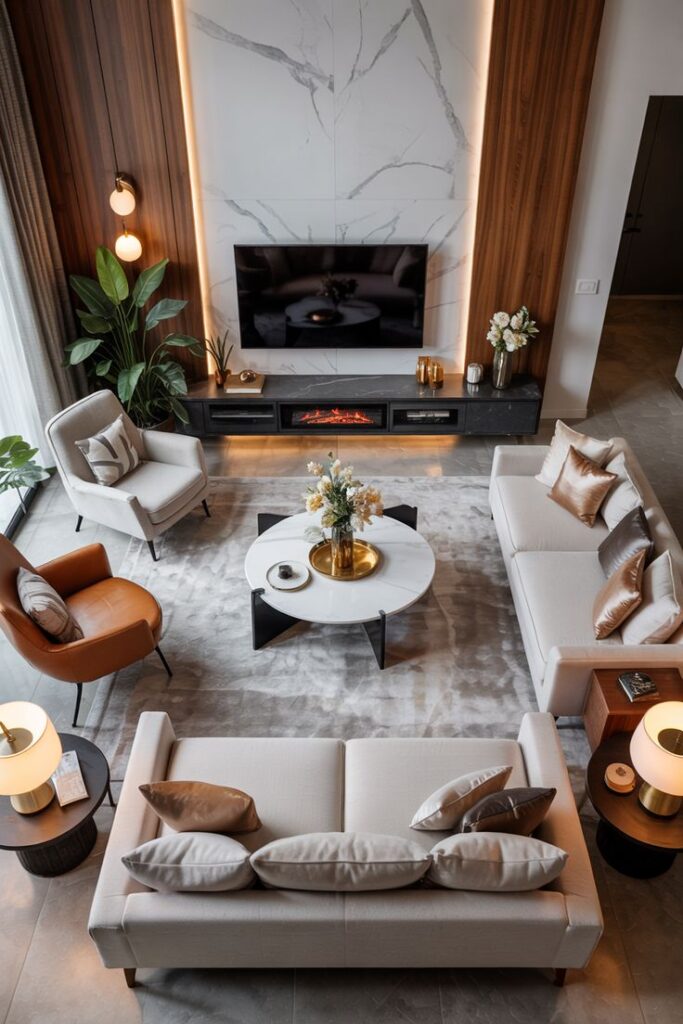
If your only light comes from a lonely ceiling fixture, your living room probably feels flat and harsh.
Pros always layer three types of lighting:
- Ambient: your main overall light (ceiling fixture, chandelier, track lighting).
- Task: focused light for reading, working, or hobbies (floor lamp by a chair, desk lamp).
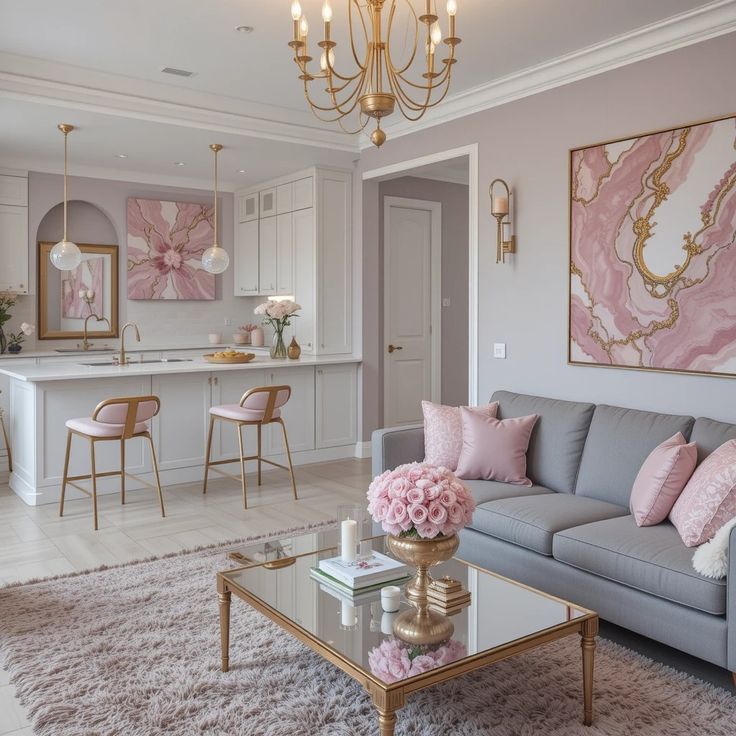
- Accent: mood and drama (table lamps, wall sconces, picture lights, candles).
Aim for at least three light sources in a typical living room.
Spread them around the room, not just in one corner.
Use warm bulbs (around 2700K–3000K) for a cozy glow instead of that interrogation-room-white light.
FYI, dimmers change everything. A dimmer turns the same room from “kids’ homework zone” to “movie night” without moving a single piece of furniture.
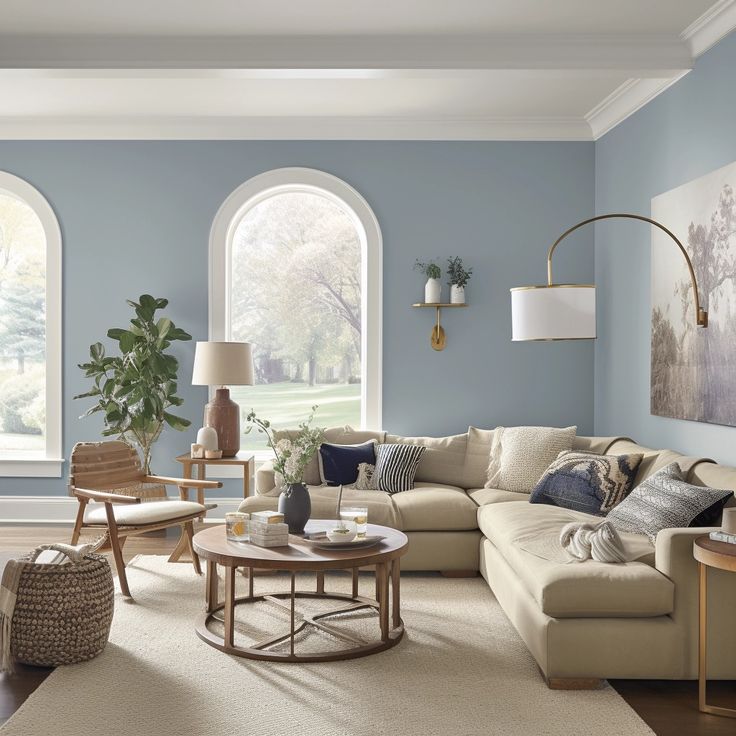
5. Build a simple color palette (and stick to it)
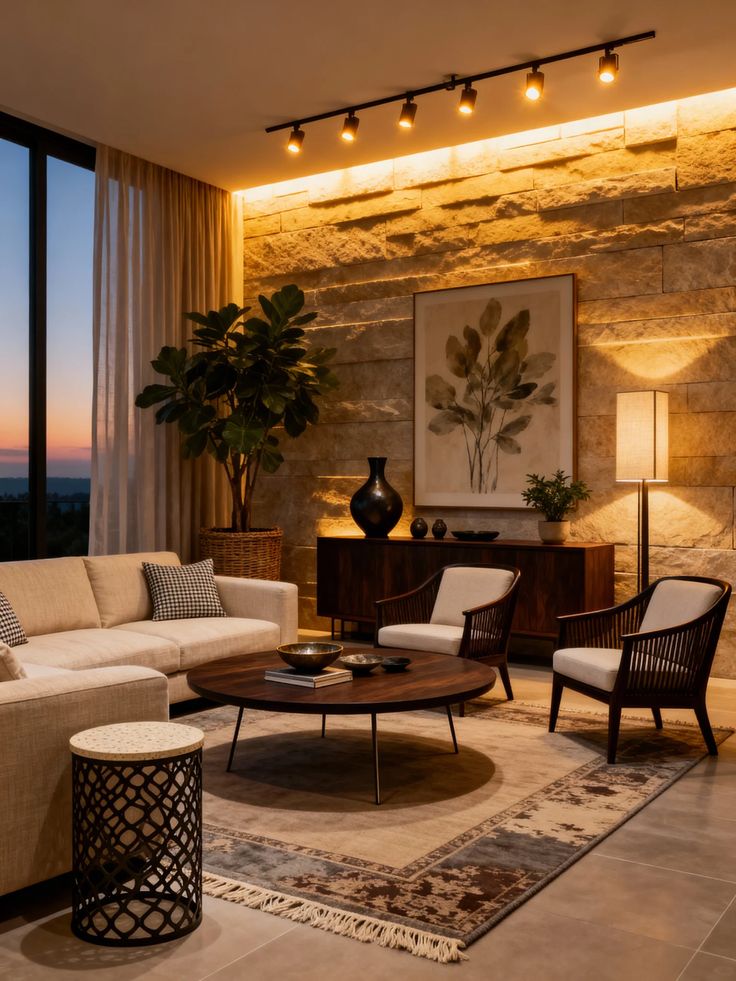
Ever mix five different neutrals and suddenly your room feels… strangely chaotic?
Color looks simple, but it controls the whole vibe.
Pros usually follow a planned palette, not a random collection of “colors I liked at the store”.
Use a 3-part formula:
- 60% – Main color: walls, big rug, large sofa
- 30% – Secondary color: armchairs, curtains, large furniture
- 10% – Accent color: cushions, decor, art
Pick 2–3 main colors and 1–2 accent colors, then repeat them around the room so everything feels connected.
A few easy living room color approaches:
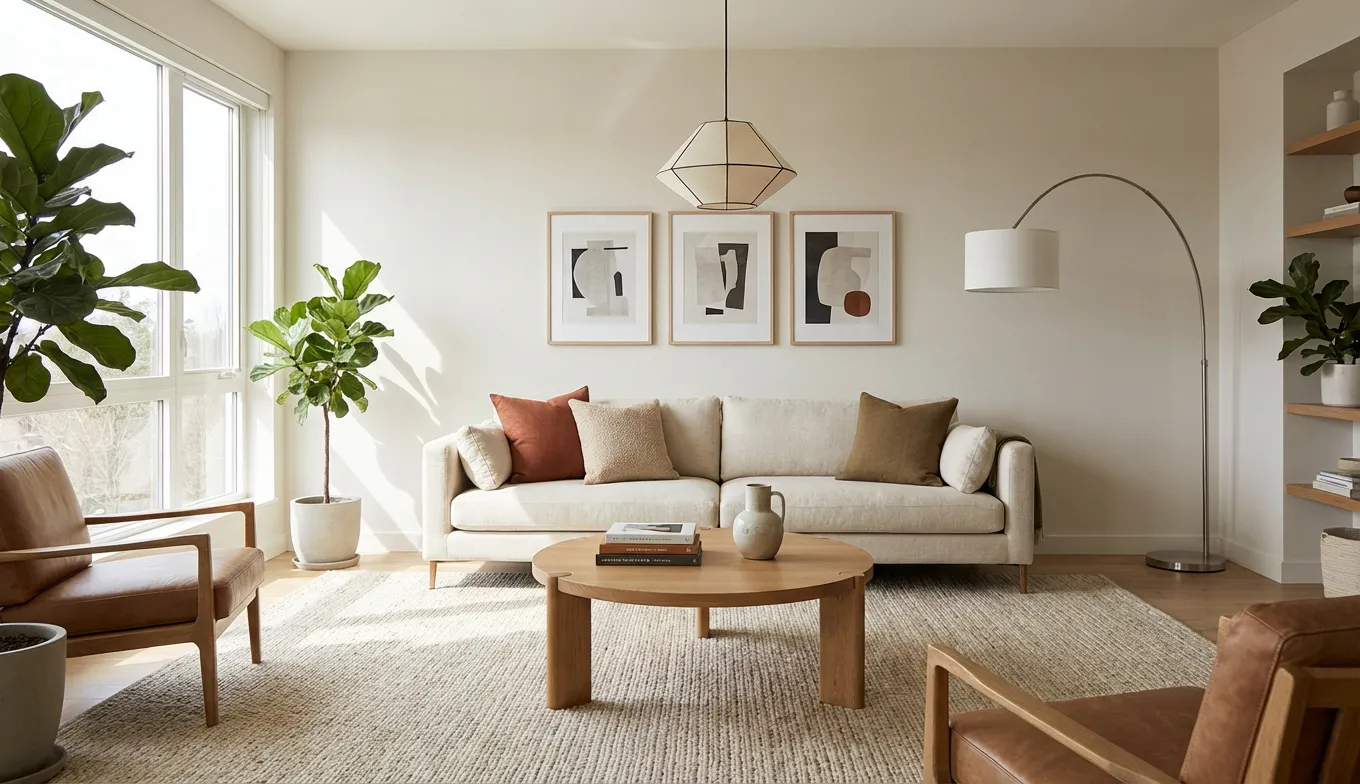
- Calm & neutral: warm whites, taupe, soft gray, natural wood
- Warm & cozy: camel, terracotta, olive, cream
- Fresh & modern: white, black, beige, with one bold accent like teal or rust
You don’t need to fear color. You just need to repeat it on purpose so the room feels pulled together.
6. Use rugs and curtains like a designer
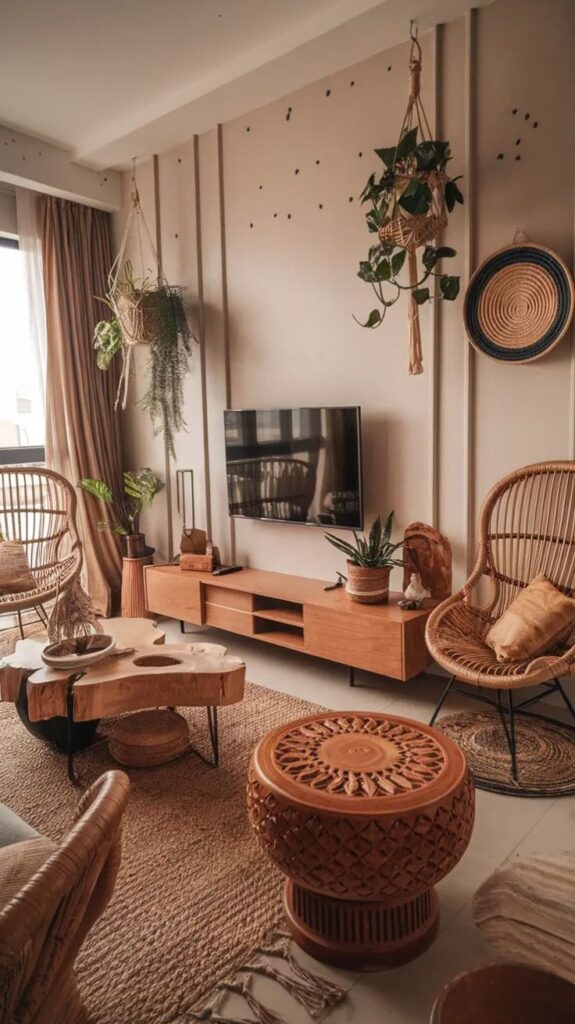
Rugs and curtains do more than “finish” a room. They shape it.
Rug rules that save your layout
The most common issue? Tiny-rug syndrome.
Use these guidelines:
- Let at least the front legs of sofas and chairs sit on the rug.
- In many living rooms, 8×10 or 9×12 rugs work better than 5×7.
- Center the rug under your seating area, not just under the coffee table.
A correctly sized rug grounds the whole conversation area and makes everything feel intentional.
Curtain tricks that instantly level up the room
Pros hang curtains:
- High: close to the ceiling or a few inches under it
- Wide: at least 4–6 inches past the window on each side
- Long: brushing or slightly breaking on the floor
This makes your windows look larger and your ceiling feel higher.
When I started hanging curtains high and wide, every room suddenly felt more “designed” and less “rental with random rods”.
7. Balance symmetry and asymmetry
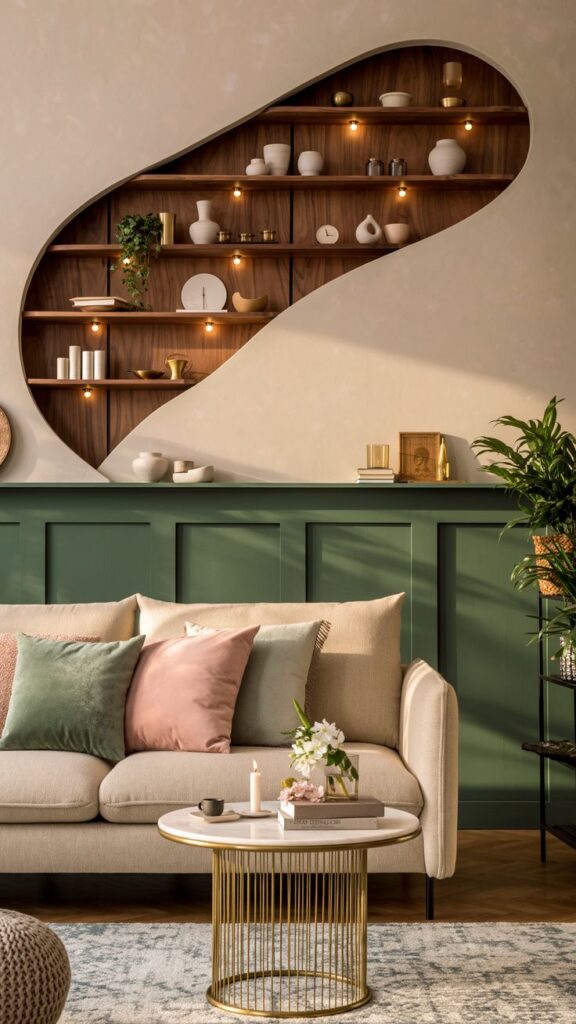
Want your living room to look like a professional touched it? Watch how you balance things.
Where symmetry works
Symmetry calms the eye and creates structure. Use it when you want a classic, polished look:
- Matching table lamps on each side of a sofa
- Two chairs facing a sofa
- Art that frames a fireplace or TV
Where asymmetry adds life
All-symmetry-everywhere can feel a little stiff.
Pros break it up on purpose:
- One large lamp on one side of the sofa, a stack of books on the other
- A gallery wall that feels balanced but not perfectly mirrored
- A single accent chair angled toward the conversation area
Ask yourself: Does the room feel stable but not boring?
If the answer feels like a “kind of?” you probably need to tweak either symmetry or asymmetry.
8. Style surfaces with purpose, not clutter
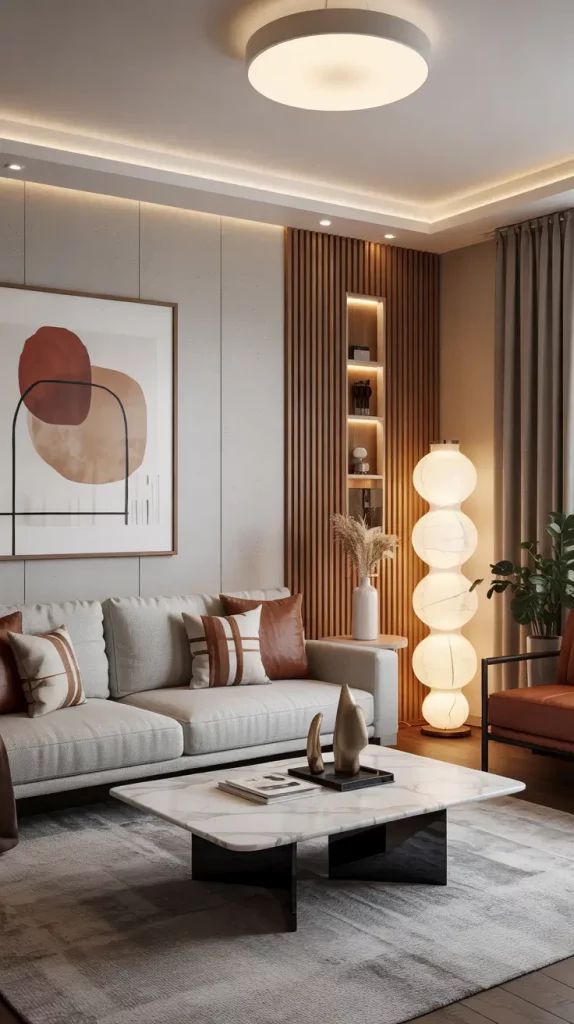
Coffee tables, consoles, and shelves turn into clutter magnets fast.
Pros style them instead of letting random stuff land there permanently.
Coffee table styling basics
Use the rule of threes and mix heights:
- One stack of books
- One tray with a candle and small object
- One taller element like a vase with flowers or branches
Leave some empty space so you can still, you know, put down an actual cup of coffee.
Shelf and console styling
Think in groups and repeated elements:
- Mix vertical items (vases, frames) with horizontal items (books, boxes).
- Repeat materials: wood, black metal, glass, woven baskets.
- Add at least a bit of greenery on shelves so they don’t feel too stiff.
IMO, the difference between “mess” and “styled” often comes from editing. Remove one or two things after you finish and the whole vignette usually breathes better.
9. Hide the chaos with smart storage
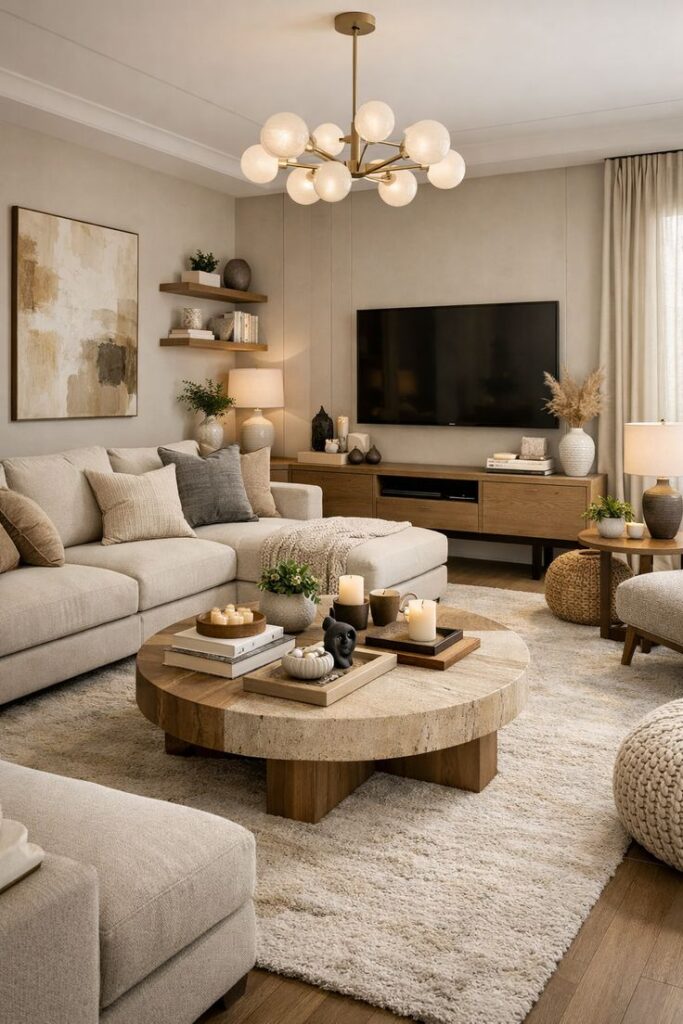
No one lives in a magazine spread. Real living rooms contain remotes, cables, toys, blankets, and the mysterious item nobody claims.
Pros never rely only on aesthetics. They plan storage from the beginning.
Smart options:
- Closed media units for consoles, routers, and cable boxes
- Storage ottomans for blankets, games, and extra cushions
- Baskets for toys, throws, or magazines
- Sideboards or credenzas for everything you don’t want in sight
Use trays to corral small items like remotes and candles on the coffee table or console.
You still keep things within reach, but the room reads as calm instead of “someone exploded a gadget drawer in here”.
When you design for real life, you actually keep the room looking good past the weekend.
10. Add personality, plants, and a “lived-in” vibe
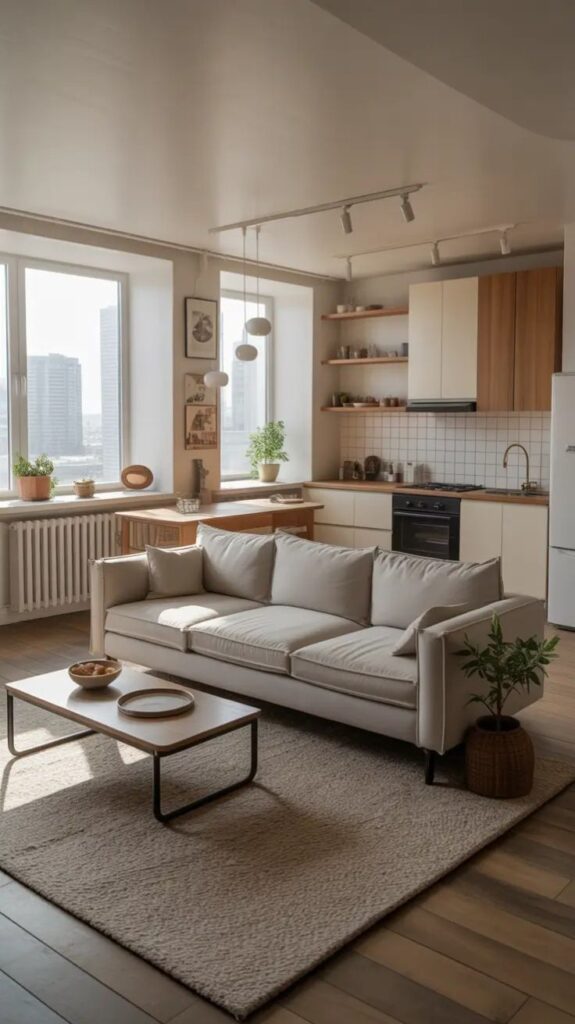
You probably don’t want your living room to feel like a hotel lobby. Nice to visit, weird to live in.
Pros always add personality:
- Art that you actually like, not just whatever matched the cushions
- Personal objects: travel finds, family photos, books you read (or pretend to read, no judgment)
- Vintage or sentimental pieces that tell a story
Layer in texture so the room feels inviting:
- Chunky knit throws
- Linen or velvet cushions
- Woven baskets
- Natural wood, stone, or ceramic accents
And yes, plants. Real ones if you can keep them alive, good faux ones if you can’t. A bit of greenery instantly makes the room feel less sterile and more alive.
I treat this final layer as the “make it feel like you live here” moment, not an anonymous Pinterest person.
Quick recap: how pros approach living room design
When you strip away the fancy terms, top professionals follow a clear pattern:
- Define the function of the living room first.
- Choose a focal point and aim your layout at it.
- Respect scale and proportion so furniture fits the space.
- Layer lighting for mood and function.
- Stick to a color palette instead of random buys.
- Use rugs and curtains to frame and anchor the room.
- Balance symmetry and asymmetry for interest.
- Style surfaces intentionally instead of letting clutter win.
- Plan smart storage so real life fits in.
- Add personality and texture so the room feels like you.
You don’t need a designer budget to use interior design living room tips from top professionals. You just need to think like a pro and shop like a realistic human.
Pick one or two tips that feel easiest, try them this week, and see how the room changes.
Then tackle the next ones. Your living room evolves step by step, not in one dramatic TV reveal (unfortunately.