9 Shared Kids’ Bedroom Ideas for Brothers, Sisters, and Twins

Two kids. One room. Zero storage. Slightly rising panic.
If you try to set up a shared kids’ bedroom for brothers, sisters, or twins, you probably juggle about twelve problems at once: sleep schedules, storage, privacy, and that one child who loves neon slime on every surface.
I helped friends and family sort out more shared rooms than I can count, and I learned this: the room never grows, but the kids and the stuff always do. So the layout and design need to work smart, not just look cute on Pinterest.
Let’s walk through 9 shared kids’ bedroom ideas for brothers, sisters, and twins that actually work in real life, not just in styled photos. Ready?
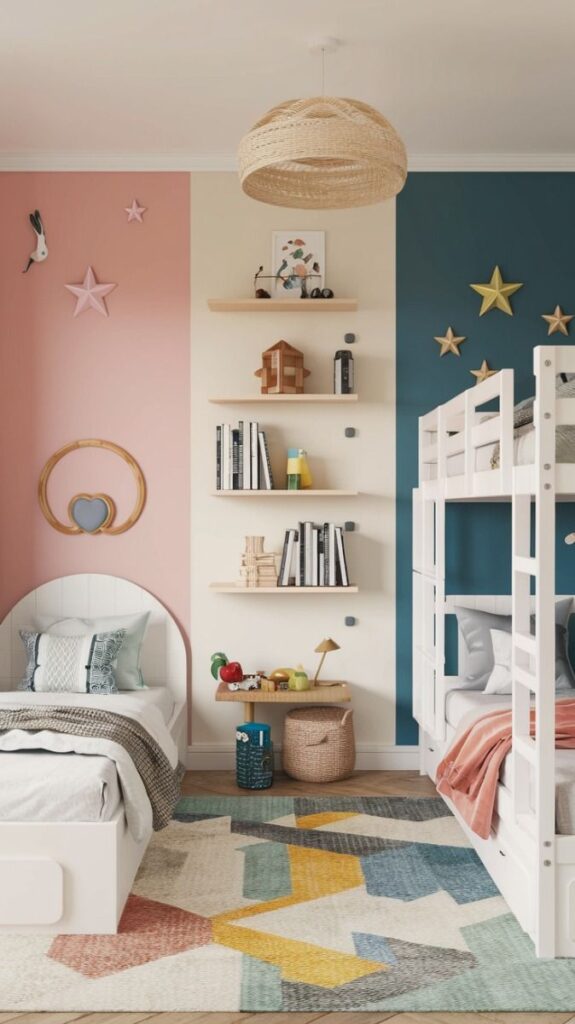
1. Bunk Beds That Create Instant Floor Space
Bunk beds basically shout, “We save space!” and honestly, they deliver.
When you stack beds, you free up a big chunk of floor for play, desks, or storage. This layout works really well for twins, brothers close in age, or sisters who like hanging out together.
For a functional bunk setup, I always focus on:
- Guard rails and sturdy ladder for safety
- A clip-on lamp for the top bunk
- Under-bed drawers or bins under the lower bunk
You also create that magical “top bunk = secret fort” situation, which kids love, and you win bonus points without extra effort.
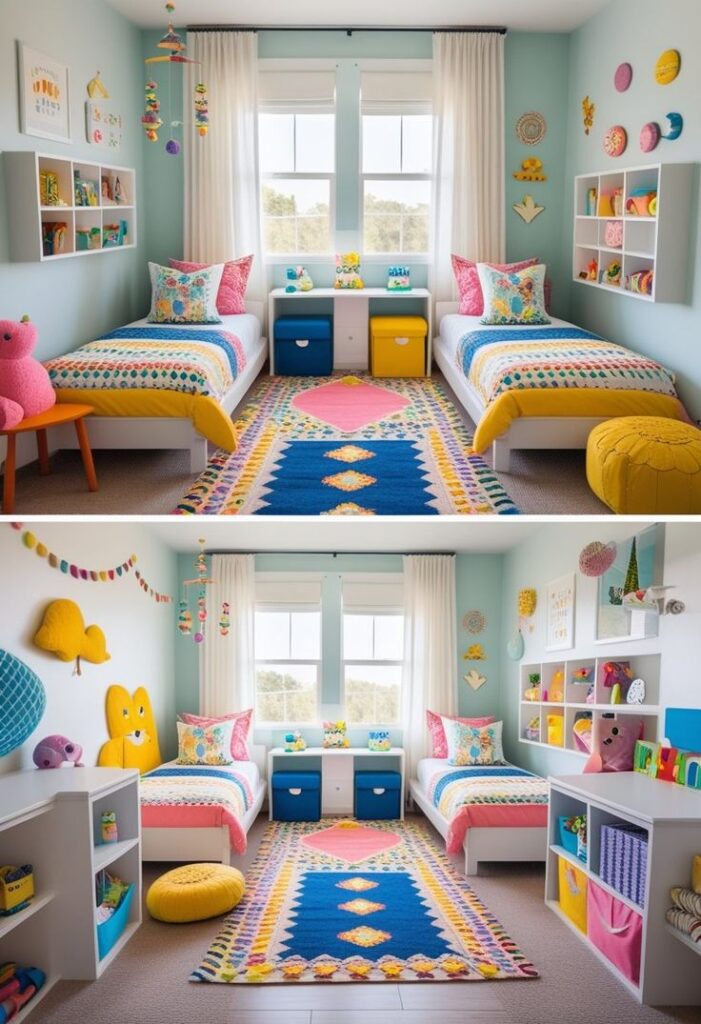
2. Side-by-Side Beds with a Shared Center Zone
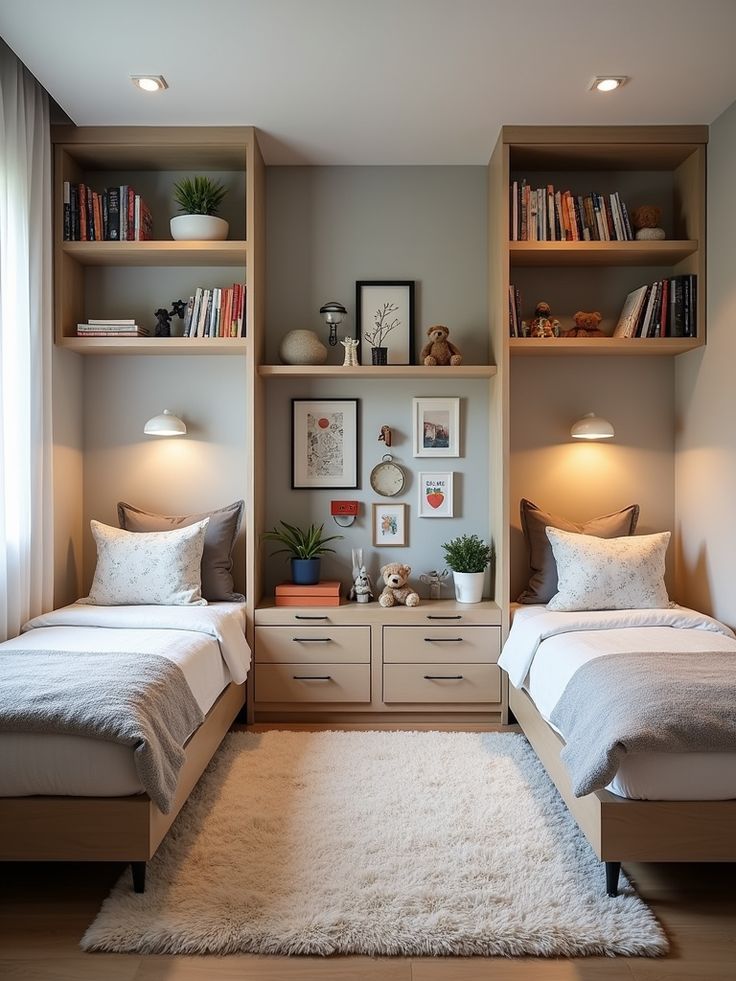
If your kids feel nervous about bunks or you prefer something easier to change later, try two beds side by side with a shared nightstand in the middle.
This layout works for brothers, sisters, and mixed-gender siblings because it feels equal. No one grabs the “better” bed, and you still keep things simple and flexible.
You can style the shared middle zone with:
- One lamp that both kids reach
- A small tray or caddy for books and water
- A shared clock or nightlight
Ever notice how kids fight less when they feel you treat them fairly? This layout helps with that little headache.
3. Head-to-Head Beds to Maximize Wall Space
When the room runs long and narrow, I like head-to-head beds along one wall. You push the headboards toward each other near the center of the wall and stretch the beds out in opposite directions.
This layout creates a shared feeling without the kids sleeping directly side by side. It works especially well for older siblings or kids with slightly different routines.
You gain wall space for:
- Shelves above each bed
- Individual wall art zones
- Hooks or peg rails for bags and hats
You keep the beds close enough for late-night whispering but far enough for a little breathing room. Win-win.
4. One Room, Two Personalities: Color-Zoned Space
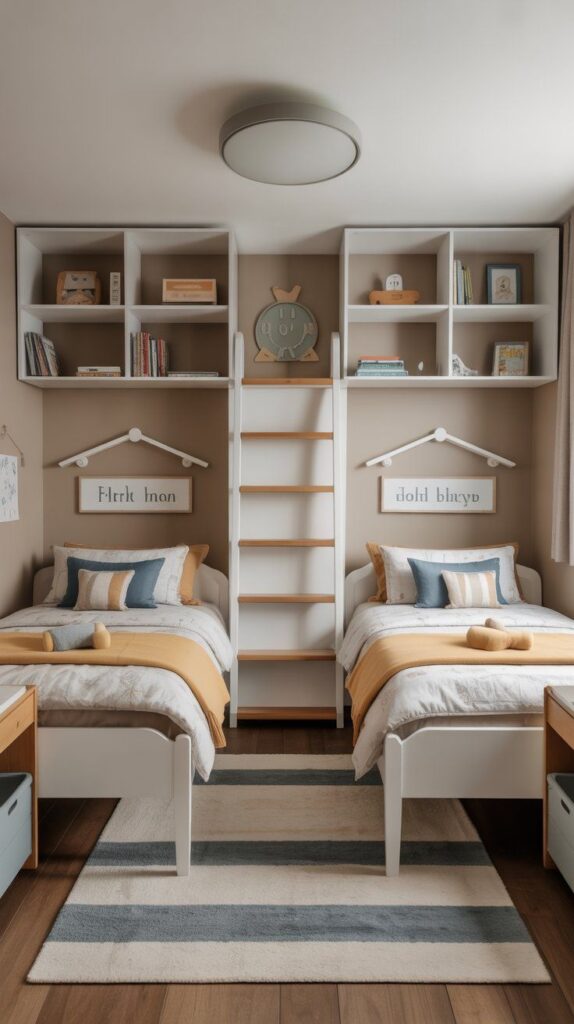
If one kid loves unicorns and the other swears loyalty to dinosaurs, you don’t need a design referee. You just split the room visually.
I create two color zones or style personalities and still keep a few shared elements for harmony. This approach works beautifully for brothers and sisters sharing one bedroom, but it also helps with twins who want their own style.
You can:
- Use different bedding for each child
- Choose one shared wall color and then add each kid’s accent shade
- Hang personalized art or name signs above each bed

You respect their individuality, and you still keep the room from looking like a toy store explosion. IMO, that balance saves everyone’s sanity.
5. Mirrored Storage So No One Argues
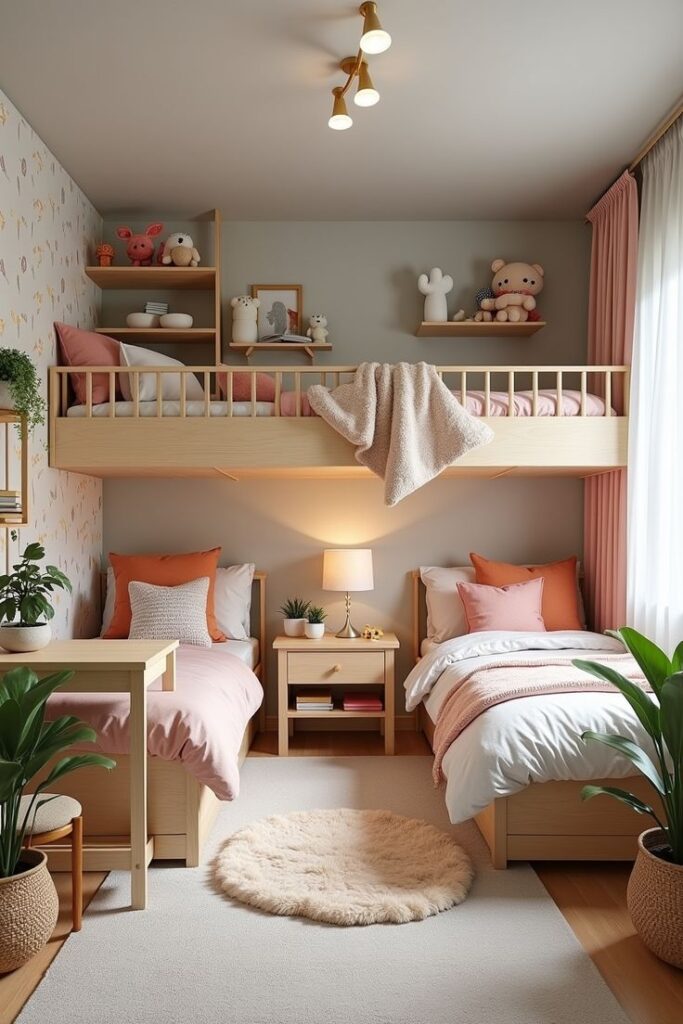
Kids argue over everything, so I love mirrored storage because it removes half the drama.
You repeat the same dresser, shelf, or cubby on each side of the room. Each kid knows exactly which drawer or bin belongs to them. This setup works with any sibling combo and especially helps when you raise twins who share almost everything else.
I normally set it up like this:
- Identical dressers or cubbies on each side
- Labels with names or icons for younger kids
- A shared central toy area that both kids access
You create a sense of fairness and make tidying easier. No one “forgets” where their socks go anymore. Well, not as often.
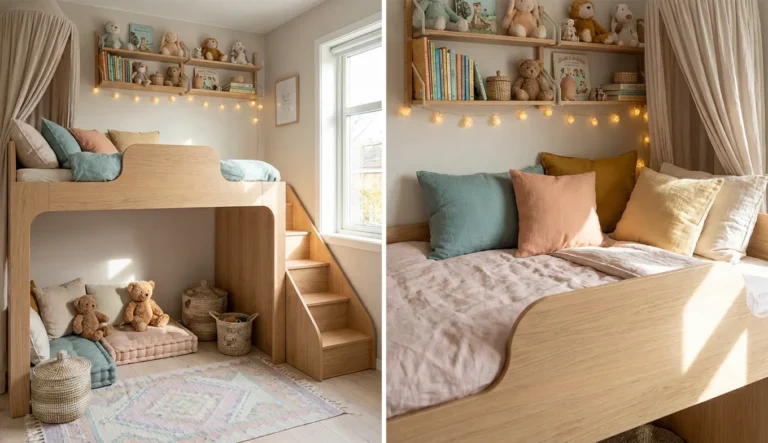
6. Loft Bed + Regular Bed Combo for Different Ages
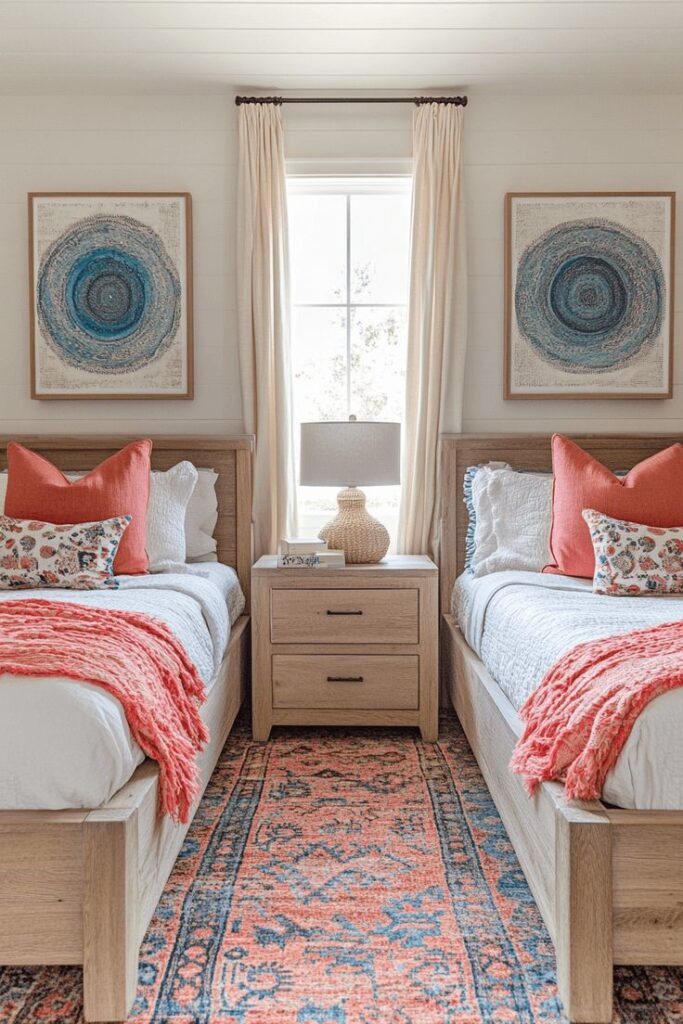
When siblings share a room but live in totally different stages of life, things get trickier. Think tween + toddler or school-age + preschooler. In those cases, I love a loft bed plus a regular bed.
You raise the older child’s bed up high with a loft setup, then tuck the younger child’s bed underneath or beside it. The older kid gets a bit of privacy, and you protect the younger one from top-bunk temptation.
Under the loft, you can add:
This layout uses vertical space and gives each child a defined “zone” that feels right for their age.
7. Play in the Middle, Sleep on the Sides
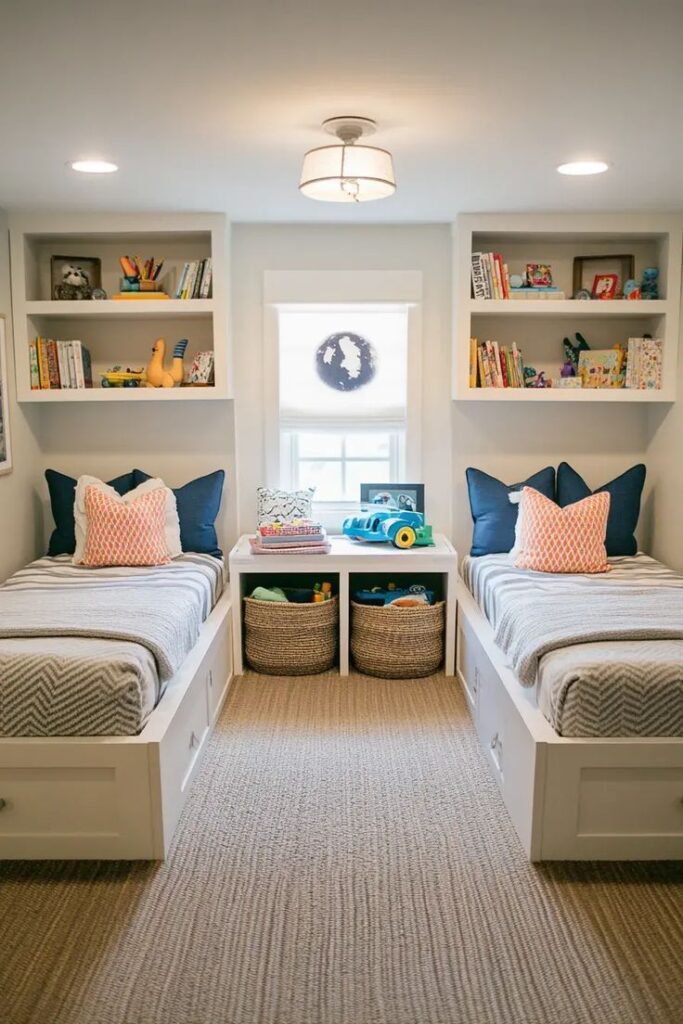
If you want a room that survives constant Lego explosions, you might love a sleep-on-the-sides, play-in-the-middle layout.
You place each bed along opposite walls and keep the center of the room open as a shared play space. This setup works perfectly for twins or two kids close in age who share toys, books, and games.
To make this layout really work, I usually:
- Add a soft rug in the middle as the official play zone
- Line the walls with low storage under or near the beds
- Use under-bed drawers for bulky items like blocks or train sets
The room stays flexible, and no one trips over a random stuffed animal the second they step inside. Well, not every time, anyway. 🙂
8. Built-In “Mini Privacy” with Curtains or Screens
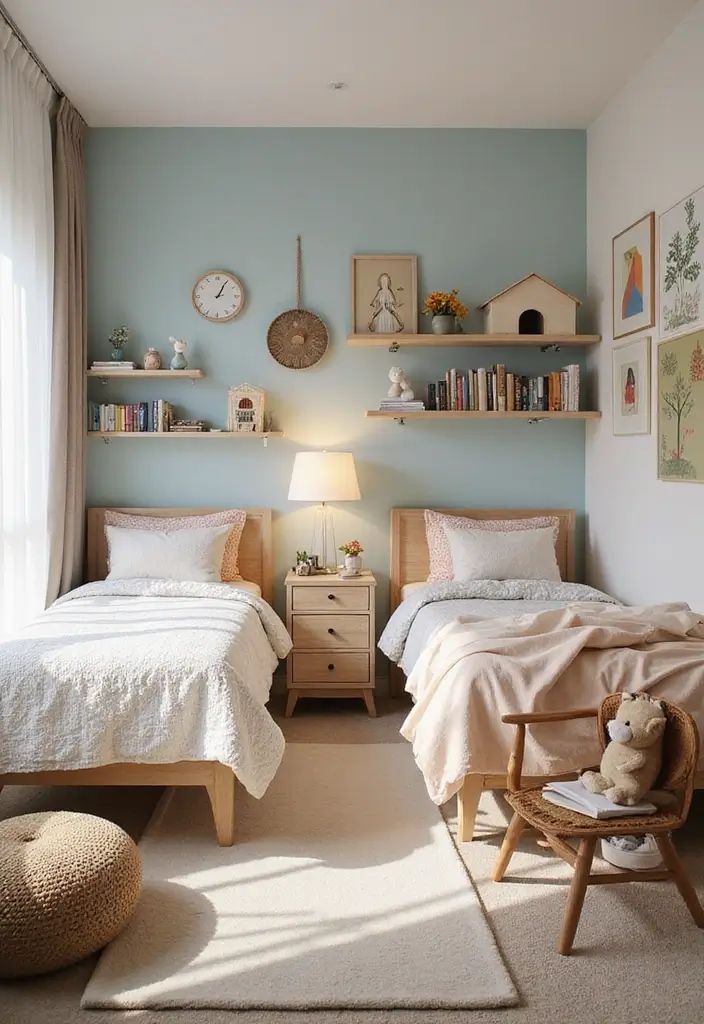
Let’s be honest: kids love each other, but they also sometimes want everyone to disappear.
You can’t give them separate rooms, but you can create mini privacy zones with curtains, canopies, or lightweight screens. This hack works especially well for brother-sister shared rooms or older twins who want a little more independence.
Some easy options:
- Bed canopies that create a cozy cave feeling
- A ceiling-mounted curtain track between beds
- A folding screen that you move around as needed
You still keep one shared bedroom, but each child gains a tiny sanctuary. FYI, this trick also helps during “I’m mad at my sibling” days.
9. One Shared Theme, Two Custom Takes
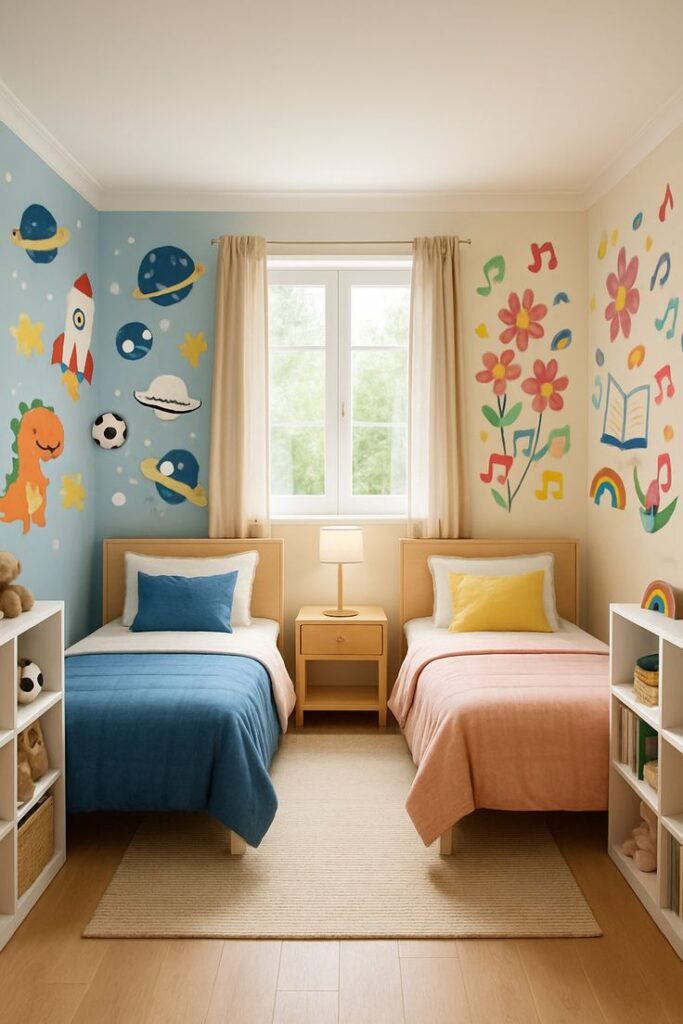

If your kids love the same general thing—space, jungle, ocean, sports—you can create one big theme and then twist it slightly for each child.
For example, you set up a space-themed shared bedroom for twins, but one bed focuses on planets and the other on rockets. Or you style a jungle room where one side leans into tigers and the other side celebrates monkeys.
You keep things cohesive when you:
- Choose one main wall color and repeat it on both sides
- Repeat matching furniture finishes
- Use coordinated bedding that follows the same theme but uses different patterns
You get a room that feels fun and unified, but each child still points to their area and says, “That part feels like me.”
Smart Storage Tricks for Any Shared Kids’ Bedroom
Now you have layout ideas, but shared kids’ rooms always need serious storage help. When I set up children’s shared bedrooms, I always layer in a few key tricks.
Use Under-Bed Space Like Gold
You can treat under-bed areas like extra closets.
I like:
- Rolling drawers for clothes or toys
- Shallow bins for art supplies or Lego
- Vacuum bags for off-season clothes
You keep the floor clear and still stash a ridiculous amount of stuff.
Go Vertical with Walls
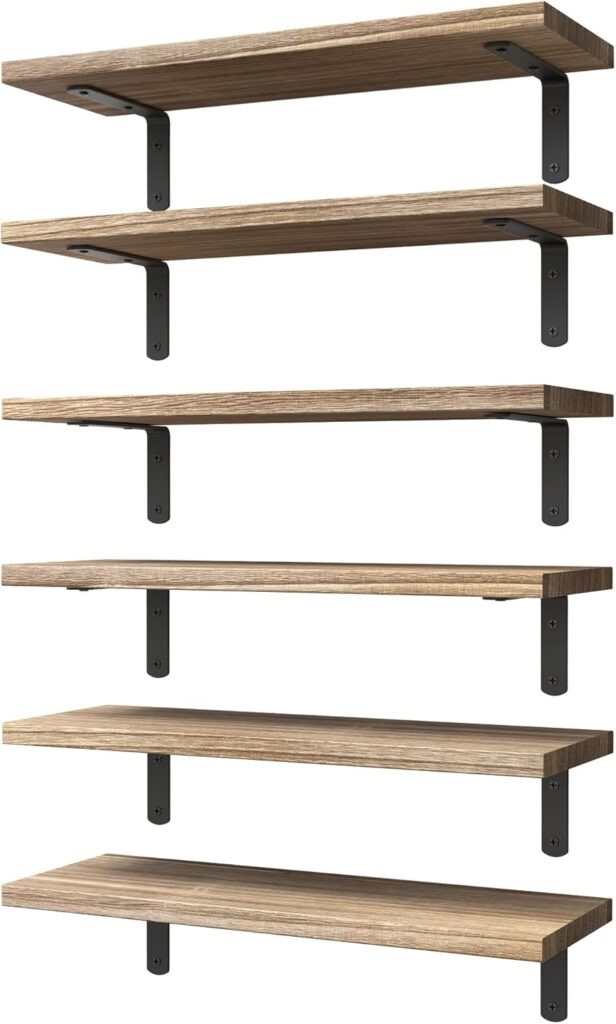
Walls handle more than posters.
You squeeze extra storage out of vertical space with:
- Wall shelves above dressers or desks
- Pegboards for art supplies, headphones, or hats
- Hooks behind the door for backpacks, robes, or jackets
You keep small things off the floor and give each child a few spots they control.
Label Everything
Kids respond really well to clear labels, especially in shared rooms.
You can:
- Use pictures and words for younger kids
- Add colors for each child (blue labels for one, green for the other)
- Mark drawers, bins, and cubbies
You reduce the “I didn’t know where it goes” excuse by about 50%. Not zero, obviously, but still.
How to Keep the Peace in a Shared Kids’ Bedroom
You care about the furniture and the storage, but you probably care even more about the peace treaty inside that room.
Give Each Kid At Least One “Mine Only” Spot
Even in a fully shared space, each child needs one private zone.
You can assign:
- A bedside shelf
- A top drawer
- A special bin for treasures
You protect that spot fiercely and set clear rules: no borrowing without asking. Kids usually respect boundaries better when you actually define them.
Involve Them in the Design
I always ask the kids a few simple questions:
- “What color do you like right now?”
- “What do you want near your bed?”
- “Do you want your own shelf or a shared one?”
When kids help design the room, they normally treat it better and feel more excited about sharing.
Plan for Change
Kids grow fast, and their tastes sprint even faster.
You create flexibility when you:
- Choose neutral main furniture
- Use easily swappable decor (bedding, posters, pillows)
- Leave room for desk space later if they don’t need it yet
You save yourself from a full redesign every year, and your future self thanks you. Probably loudly.
Wrapping It Up: Shared Room, Shared Wins
A shared kids’ bedroom for brothers, sisters, and twins doesn’t need to feel cramped, chaotic, or unfair. You just need a layout that respects their personalities, uses every inch of space, and sneaks in smart storage.
You can:
- Stack beds with bunks or lofts
- Keep things equal with mirrored layouts and storage
- Protect sanity with color zones, curtains, and “mine only” spots
Start with one of these 9 shared kids’ bedroom ideas, sketch the layout, and check what you already own before you buy more stuff. You probably own more usable pieces than you think, and a fresh layout often changes everything.