How to Design a Japandi Small Apartment That Feels Spacious

Japandi (Japanese + Scandinavian) is ideal for small apartments because it prioritizes calm, function, natural materials, and “negative space.” The key to making it feel spacious is editing: fewer, better pieces; a light, cohesive palette; and smart storage that disappears.
1) Start with the layout: create “air” and clear paths
- Keep walkways open (aim for ~75–90 cm / 30–36 in where possible).
- Float fewer zones, not more: define living/dining/sleeping with a rug or lighting rather than extra furniture.
- Use one “anchor” per zone: e.g., one sofa + one coffee table; one dining table + 2–4 chairs. Avoid adding extra side furniture unless it solves storage.
2) Choose a calm, continuous palette (and repeat it everywhere)
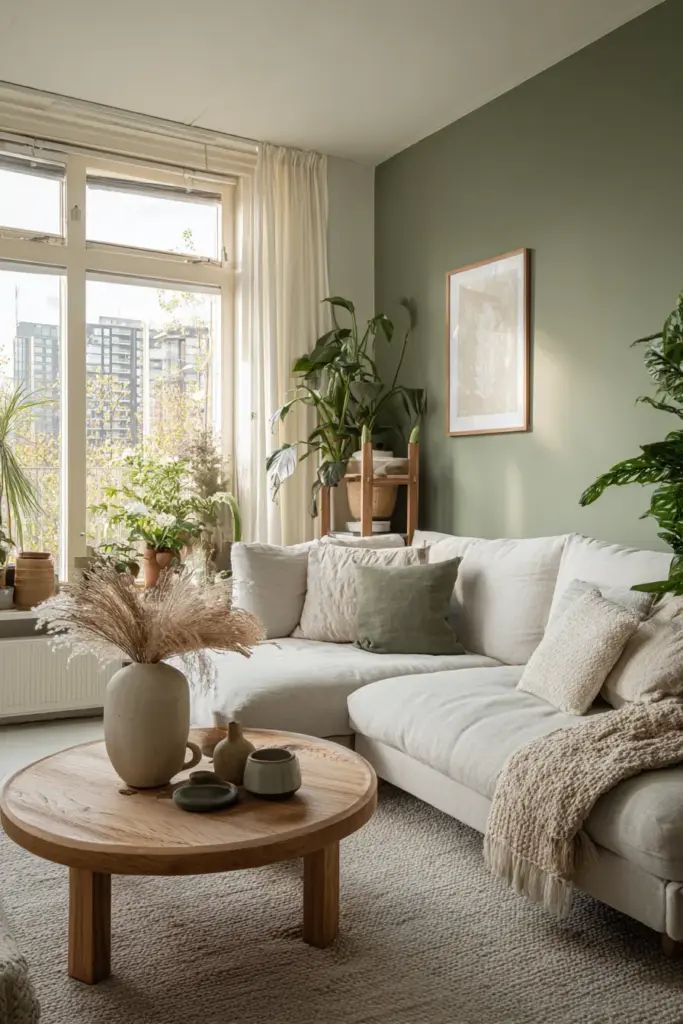
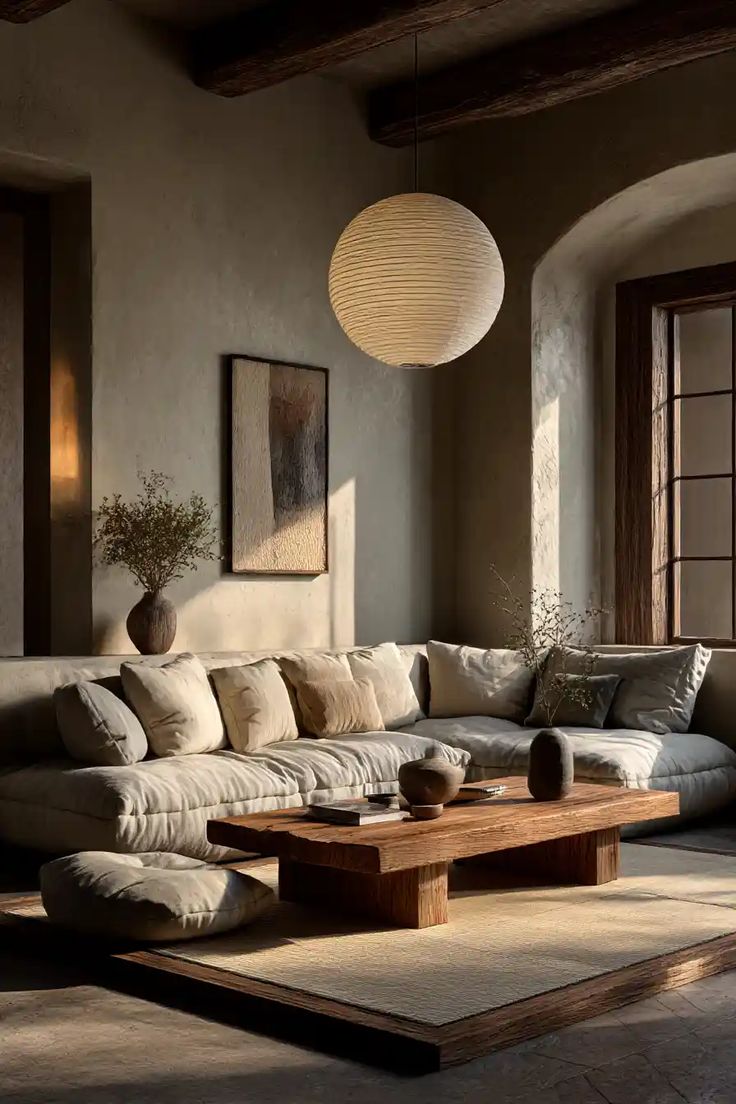
A small home feels bigger when surfaces read as one continuous field.
- Base: warm white, soft greige, or pale taupe walls.
- Wood: light oak/ash or medium oak; keep it consistent across pieces.
- Accents: matte black or charcoal (sparingly), and one muted color (sage, clay, ink blue).
Simple palette formulas
- Warm white + light oak + black accents
- Soft greige + medium oak + muted sage textiles
- Cream + ash wood + charcoal + natural linen
3) Prioritize low-profile, leggy furniture
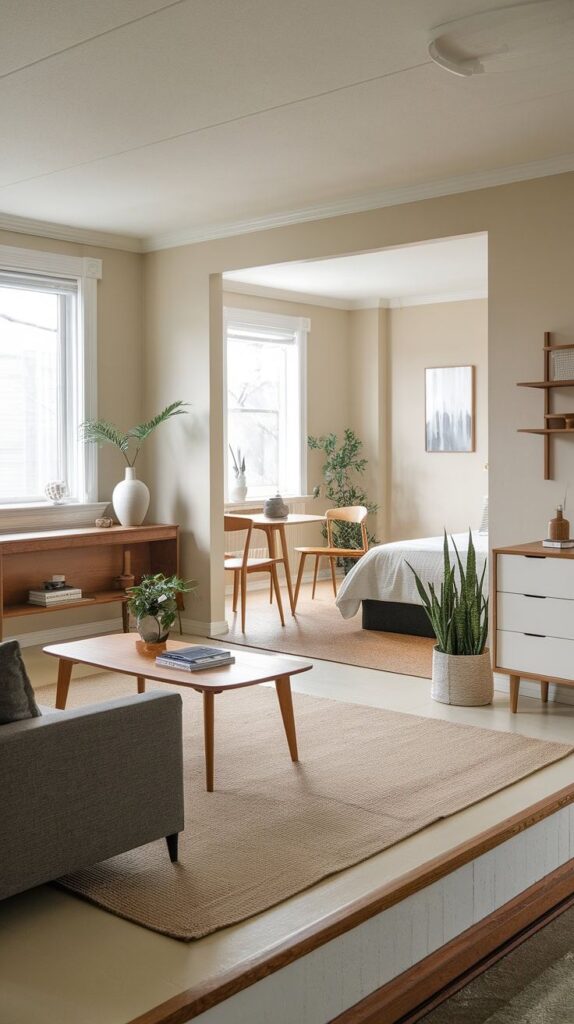
Japandi likes grounded simplicity; small spaces benefit from visual lift.
- Sofa: clean lines, slim arms, ideally raised legs.
- Coffee table: light wood, rounded edges, or a nesting set.
- Dining: small round table often circulates better than square/rectangular.
- Bed: low platform or simple frame; avoid bulky headboards unless it includes hidden storage.
4) Build storage that disappears (the “tidy calm” is the spaciousness)
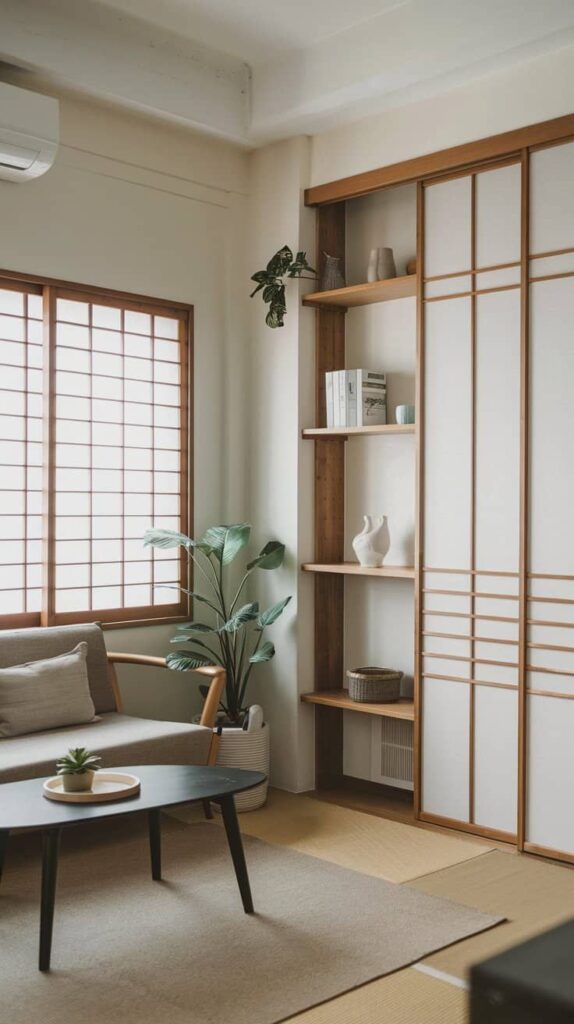
Clutter kills Japandi.
- Closed storage > open shelves for most things.
- Use one tall storage piece (wardrobe/cabinet) instead of several short ones.
- Add vertical storage: wall cabinets, tall bookcase, peg rail, picture ledges.
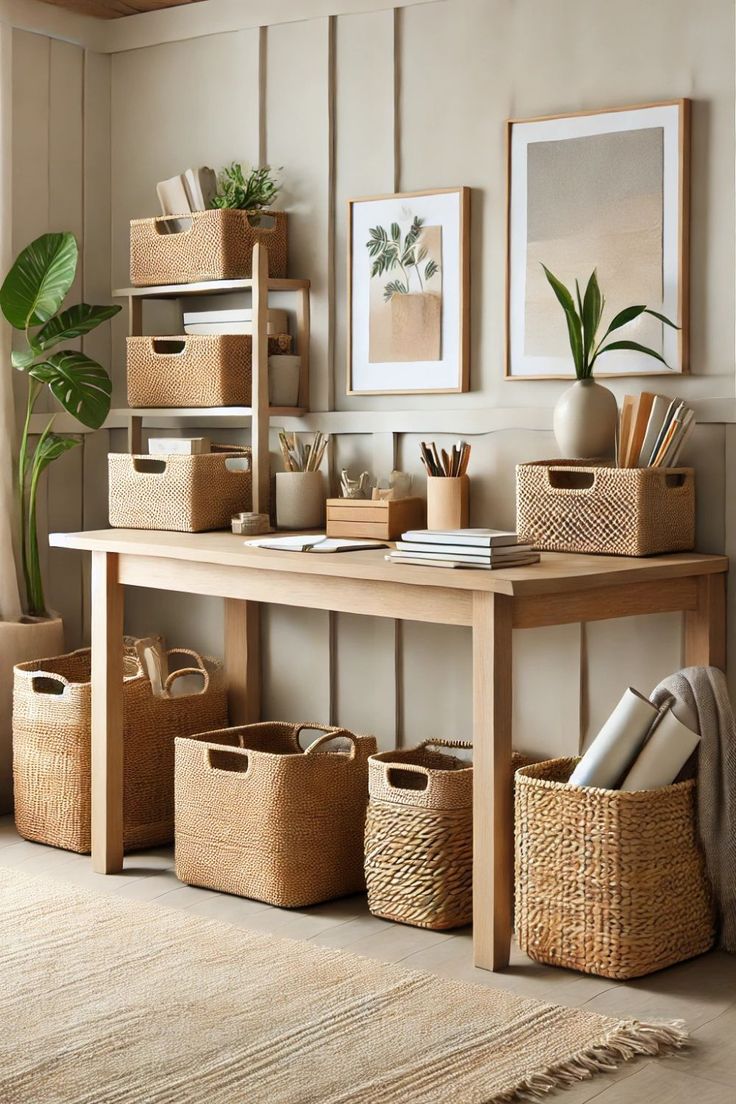
- Use matching boxes/baskets in natural fibers (rattan, seagrass) or matte bins.
Rule of thumb: keep surfaces 70–80% clear (countertops, coffee table, nightstand).
5) Let light do the work (layered, soft, and warm)
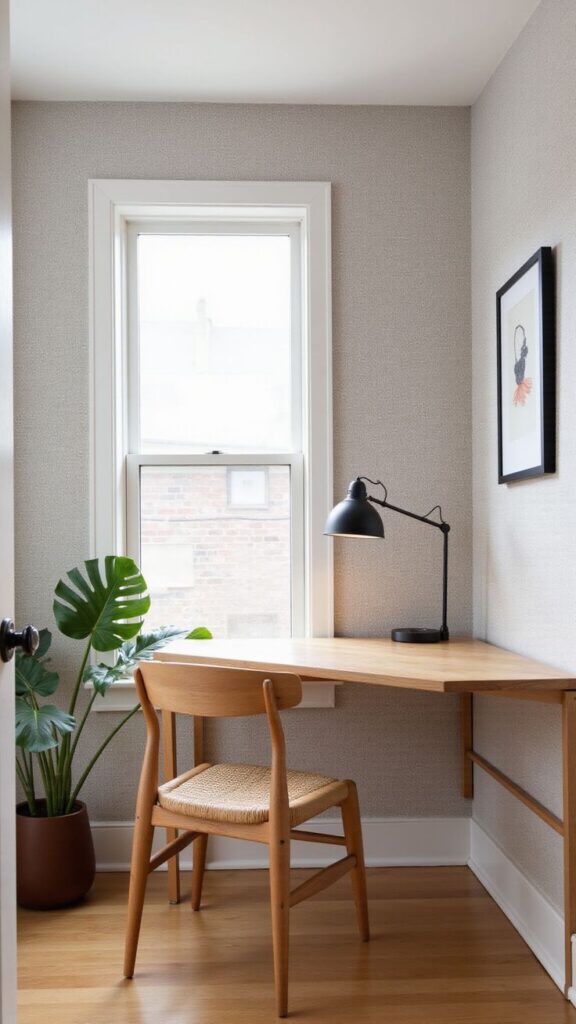
- Use sheer linen curtains or light-filtering shades; hang curtains high and wide to visually enlarge windows.
- Stick to 2700–3000K warm lighting (Japandi warmth).
- Layer: one ceiling light + one floor lamp + one table lamp.
- Choose paper, linen, or opal glass shades for soft diffusion.
6) Materials: natural, matte, tactile (not busy)
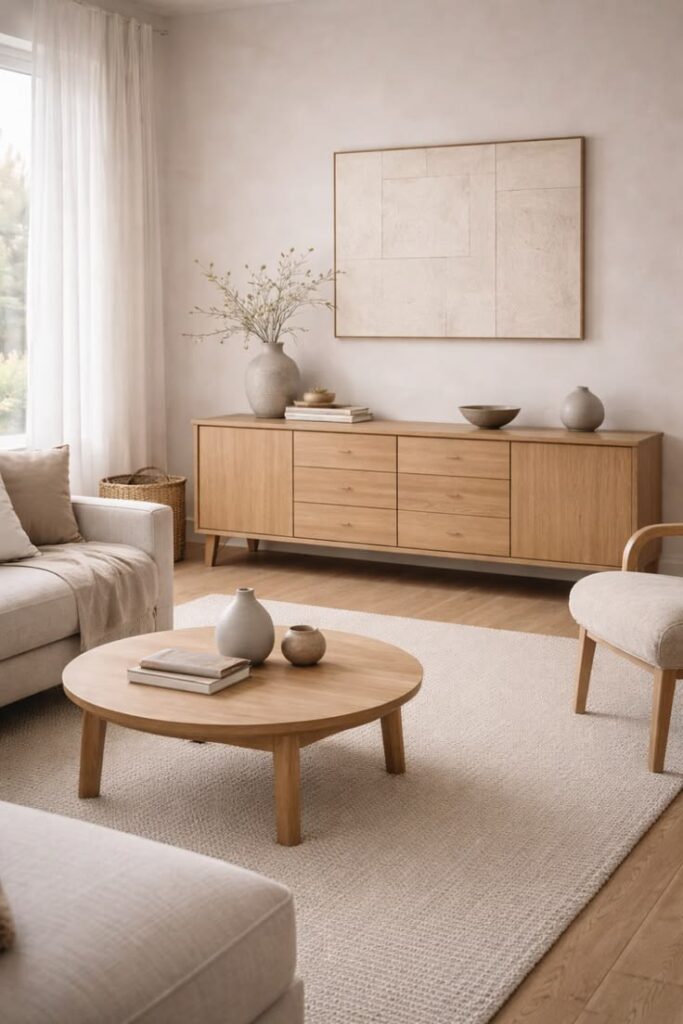
Japandi feels spacious when textures are subtle and cohesive:
- Wood: oak/ash/walnut (pick one dominant tone)
- Textiles: linen, cotton, wool (solid or minimal weave)
- Ceramics/stone: matte, imperfect, handmade feel
- Metal: blackened steel or brushed nickel (sparingly)
Avoid glossy finishes and high-contrast patterns that “chop up” the room.
7) Decor: fewer objects, more meaning
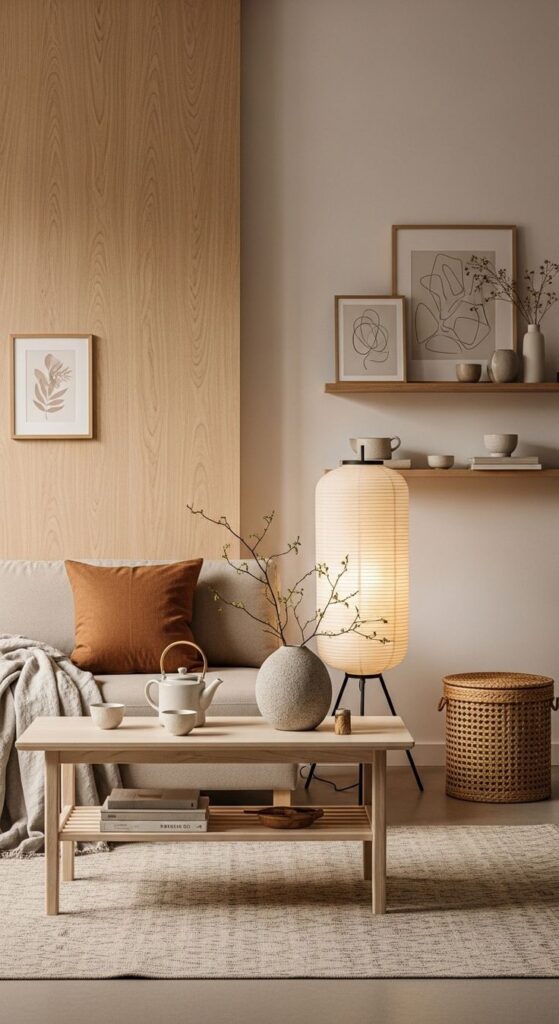
- Use the “one statement per surface” rule: one vase or one lamp, not five small things.
- Choose large-scale art over many small frames (more spacious visually).
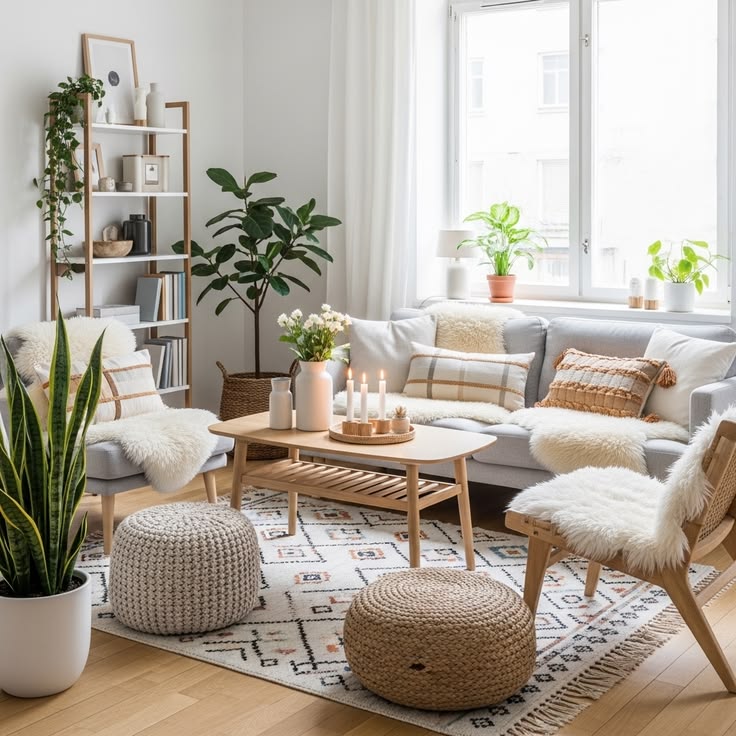
- Add one plant with a clean silhouette (olive, ficus, rubber plant) rather than many tiny ones.
- Leave deliberate empty space; it’s part of the design.
8) Make mirrors and rugs work strategically
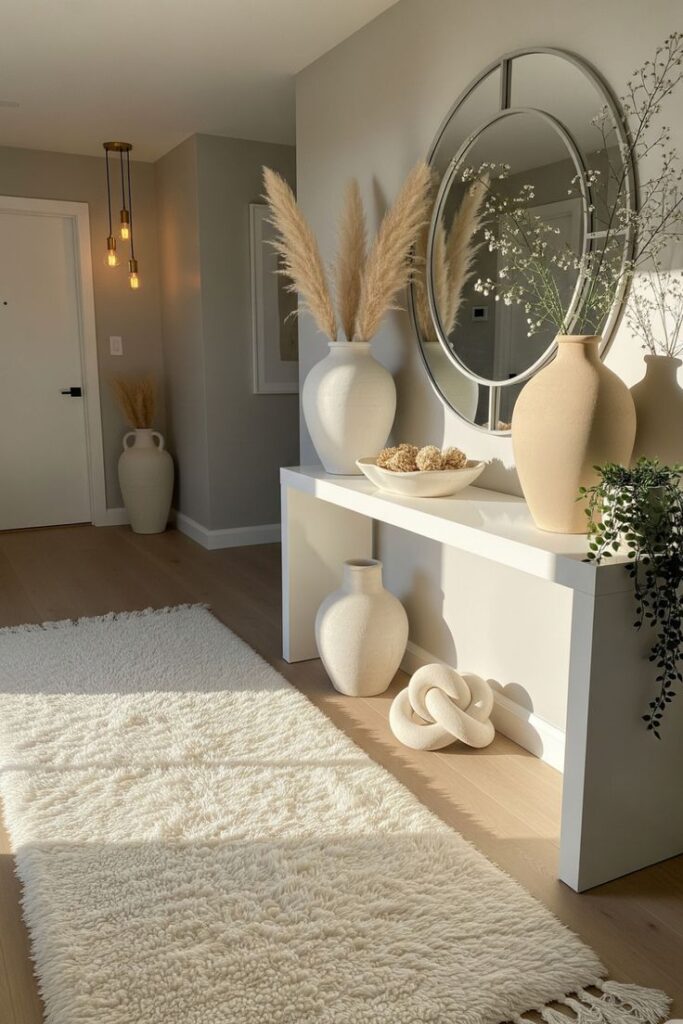
- Mirror placement: reflect a window or a bright wall; choose a simple wood or thin black frame.
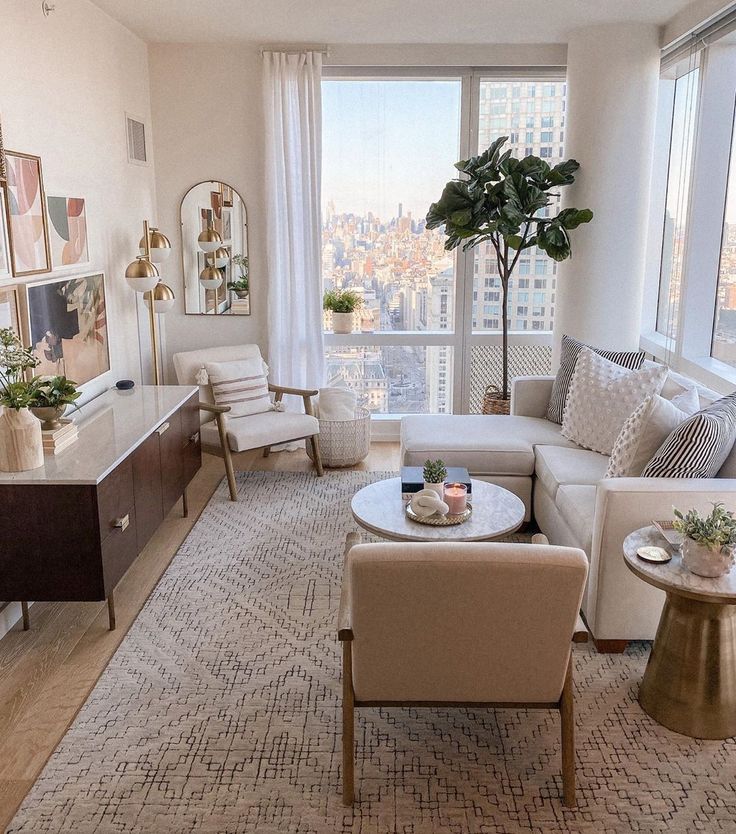
- Rugs: one larger rug can make a room feel bigger than several small rugs.
Living room: front legs of sofa and chairs on the rug.
9) Room-by-room moves that instantly help
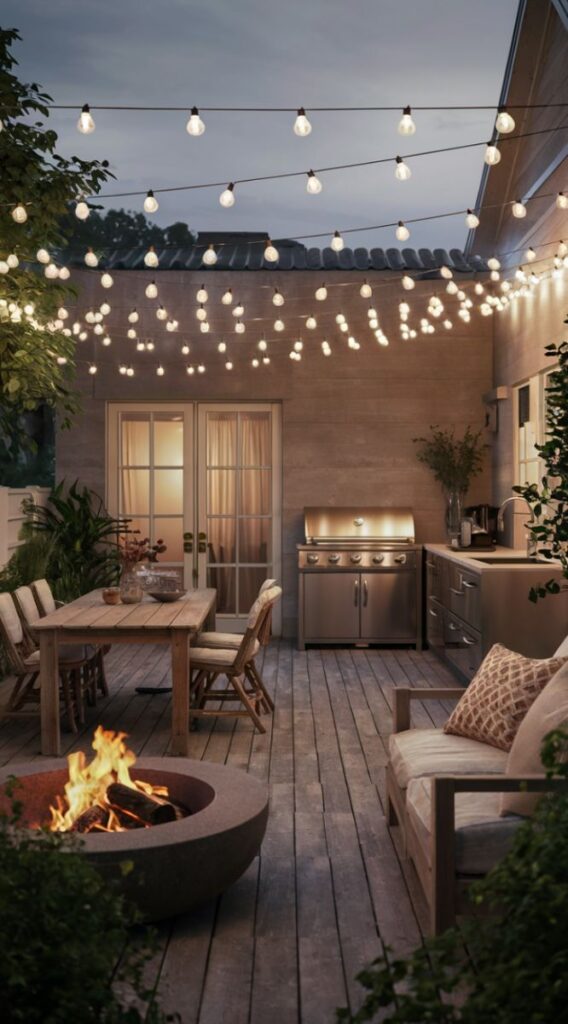
Entry
- Wall hooks/peg rail + slim shoe cabinet + small tray.
- One mirror to bounce light and create depth.
Living area
- Sofa + one side table + one storage piece (low credenza or tall cabinet).
- Consider a wall-mounted TV or projector to reduce bulk.
- Use a storage ottoman or bench as flexible seating.
Kitchen
- Keep countertops minimal: one nice wooden board + one ceramic canister set.
- Add rail/peg system for frequently used tools; hide the rest.
- Uniform jars for pantry items.
Sleeping area (or studio “bed zone”)
- Linen bedding in one tone; minimal pillows.
- Under-bed drawers or lift-up storage.
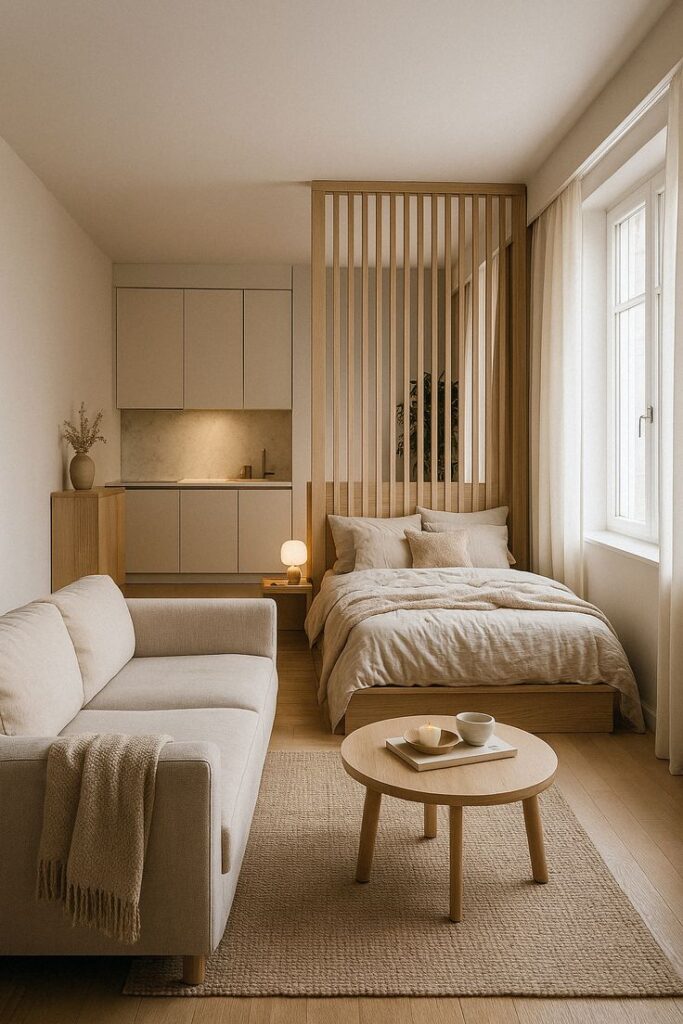
- Use a slatted wood divider, curtain, or open shelving if you need separation—keep it light and airy.
Bathroom
- Decant into matching bottles; use one wood stool or teak mat.
- Closed cabinet for extras; one plant or one candle max.
10) Common mistakes (and what to do instead)
- Too many small items → swap for fewer, larger pieces.
- Mixing many wood tones → limit to 1–2 tones (dominant + accent).
- Over-decorating “to make it cozy” → use texture (linen, wool) instead of more objects.
- Open shelves everywhere → mix in closed storage to keep calm.
Quick Japandi shopping checklist (small-apartment friendly)
- Slim-leg sofa in a neutral fabric
- Round dining table or drop-leaf table
- One tall closed cabinet/wardrobe
- Linen curtains (hung high)
- Warm paper/linen lampshade floor lamp
- Large simple rug in wool/jute blend
- 1–2 ceramic vessels + one branch/plant
- Matching storage bins/baskets
If you tell me your apartment size, whether it’s a studio or 1BR, and share a quick photo or floor plan, I can suggest a specific layout and a tight palette (with furniture dimensions) that will maximize spaciousness