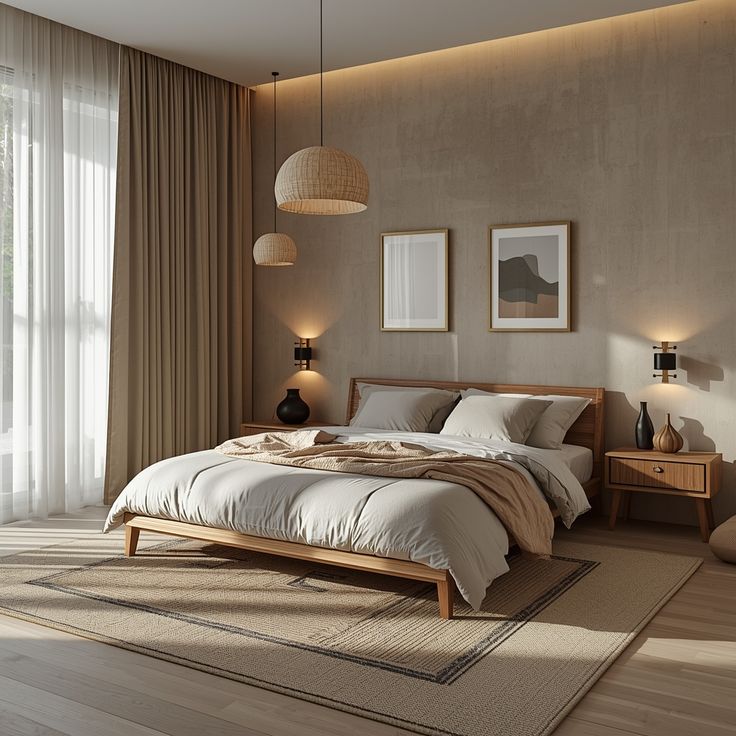
12 Japandi Bedroom Ideas That Make Your Space Instantly Calmer

Your bedroom shouldn’t feel like a storage unit with a mattress squeezed in for fun. You deserve a space that tells your nervous system, “Hey, you can chill now.” That’s exactly why I keep coming back to Japandi bedroom style—that sweet spot where Japanese simplicity meets Scandinavian coziness.
I tried “more decor” before, and wow… my brain hated it. When I switched to clean lines, natural materials, and calmer colors, I slept better and stopped doom-scrolling at 1 a.m. (Okay, I reduced the doom-scrolling.) Want your room to feel instantly calmer without turning into a minimalist monk? Let’s do it.
1) Start With a Soft, Neutral Japandi Color Palette
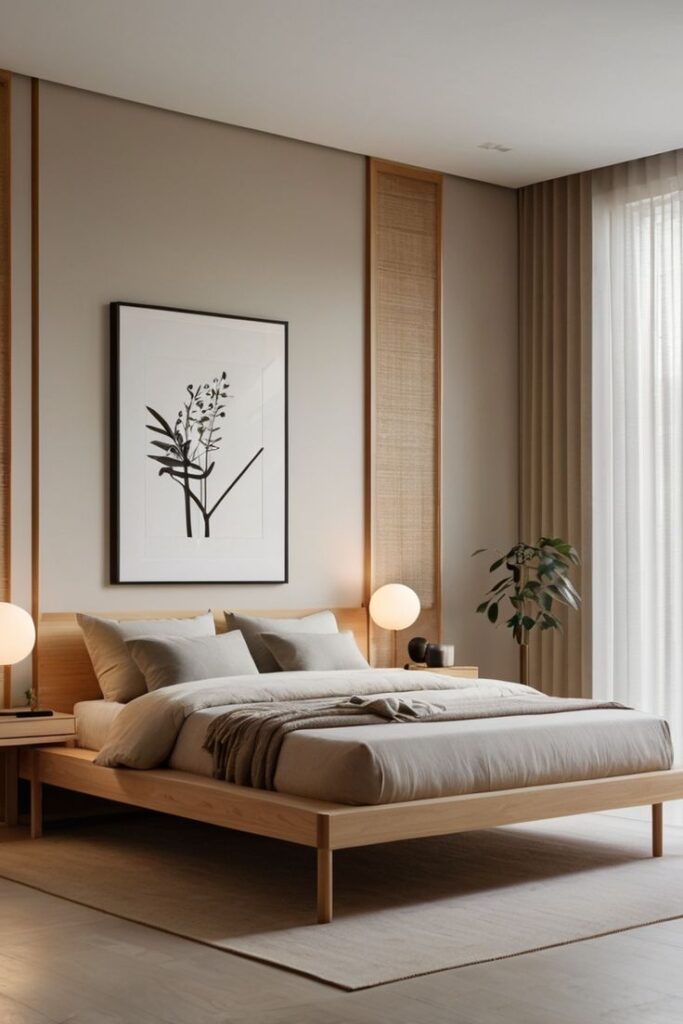
If you want instant calm, you need colors that don’t shout at you. Japandi bedrooms thrive on warm neutrals that feel quiet but not boring. Ever notice how your shoulders drop in a room with soft tones?
I like a base of warm white, oatmeal, taupe, and soft greige, then I add one deeper accent. That accent keeps the room from looking like an unseasoned bowl of rice.
Try one of these combos:
- Warm white + oak + charcoal
- Sand + walnut + muted olive
- Cream + ash wood + inky navy
2) Choose a Low Bed Frame (Your Brain Will Thank You)
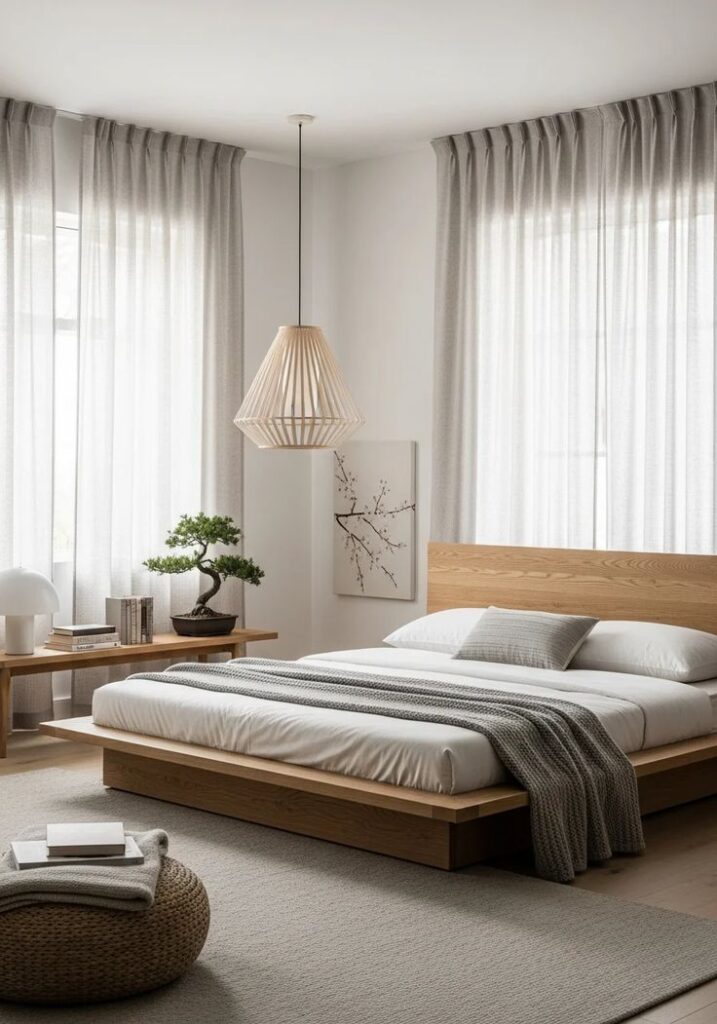
A low-profile bed instantly gives you that grounded, serene Japandi vibe. You also make the ceiling feel higher, which helps the whole room breathe. Why does that matter? Because your bedroom shouldn’t feel like it presses down on you.
I prefer a simple platform bed in oak, ash, or walnut. Skip ornate headboards and anything with a million curves. Japandi style loves clean geometry, not drama.
Quick tip: If you rent, you can still fake this look with a low platform base and minimal bedding.
3) Layer Natural Textures (Without Creating a Linen Avalanche)
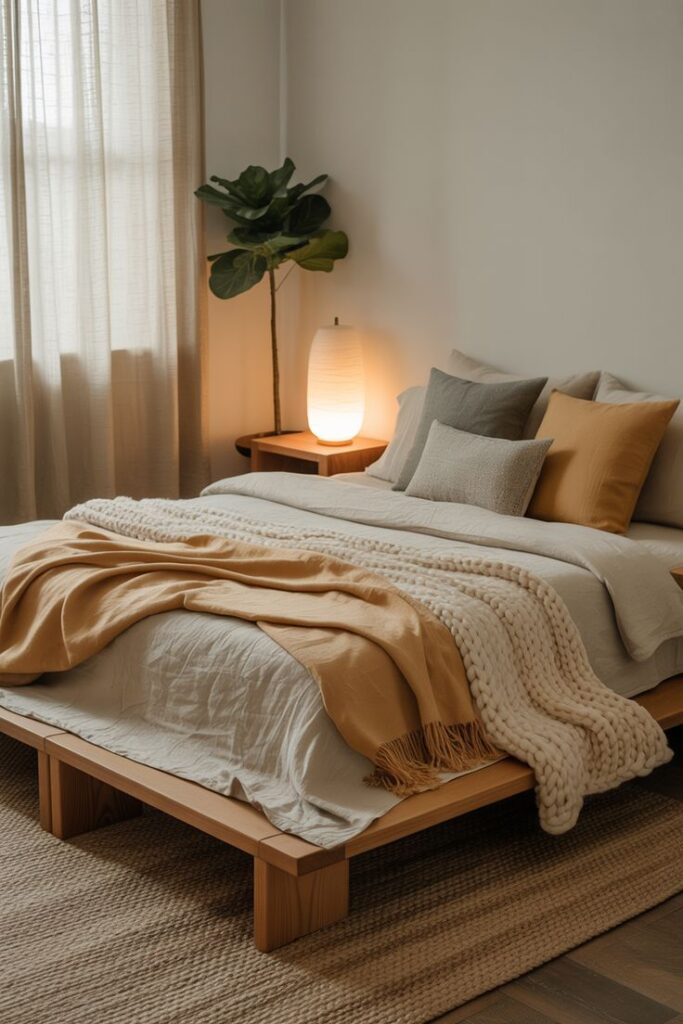
Japandi calm comes from texture, not clutter. You want materials that feel good and look honest. When I swapped shiny microfiber for linen, I finally understood why people romanticize bedding.
Aim for:
- Linen or cotton bedding
- Wool or woven throws
- Jute, sisal, or flatweave rugs
- Wood and ceramic accents
FYI, you don’t need ten throw pillows to “layer.” Two pillows you actually use beat eight decorative ones that fall on your face at night.
4) Add One Statement Light (Then Stop Shopping)
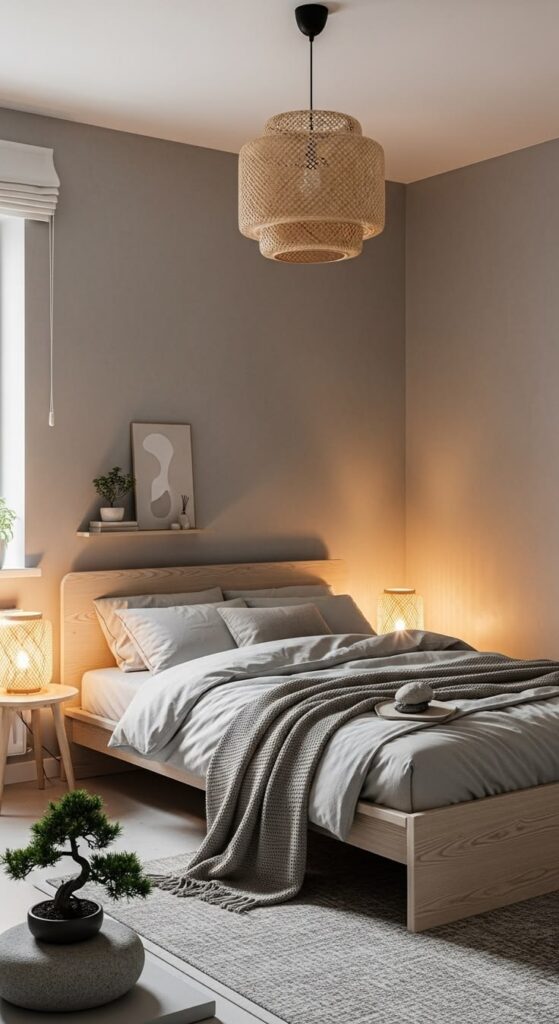
Lighting sets the mood faster than almost anything else. A single standout fixture can make your Japandi bedroom look intentional instead of accidental. Have you ever turned on harsh overhead lighting and instantly felt stressed? Yeah, same.
I love:
- Paper lantern pendants for soft glow
- Wood-slat pendants for warm shadows
- Simple matte sconces for hotel-level calm
Keep the bulb warm
Pick 2700K warm bulbs. Your brain reads cool white light as “office,” and nobody wants their bedroom to feel like a spreadsheet.
5) Keep Furniture Low and Simple (Yes, Even the Nightstands)
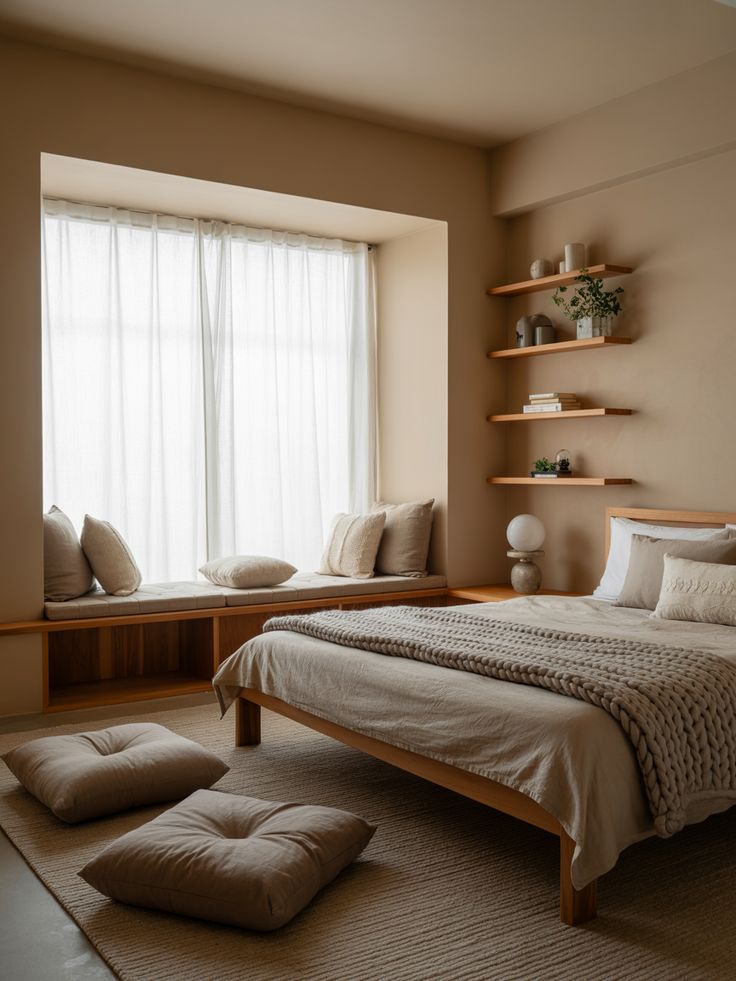
Japandi design loves furniture that sits low, looks clean, and functions well. That combo makes your room feel calm because your eyes don’t bounce around. You create visual rest.
I choose floating nightstands when I can. They make cleaning easy and keep the floor visible, which makes the space feel larger.
If you want a quick checklist, look for:
- Straight lines
- Natural wood or matte finishes
- Hidden storage or one simple drawer
6) Use Soft, Minimal Window Treatments
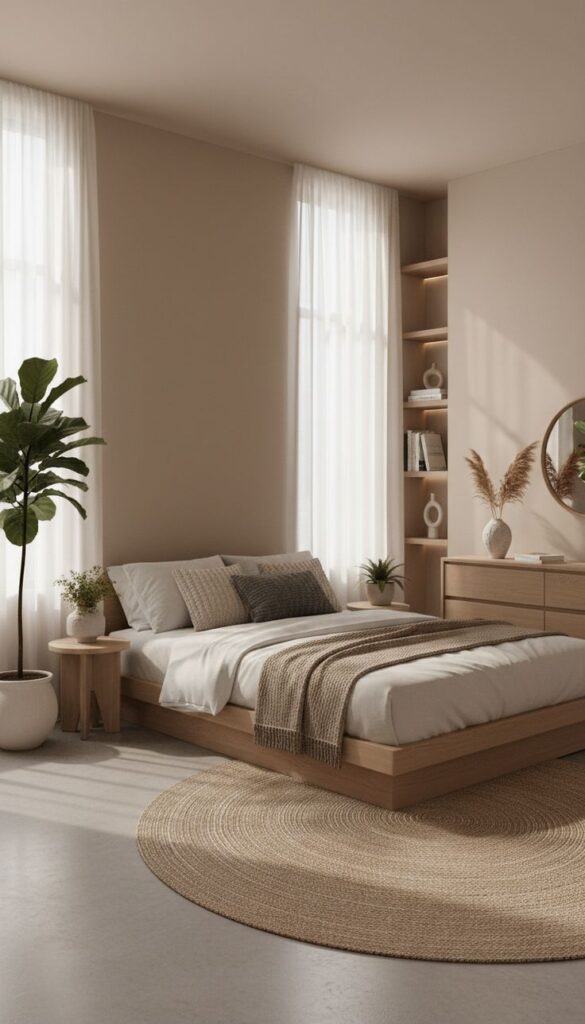
Your windows can either soothe you or sabotage you. Heavy, fussy curtains can overwhelm a Japandi bedroom fast. You want light control without visual chaos.
I like linen curtains because they soften sunlight and still feel airy. If you need darkness, add a hidden blackout roller shade behind the linen. You get the calm look and actual sleep—an underrated combo.
Ask yourself: do you want your bedroom to feel like a spa or a stage production?
7) Bring in Wood (But Mix the Tones Like a Grown-Up)
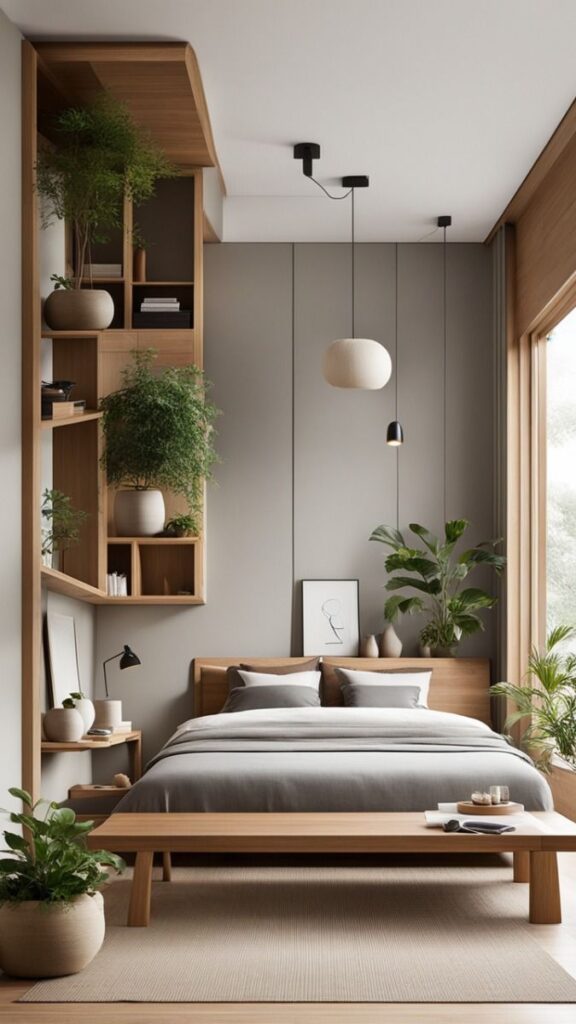
Japandi bedrooms love wood because wood instantly signals warmth. You can use oak, ash, walnut—just don’t mix five tones and call it “eclectic.” Your room will feel busy, and your brain will notice.
IMO, the easiest approach looks like this:
- Pick one main wood tone (like light oak)
- Add one supporting tone (like walnut accents)
- Repeat each tone at least two times so it looks intentional
You can do this with a bed frame, nightstands, a bench, picture frames, or a dresser.
8) Declutter Hard (Then Add Storage That Disappears)
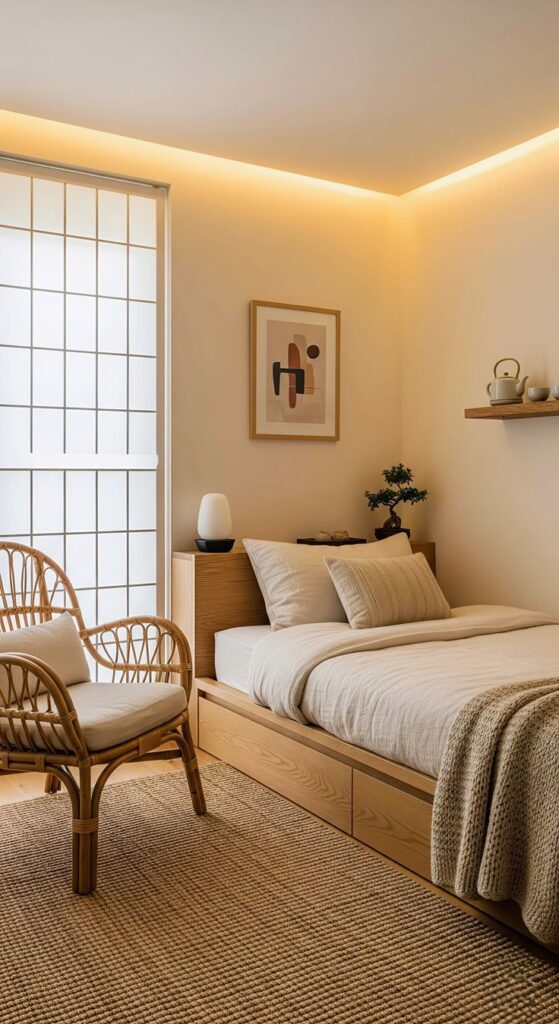
Clutter kills calm. Japandi style doesn’t judge you, but it does ask you to stop stacking random stuff on every surface. When I cleared my nightstand down to a lamp and a book, I felt weirdly powerful.
Focus on closed storage so your room looks quiet even when life feels loud:
- Under-bed drawers
- A dresser with flat fronts
- Baskets with lids (they hide chaos beautifully)
My rule
If you can’t clean a surface in 10 seconds, you own too much stuff for that surface.
9) Add a Single Piece of Calm Wall Art
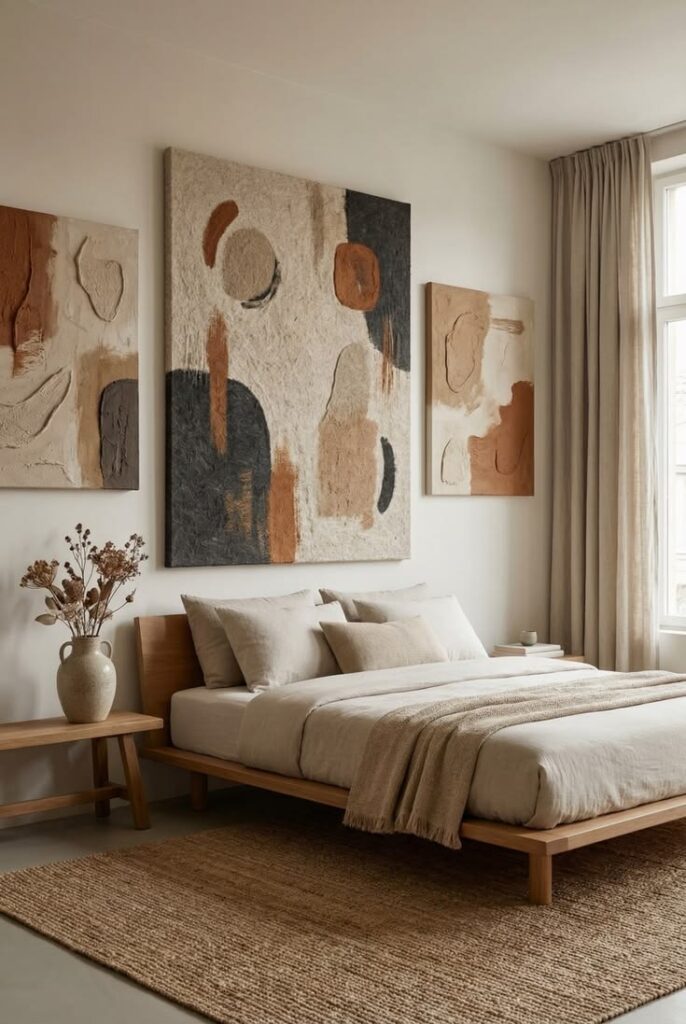
Japandi bedrooms don’t need gallery walls that scream for attention. You want art that feels like a deep breath. One large piece often works better than five small ones.
Look for:
- Abstract neutral prints
- Japanese ink-style landscapes
- Minimal line drawings
- Textured textile hangings
Hang it where you see it most, like above the bed or across from it. Doesn’t it feel better when your eyes land on something peaceful instead of visual noise?
10) Bring Nature In (But Keep It Low Maintenance)
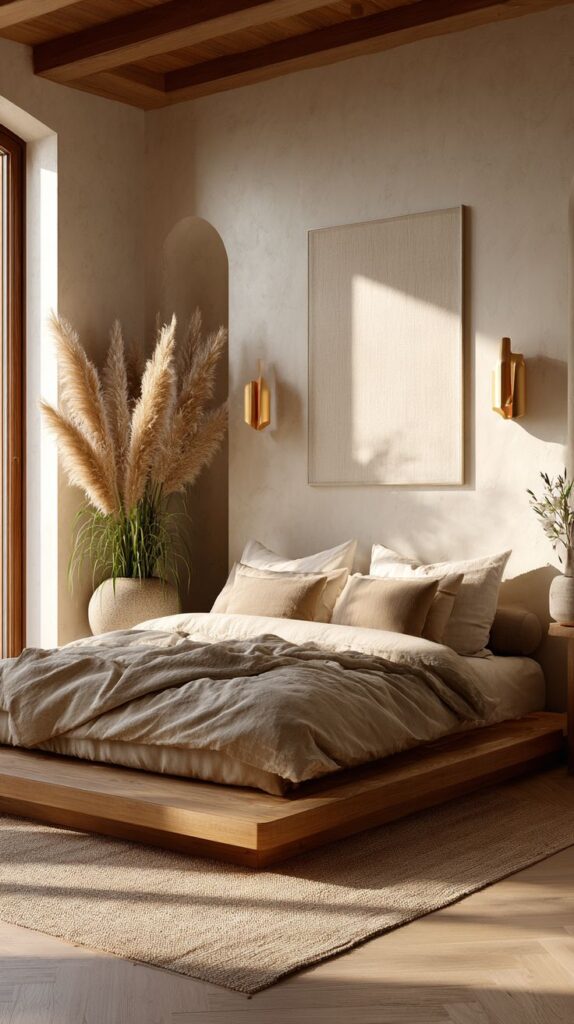
Plants make a room feel alive, and Japandi bedrooms love that quiet connection to nature. You don’t need a jungle. You need one or two plants that look sculptural and calm.
My favorites:
- Snake plant (nearly unkillable)
- ZZ plant (thrives on neglect)
- Olive tree (faux or real) for that soft Mediterranean-meets-Japandi vibe
If you kill plants, grab a good faux and move on with your life 🙂 Calm doesn’t require horticultural guilt.
11) Create a Tiny “Pause Corner” (Even in a Small Bedroom)
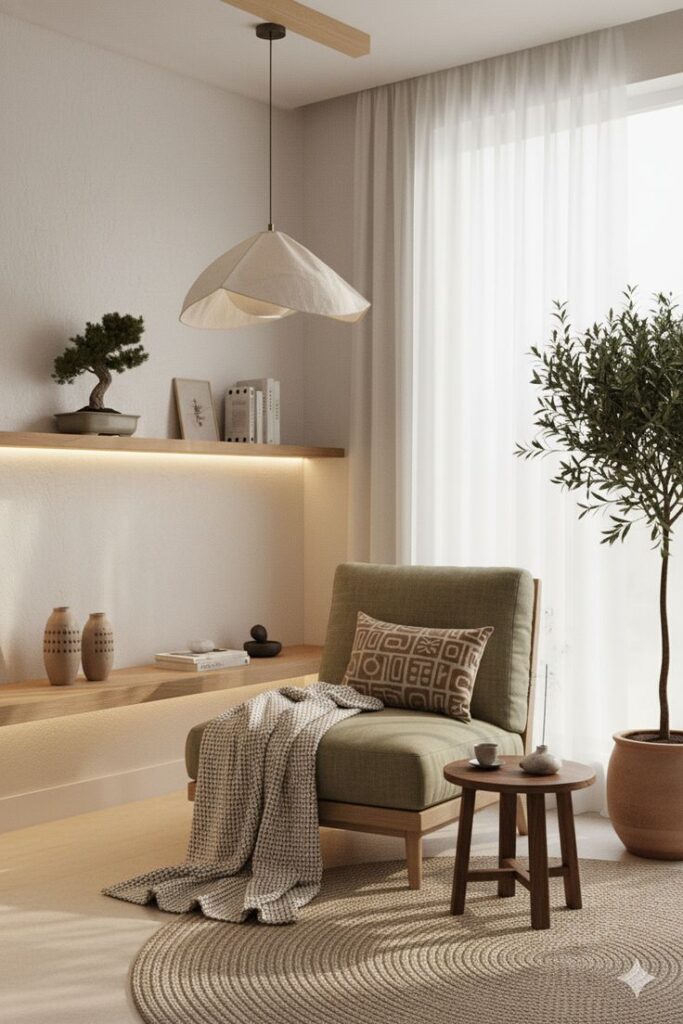
This idea feels small, but it changes everything. A pause corner gives you a spot that doesn’t involve your bed, your phone, or your laundry pile. You can read, stretch, or just sit there like a thoughtful main character.
You only need:
- A small chair or floor cushion
- A side table or stool
- A warm lamp
I set one up once in a cramped room, and I still felt like I lived in a boutique hotel. Who knew one corner could do all that?
12) Upgrade Your Bedding to “Calm Luxury” (Not “Fussy Luxury”)
Bedding matters because you touch it every night. Japandi style keeps bedding simple, breathable, and layered just enough. You want that “clean cocoon” feeling, not a complicated bed you resent making.
Try this easy formula:
- Crisp cotton or linen sheets
- A neutral duvet (white, oatmeal, stone)
- One textured throw at the foot
- Two sleeping pillows + one lumbar (optional)
Pick matte fabrics over shiny ones. Shine adds visual noise, and your bedroom already deals with enough.
Wrap-Up: Calm Happens When You Edit, Not When You Add
Japandi bedroom ideas work because they push you toward less clutter, softer color, natural materials, and better light. You don’t need a full renovation or a shopping spree that leaves your bank account crying in the corner. You need a few smart choices that make your space feel quieter on purpose.
Start with one change—maybe neutral bedding, a low bed, or decluttering your nightstand—and notice how fast the room shifts. Then build from there. You’ll sleep better, think clearer, and spend less time wondering why your bedroom stresses you out. And if you still keep one “random chair that collects clothes,” I won’t tell anyone.