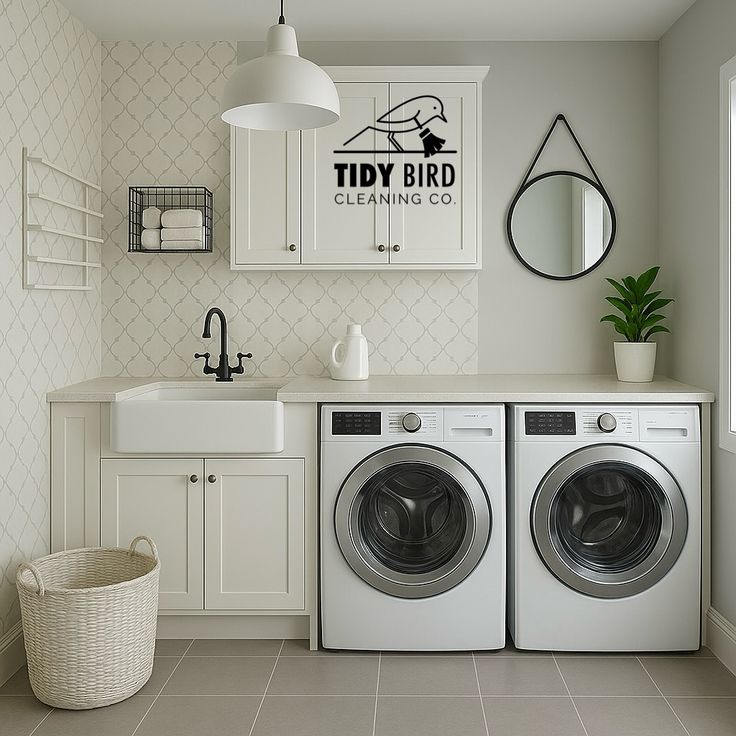
How to Organize Your Laundry Room for Maximum Efficiency

Laundry should feel like a quick pit stop, not a full-blown expedition where you lose a sock, your patience, and somehow your will to live. If your laundry room stresses you out, you don’t need “more space.” You need a setup that helps you move fast, think less, and finish loads without creating Mount Laundry on a nearby chair.
I’ve run laundry in tiny closets, shared basements, and one weird corner setup where I folded shirts on top of a vibrating dryer. So yeah, I care about how to organize your laundry room for maximum efficiency more than any reasonable person should. Ready to make your laundry room work like a well-oiled machine (minus the weird noises)? Let’s set it up right.
Start With a Ruthless Reset (Because Clutter Slows Everything Down)
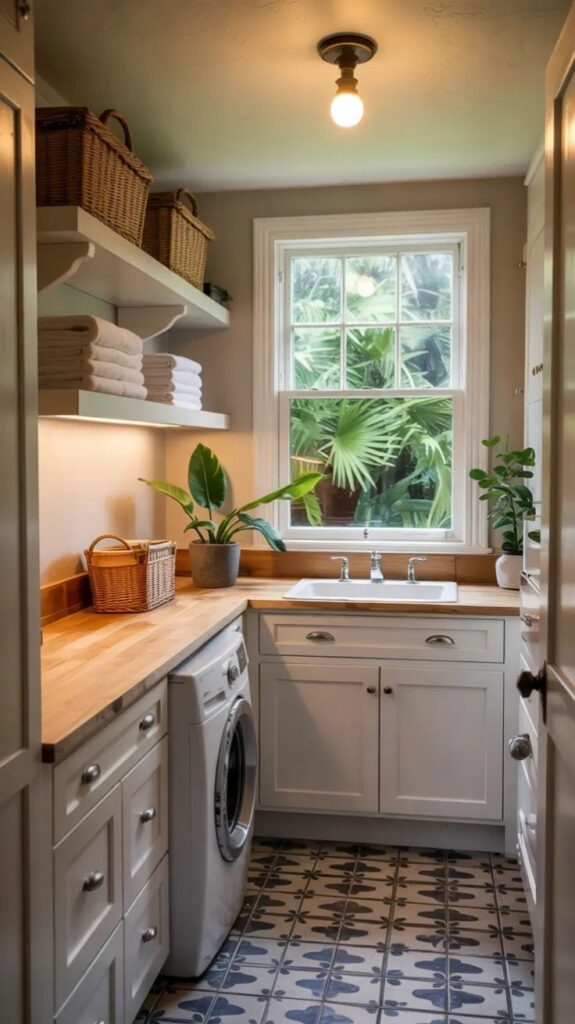
You can’t organize around chaos. You can only move it from one pile to another and call it “a system.” Ask me how I know.
Grab a trash bag and a donate box, then clear anything that doesn’t directly support laundry. Why store mystery candles and old paint rollers next to detergent? Your towels didn’t sign up for that.
Use this quick declutter checklist:
- Toss empty bottles, dried-up stain pens, and broken hangers
- Relocate non-laundry items to their real home
- Keep only one backup per product (two backups turns into ten backups fast)
- Remove “I might use this someday” gadgets that you never touch
Do you already feel the room breathing a little? I always do.
Plan Your Laundry Workflow Like a Tiny Factory (In a Non-Sad Way)
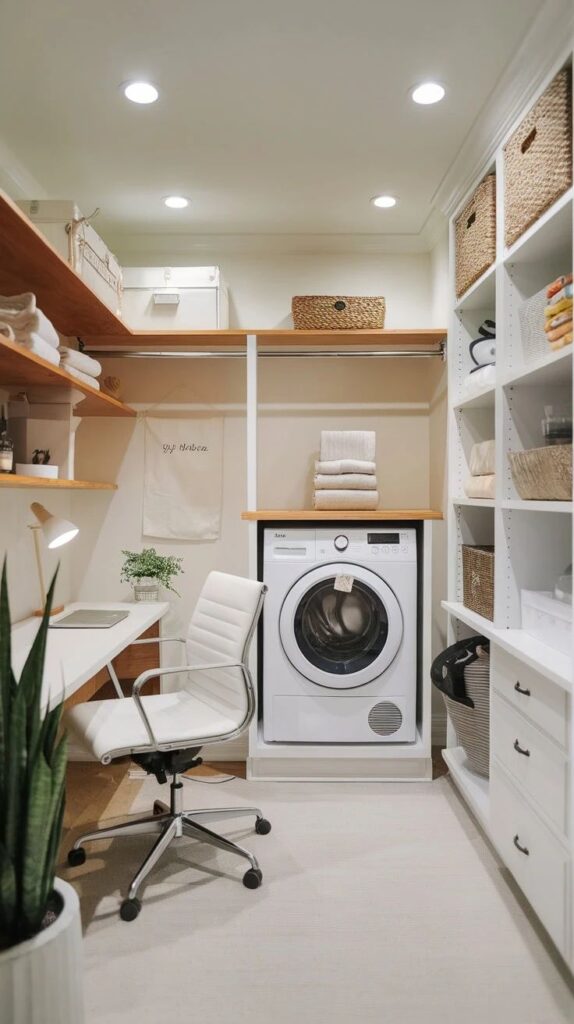
Efficiency comes from order, not from buying another basket that you totally “needed.” You want your laundry room to match the steps you actually take, so you stop zig-zagging like a confused Roomba.
Create Simple Zones That Match Your Habits
I like to break an efficient laundry room into a few clear zones. You don’t need a blueprint, but you do need logic. When you group items by task, you cut time and frustration.
Try these zones:
- Sort Zone (hampers or bins)
- Wash Zone (detergent, boosters, measuring scoop)
- Dry Zone (dryer sheets or wool balls, lint bin)
- Fold Zone (countertop or fold-down table)
- Finish Zone (hang, steam, or “put away immediately” fantasy zone)
Ever notice how laundry feels easier when your hands stop searching for stuff? You win half the battle with layout.
Set Up Sorting That Prevents Pile-Ups
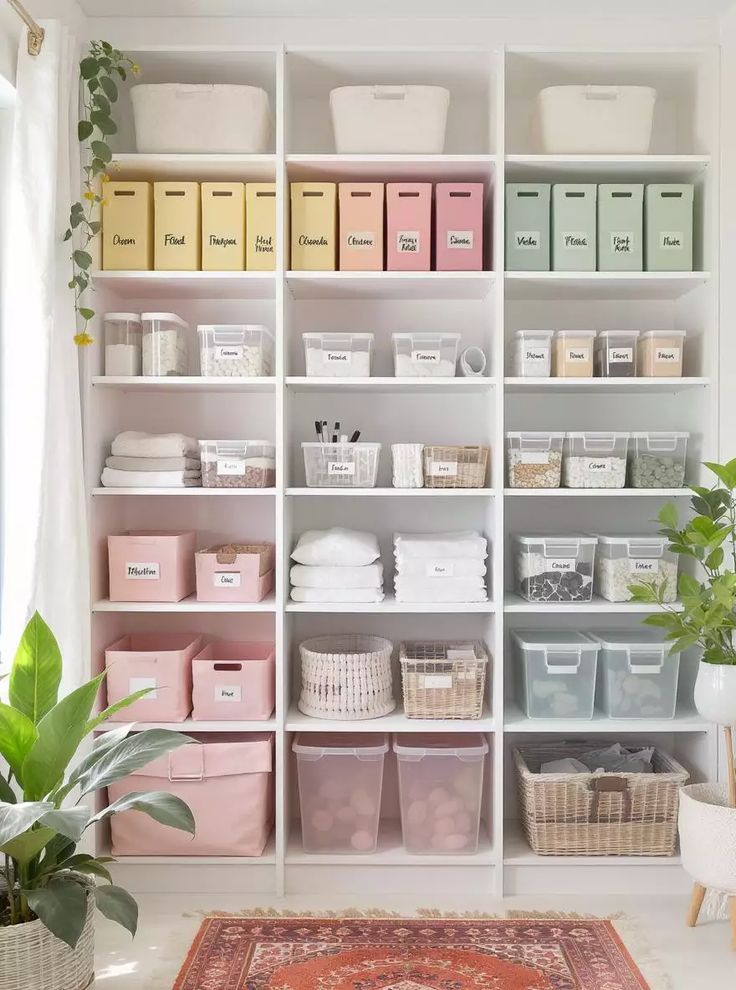
Sorting sounds boring until you do it wrong for years and suffer weekly. If you sort at the end, you handle the same clothes multiple times. If you sort up front, you move straight from hamper to washer like a laundry wizard.
Pick a Sorting Style You’ll Actually Use
I’ve tried the “one big hamper” life, and it always turns into a fabric soup. I prefer a sorter with two or three sections because it keeps decisions simple.
Common setups that work:
- Lights / Darks / Towels
- Work clothes / Kids clothes / Everything else
- Delicates / Regular / Gym gear (if you air-dry a lot)
Keep it realistic. Do you really want six categories when you already hate laundry? I wouldn’t.
Make Sorting Stupidly Easy
Place your sorting bins where clothes land naturally. You want a straight shot from bedroom to hamper to washer. You also want labels if multiple people “help” and create chaos with confidence.
FYI, I label bins in plain language like “Darks” and “Towels” because nobody needs a complicated system at 9 p.m.
Build a Folding and Finishing Station (So Clothes Don’t Live in Baskets Forever)
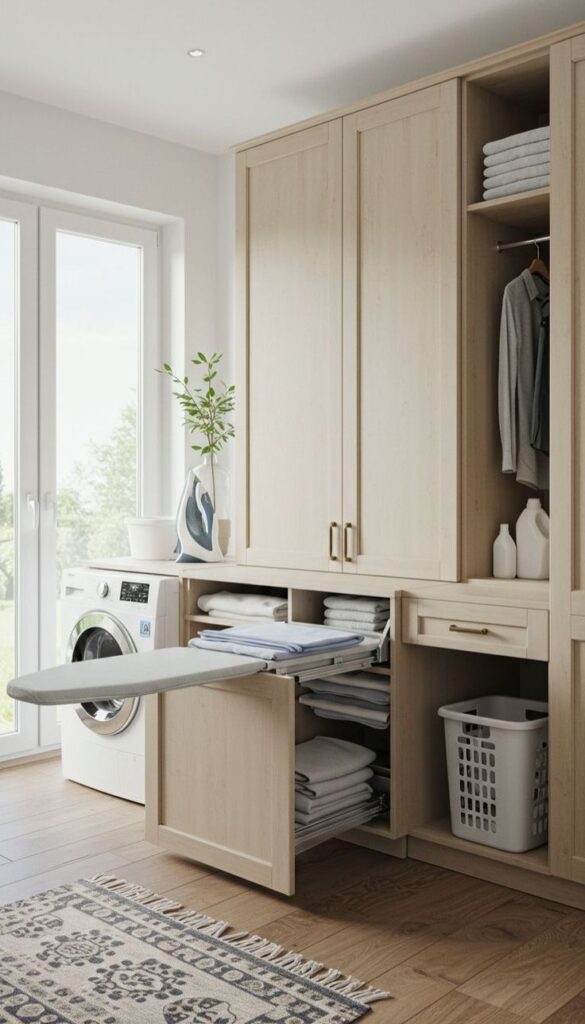
You don’t need a sprawling countertop to fold. You need a dedicated spot that stops clean laundry from becoming a wrinkled mess. When you fold immediately, you finish the job faster and you avoid the dreaded “rewash because it sat too long” cycle.
Choose a Folding Surface That Fits Your Space
Pick one option and commit:
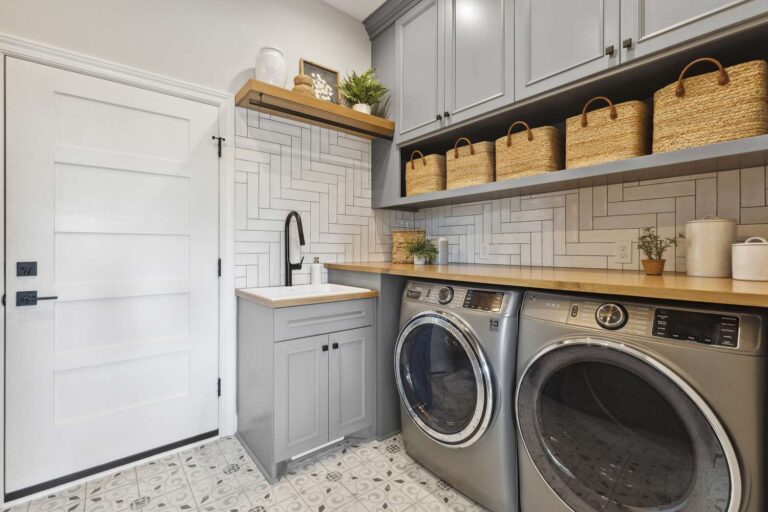
- Countertop over front-load machines for a seamless workflow
- Wall-mounted drop-leaf table for tight rooms
- Pull-out shelf inside a cabinet if you want everything hidden
I love a drop-leaf table in a small laundry room because it disappears when I finish. Why donate floor space to a permanent table if you fold for ten minutes?
Add a “Finish” Tool Right Where You Need It
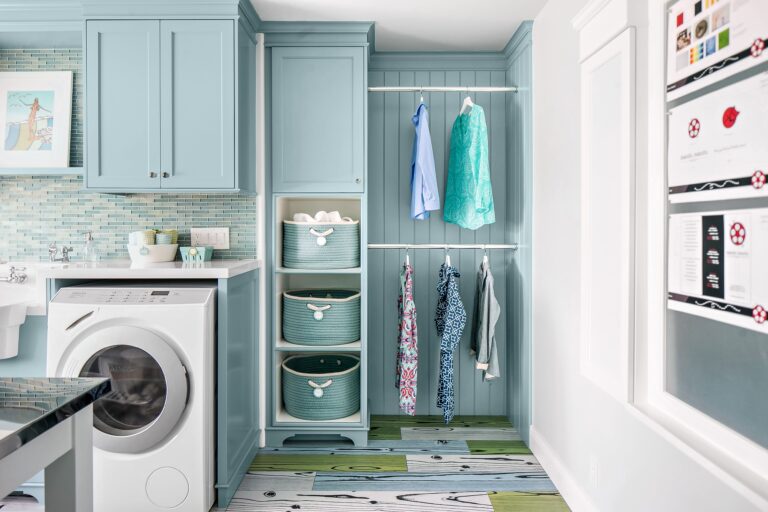
Hang a small rod or hook near your folding area. You can hang shirts immediately and stop wrinkles before they start. Do you want to iron later, or do you want to hang now and move on with your life?
Organize Laundry Supplies So You Grab and Go
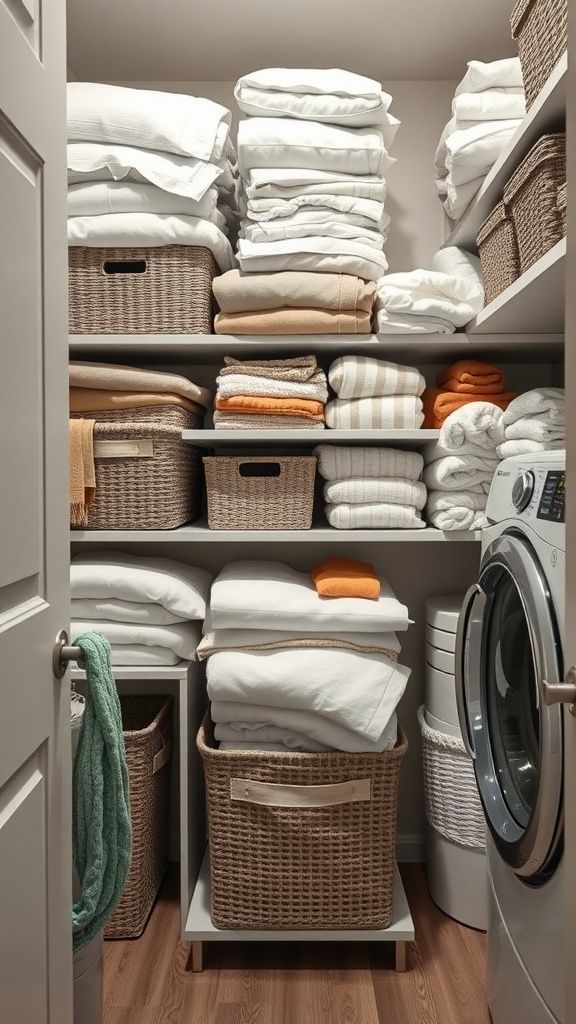
When supplies scatter across shelves, you waste time and create mess. When supplies live in a tight, predictable layout, you move through loads faster. This section alone can upgrade your laundry room organization a lot.
Keep Only the Products You Use Every Week
I keep my “daily drivers” in arm’s reach and push everything else to a backup shelf. This strategy stops the shelf sprawl that makes your room look cluttered even when it’s clean.
Keep front-and-center:
- Detergent
- Stain remover
- Oxygen booster (if you use it)
- Delicate bags
- Lint roller for the “why do I own a black cat” moments
Decant or Don’t Decant? Here’s My Honest Take
I used to think decanting looked silly. Then I tried it, and I stopped knocking over bottles and sprinkling detergent like fairy dust. IMO, decanting helps most when you fight limited shelf space or messy packaging.
If you decant, use:
- Clear containers so you track supply levels
- Simple labels so nobody guesses
- Tight lids so moisture doesn’t ruin powders
Use Vertical Space Like You Mean It
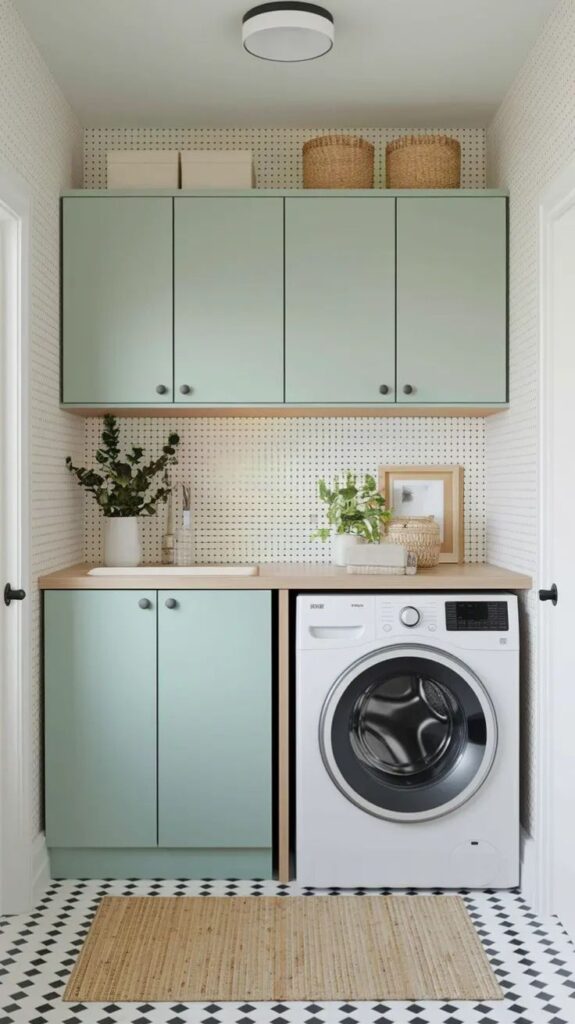
Walls count as storage, and I treat them like gold in any laundry room setup. You can free up your floor and your brain by moving supplies upward. Why store everything on the ground when you can store it where your eyes already look?
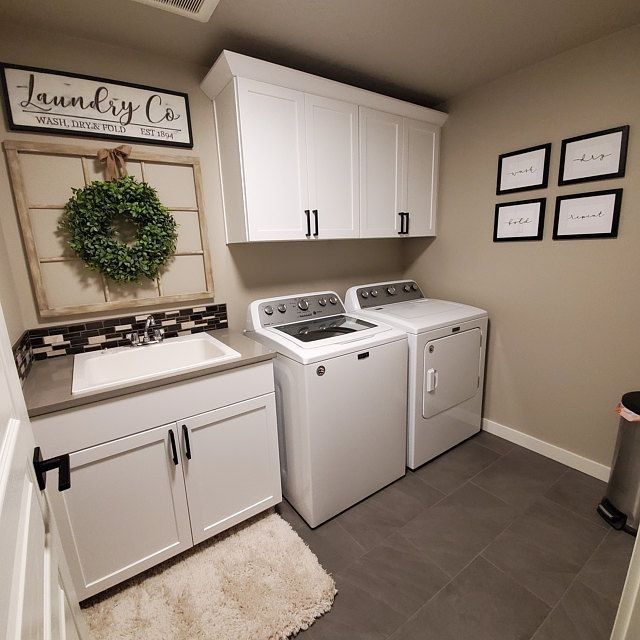
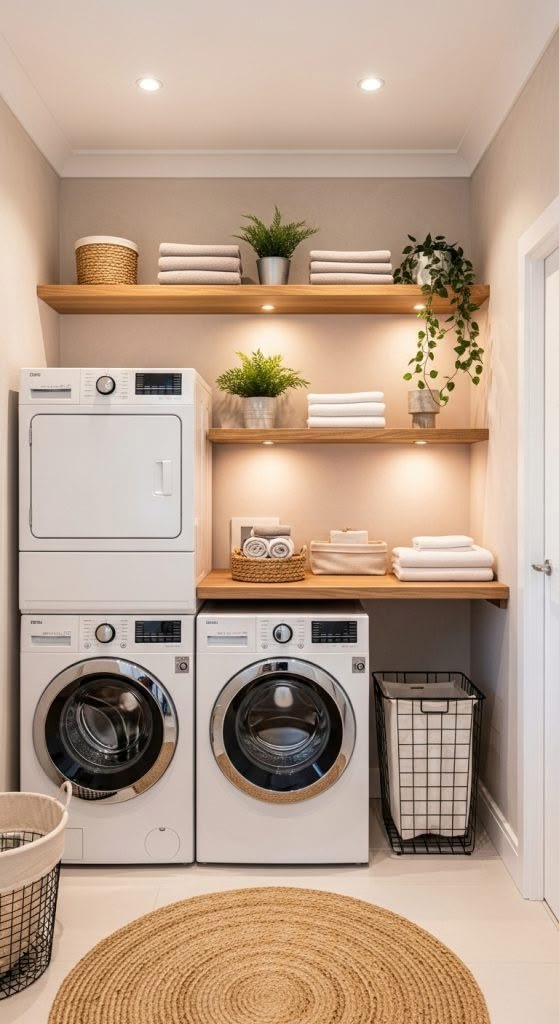
Add Shelves Above Machines
A shelf above the washer and dryer gives you instant storage without changing your footprint. I keep lightweight items up top and heavy items lower, because I like my toes unbroken.
Stock that shelf with:
- Backstock detergent
- Extra towels or rags
- A small basket for “random but useful” items
Use Hooks, Pegboards, and Door Organizers
Hooks handle awkward items like dusters and reusable bags. Pegboards hold tools and stain brushes without turning drawers into junk. Over-the-door organizers store small items that usually explode across shelves.
Do you want your supplies visible and fast to grab, or do you want to play “where did I put that” every week?
Make Storage Easy to Carry (Because Trips Waste Time)
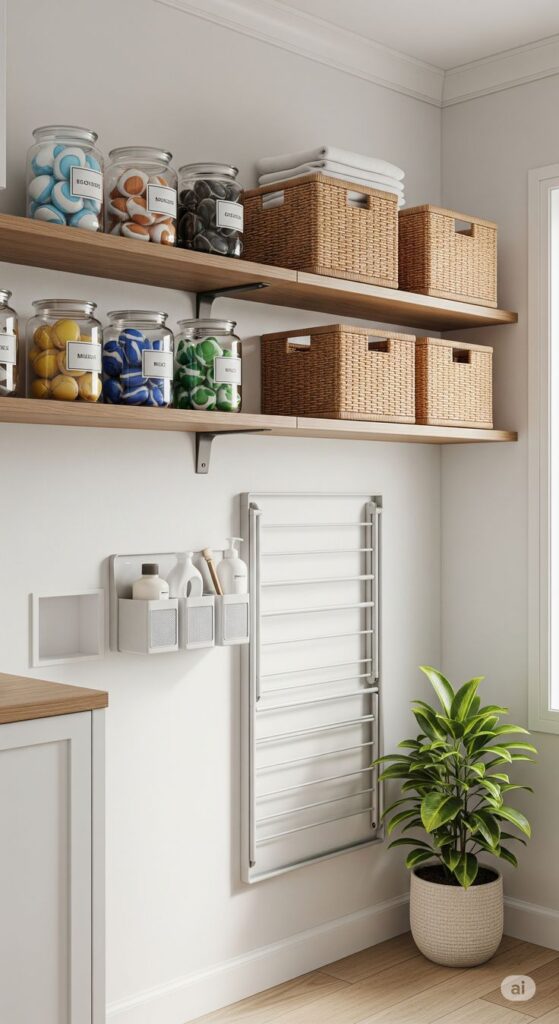
You can organize perfectly and still feel annoyed if you run back and forth. Carryable storage fixes that. I keep one main caddy and a couple small bins, and I stop treating laundry like cardio.
Use a Laundry Caddy for Daily Essentials
A caddy works great if you share a laundry area or if you do pre-treating somewhere else. You grab it, you handle stains, and you return it to its home.
Pack your caddy with:
- Stain spray
- A small scrub brush
- Measuring scoop
- Clothespins or clips
Try a Slim Rolling Cart for Tight Spaces
A slim cart slides between machines and walls, and it stores supplies without hogging space. I love carts because they keep items accessible without turning shelves into a messy skyline. Do you have a weird gap that annoys you? A cart fixes that gap fast.
Cut “Laundry Decisions” With Simple Rules
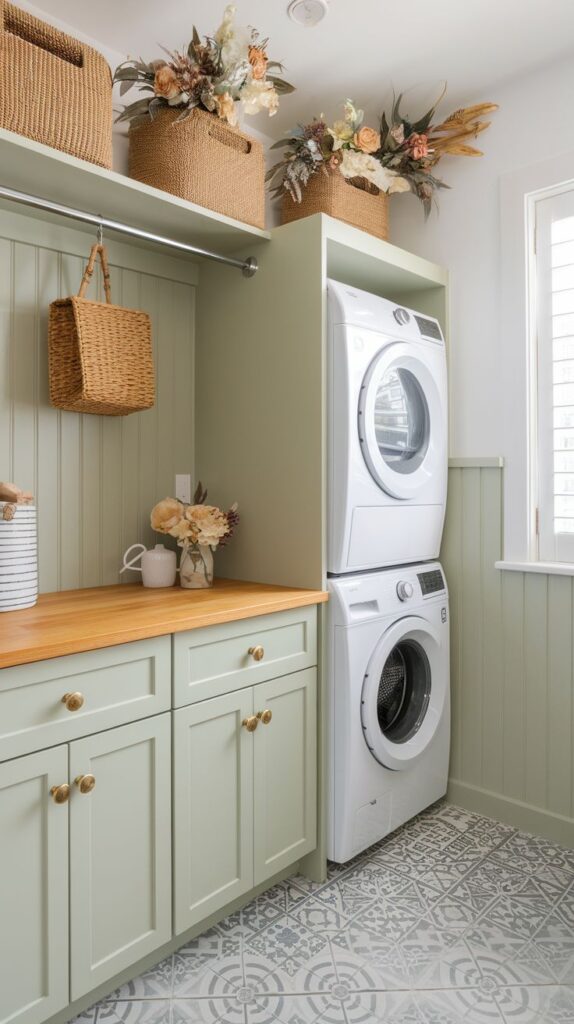
Laundry feels exhausting when you make a thousand micro-decisions. You can reduce that mental load with a few standards. You’ll move faster when you follow the same steps every time.
Create Default Load Settings
Pick a default for most loads, then adjust only when needed. I use one “regular” setting and one “towels” setting, and I stop overthinking it like a philosopher with a sock.
Try this approach:
- Regular clothes: cold, normal, medium spin
- Towels/sheets: warm, heavy, high spin
- Delicates: cold, gentle, low spin + air dry
Post a Tiny Cheat Sheet
Tape a small note inside a cabinet door with your go-to settings and stain tips. You’ll save time and avoid laundry errors that cause extra work. Ever shrunk a shirt and then pretended it always fit that way? Same.
Keep the Room Clean So Efficiency Stays Effortless
A clean laundry room runs smoother. Dust, lint, and clutter slow you down and make the space feel chaotic. You don’t need a deep clean every week, but you do need quick habits.
Do a 5-Minute Reset After Laundry
I run a quick routine after I finish the last load. I put supplies back, wipe obvious drips, and empty lint. This reset keeps the room ready for next time.
My quick reset looks like this:
- Wipe machines and counter
- Empty lint trap and lint bin
- Return caddy and baskets to their spots
- Sweep quick if lint piles up
Schedule One Monthly “Not Gross” Check
Once a month, I check hoses, wipe shelves, and clean detergent residue. This habit keeps odors away and prevents weird buildup. Nobody wants their laundry room to smell like damp mystery.
Choose Smart Upgrades That Actually Improve Efficiency
You don’t need a full remodel to create maximum efficiency. You just need upgrades that save steps, reduce mess, and increase usable space. I always start small, then I upgrade only after I feel friction points.
Best Budget Upgrades (High Impact, Low Drama)
These give you fast results without draining your wallet:
- Wall hooks and command strips for tools and bags
- A magnetic lint bin on the side of the dryer
- Matching baskets to group supplies by category
- A simple label maker (or masking tape, because you live in reality)
Worth-It Splurges (When You Want a Real Upgrade)
These cost more, but they save time every week:
- Fold-down wall drying rack for delicates
- Countertop over front-load machines
- Tall cabinet or shelving system for closed storage
- Pull-out trash and recycling for empty bottles
Do you want your laundry room to look cute, or do you want it to work? Pick “work” first, then add cute.
Conclusion: Build a Laundry Room That Moves as Fast as You Do
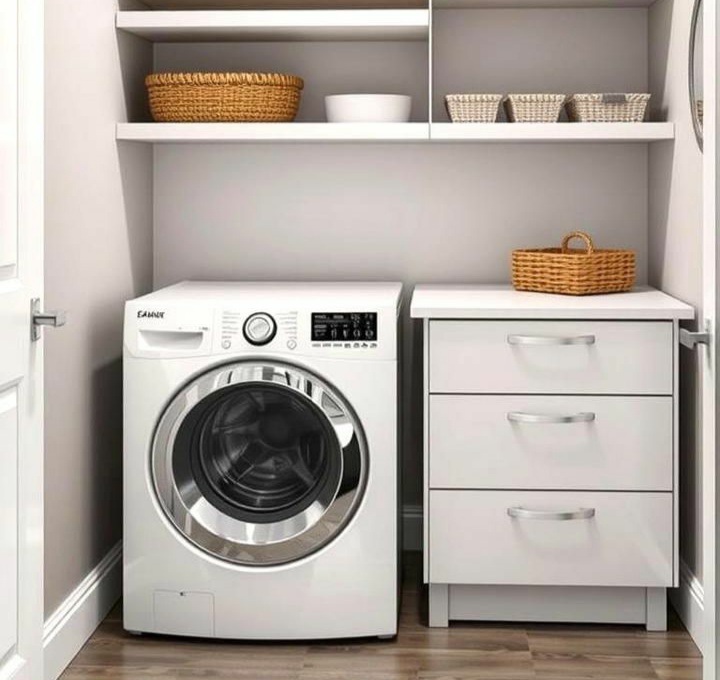
You can absolutely learn how to organize your laundry room for maximum efficiency without turning it into a home-improvement saga. Start with decluttering, then build zones for sorting, washing, drying, folding, and finishing. Add vertical storage, carryable caddies, and a simple reset routine so the system stays easy.
![[ 8 Tiny Laundry Room Ideas That Still Fit Storage + Sorting ]](https://evyvehomedecor.com/wp-content/uploads/2026/02/da1e8149252297da3df550e3bb193a0c.jpg)